Before the abduction era, most UFO investigations focused on a relatively straightforward category of evidence: lights in the sky, radar anomalies, military sightings, and unexplained aerial craft. The basic question was physical — what are these objects, where do they come from, and who or what is operating them? The witnesses were, in the main, observers. They saw something they could not explain, reported it, and moved on.
But gradually, beginning in the early 1960s, researchers began collecting a different kind of report. These were not accounts of lights at a distance. They were accounts of direct, close-range encounters with non-human entities — encounters that included missing periods of time, physical examination procedures, paralysis, telepathic communication, and memories that only surfaced weeks or years later, often under hypnosis. What these accounts shared was not just strangeness but a consistent internal structure that crossed national boundaries, cultural backgrounds, and individual psychology in ways that researchers found difficult to dismiss.
What began as isolated stories evolved into one of the most controversial branches of ufology. To supporters, abduction reports represent evidence of an ongoing and systematic interaction between humanity and non-human intelligence. To sceptics, the phenomenon reflects sleep paralysis, false memory creation, cultural mythology, psychological suggestion, and the powerful influence of media. Whatever one concludes, alien abduction research permanently transformed modern UFO culture — and deeply influenced public imagination, popular fiction, and the way millions of people think about the possibility of contact.
I. Before the Abduction Era
The early years of civilian UFO research — roughly 1947 through the late 1950s — were dominated by what J. Allen Hynek classified as Nocturnal Lights, Daylight Discs, and Radar-Visual cases. The sightings were largely observational. Kenneth Arnold sees nine disc-shaped objects over the Cascades in 1947. Air Force pilots report objects that outmanoeuvre their aircraft. Radar operators track objects moving at impossible speeds. The witnesses are typically credible — pilots, military personnel, civilian professionals — and what they describe is primarily aerial.
Even the earliest close encounter cases — what Hynek would call Close Encounters of the First Kind (object within 500 feet) and Second Kind (physical effects on the environment) — remained in this broadly observational category. The UFO was a physical object observed from a distance or nearby, leaving traces. The witness was not a participant in an event. They were an observer of something they did not understand.
The category that would change everything — what Hynek designated Close Encounters of the Third Kind, and what would later be expanded into the Fourth Kind — began appearing in the research literature in the late 1950s and early 1960s. These were the cases in which witnesses described not just sighting a craft, but encountering the beings associated with it. The 1957 Antonio Villas Boas case in Brazil, in which a young farmer described being taken aboard a craft and subjected to what he understood as a reproductive procedure, was among the first widely investigated cases of this type. It was treated by most researchers of the time as either hoax or aberration. It would not remain so for long.
II. Betty and Barney Hill: The Foundational Case
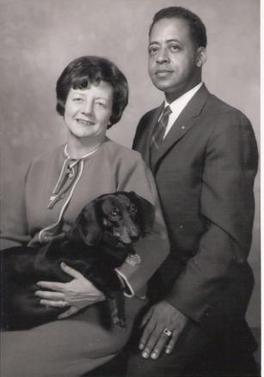
The case that established the template for all subsequent abduction research occurred on the night of September 19–20, 1961, on U.S. Route 3 in New Hampshire. Betty and Barney Hill, a married couple returning from a holiday in Canada, encountered a large, silent craft with a series of lit windows through which Barney Hill reported seeing figures. The couple experienced approximately two hours of missing time between a specific point on the highway and arriving home — a period for which neither could account.
In the weeks following the encounter, Betty Hill began experiencing vivid and disturbing dreams involving examination procedures aboard a craft. Barney Hill developed extreme anxiety and physical symptoms including the formation of a ring of warts around his groin. In 1964, under separate hypnotic regression sessions conducted by Boston psychiatrist Dr. Benjamin Simon, both independently described being taken aboard the craft and subjected to medical examinations — descriptions that were consistent with each other in ways that Dr. Simon, who was sceptical of the extraterrestrial interpretation, nonetheless found difficult to explain as simple fabrication or shared suggestion.
The Hill case, first brought to public attention in journalist John G. Fuller’s 1966 book The Interrupted Journey, introduced into the UFO literature a cluster of elements that would appear repeatedly in subsequent accounts: missing time, hypnotic regression as a recovery tool, physical examinations by small grey entities with large eyes, communication through non-verbal telepathy, and a profound psychological and physiological impact on the witnesses following the encounter. It was not simply the first widely publicised abduction case. It was the template from which nearly all subsequent abduction research proceeded.
III. Budd Hopkins and the Abduction Researcher
The researcher who did more than anyone else to establish alien abduction as a distinct field of study within ufology was Budd Hopkins — a New York abstract expressionist painter who had himself witnessed an unexplained aerial object over Cape Cod in 1964 and became gradually drawn into the investigation of similar reports. Hopkins brought a specific approach to abduction research: systematic collection of cases, cross-referencing of witness accounts for consistent elements, and the use of hypnotic regression to recover suppressed memories of encounters.
His 1981 book Missing Time presented a series of documented cases in which individuals with no prior knowledge of each other independently described nearly identical experiences involving small grey beings, examination tables, and physical procedures that included the apparent implantation of small objects. Hopkins argued that these consistencies across unrelated witnesses in different geographical locations and social circumstances constituted a form of evidence that could not easily be explained by suggestion, cultural contamination, or psychological pathology.
Hopkins’s 1987 follow-up, Intruders: The Incredible Visitations at Copley Woods, deepened this argument with the case of Kathie Davis, an Indiana woman whose account included detailed physical evidence — a circular depression in her backyard, physiological anomalies, and a family history of apparent encounters spanning multiple generations. The book was widely read, inspired a television miniseries, and brought the abduction phenomenon to a mainstream audience that had previously known it primarily from occasional news items and science fiction.
IV. David Jacobs and the Academic Dimension
Where Hopkins was an artist turned researcher, David Jacobs was a Temple University historian who had written his doctoral dissertation on the history of the UFO controversy in America — a rare instance of academic engagement with the subject from within mainstream academia. Jacobs brought rigorous historical methodology to abduction research and trained as a hypnotherapist specifically to conduct regression sessions with abductees under clinical conditions.
His 1992 book Secret Life: Firsthand Documented Accounts of UFO Abductions presented what he described as the first systematic analysis of abduction accounts drawn from a substantial clinical sample. Jacobs identified a consistent sequence of events that he argued characterised the abduction experience: capture, examination, envisioning (a procedure in which the abductee is shown disturbing imagery), machine examination, specimen procedures, and release. His conclusion — that the abduction phenomenon represented a real, physical programme of biological harvesting being conducted by non-human entities — was deeply controversial even within ufology, let alone mainstream science.
Jacobs’s work has been criticised on methodological grounds, particularly around the reliability of hypnotic regression as a memory recovery tool and the potential for researcher suggestion to shape the content of regressed accounts. These are legitimate scientific concerns. But his systematic approach and willingness to submit his methodology to scrutiny represented a significant step toward making abduction research subject to the kind of critical examination that the subject required.
V. John Mack and the Harvard Controversy
Perhaps no figure in the history of abduction research attracted more attention — or more institutional controversy — than Dr. John Mack, a Harvard Medical School psychiatrist, Pulitzer Prize-winning biographer, and professor of psychiatry who began studying abduction experiencers in 1990. Mack had been introduced to the subject by Budd Hopkins and initially approached it with considerable scepticism. What he found, after conducting more than two hundred clinical interviews and regression sessions with experiencers, led him to a conclusion that shocked his colleagues and nearly cost him his academic position.
Mack’s 1994 book Abduction: Human Encounters with Aliens argued that the accounts he had documented could not be adequately explained by any conventional psychiatric framework. The people he interviewed were not psychotic, not delusional, not suffering from identifiable pathologies. They were distressed by experiences that had the full phenomenological character of real events — events that had profoundly changed their lives, their worldviews, and their sense of human identity. Mack did not claim certainty about what the experiences represented. He claimed, carefully but explicitly, that the conventional dismissal of these accounts was scientifically inadequate.
Harvard convened a formal faculty committee to review Mack’s work — a procedure unprecedented in the institution’s history for academic research — and ultimately took no action against him, affirming his right to pursue controversial research. Mack continued his work until his death in 2004, struck by a car in London. His contribution to the field was not a definitive answer but a rigorous insistence that the experiencers were not to be dismissed — and that science had an obligation to take seriously what it could not yet explain.
VI. What the Research Left Behind
Alien abduction research remains one of the most contested areas of UFO studies. The scientific community’s mainstream critique — that hypnotic regression is an unreliable memory recovery tool capable of generating false memories, that sleep paralysis and lucid dreaming can produce vivid experiences phenomenologically identical to reported abductions, and that cultural exposure to abduction narratives through media shapes the specific content of reported experiences — is serious and deserves engagement rather than dismissal.
At the same time, a subset of abduction accounts includes physical evidence — unexplained physiological changes, anomalous materials reportedly removed from witnesses’ bodies, corroborating witnesses, and cases in which individuals describe consistent experiences before any exposure to abduction literature or media — that does not fit neatly into the psychological explanation. The phenomenon resists resolution in either direction.
What the abduction research era undeniably produced is a fundamental shift in the questions ufology asks. The subject is no longer only about what objects are in the sky. It is about the nature of the relationship — if any — between humanity and whatever intelligence may be responsible for the phenomena. That shift, whatever one makes of its implications, has permanently changed the landscape of the UFO debate.
Recommended Reading
The Interrupted Journey — John G. Fuller (1966)
The original account of the Betty and Barney Hill case — the book that introduced missing time and hypnotic regression to the public and established the abduction narrative as a distinct category within UFO research.
View on Amazon →
Abduction: Human Encounters with Aliens — John E. Mack (1994)
The Harvard psychiatrist’s landmark study of abduction experiencers. Mack approached the subject as a clinician, argued it could not be dismissed by conventional psychiatric frameworks, and nearly lost his academic position for saying so. Essential reading on what the phenomenon does to the people who experience it.
View on Amazon →
Missing Time — Budd Hopkins (1981)
The book that established alien abduction as a systematic research field. Hopkins documents cases across unrelated witnesses who independently describe nearly identical experiences — and argues that those consistencies constitute evidence that demands explanation.
View on Amazon →