
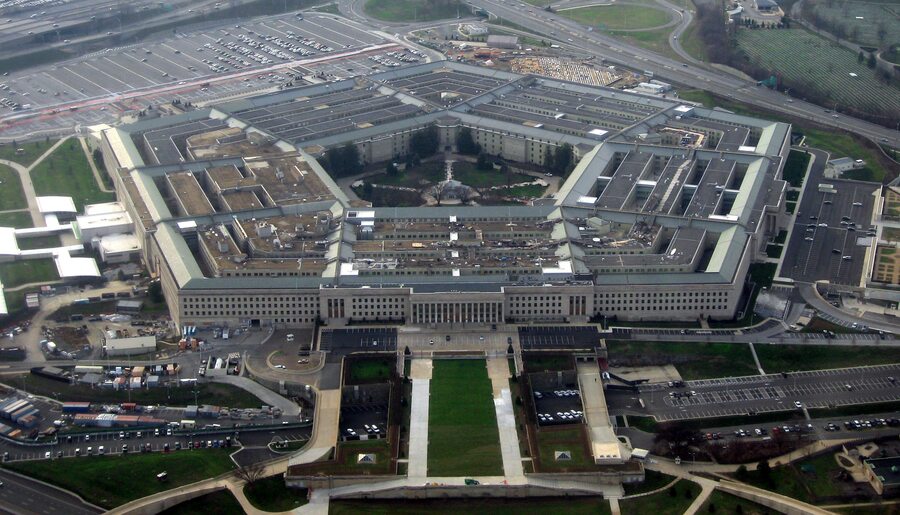
Between 2021 and 2024, the United States Department of Defense published a series of unclassified reports on Unidentified Aerial Phenomena that collectively represented the most significant official engagement with the subject in American history. The reports were required by Congressional mandate — written into defence authorisation bills by lawmakers who had grown frustrated with decades of informal dismissal and had decided to make accountability a matter of law. What those reports revealed, in the aggregate, was that the U.S. military had been encountering objects it could not identify, could not intercept, and could not explain in significant numbers, for years.
The first report, delivered in June 2021 by the Office of the Director of National Intelligence, examined 144 incidents reported by U.S. government sources between 2004 and 2021. Of those 144 cases, the report was able to offer a conventional explanation for exactly one. The remaining 143 were unresolved. The report identified five possible categories for UAP: airborne clutter, natural atmospheric phenomena, U.S. government or U.S. industry developmental programmes, foreign adversary systems, and a fifth category labelled “other.” It acknowledged that the objects had been observed to fly without discernible means of propulsion, to accelerate at rates that no known aircraft could match, and to exhibit a radio frequency signature that implied some degree of onboard power generation.
The second report, delivered in January 2023, covered 366 newly identified incidents and acknowledged that the reporting infrastructure had improved substantially — meaning the true historical volume of encounters was almost certainly far higher than the official record reflected. Among the newly reported cases were objects that had been observed moving through or near restricted airspace, objects that had interfered with military equipment, and objects that had been seen to enter and exit water. The report noted that some observations remained unexplained even after detailed analysis by analysts with access to classified sensor data.
The All-domain Anomaly Resolution Office, established in 2022 as the successor to the UAP Task Force, has become the institutional home for this ongoing accounting. Its director, Dr. Sean Kirkpatrick, testified before Congress in 2023 and stated that while most reported UAPs likely had prosaic explanations, a small number of cases exhibited characteristics that current technology could not account for. In the same hearing, former intelligence officer David Grusch testified that the DoD's public UAP reports represented a partial picture — that a separate, unacknowledged programme involving retrieved non-human craft had been operating outside the oversight structures that produced those reports.
The DoD reports, read against the backdrop of the testimony they have generated, present an unusual picture: an institution that is simultaneously being more transparent than it has ever been about UAPs, and facing credible allegations that its most significant UAP-related activities have been, and remain, hidden from the very lawmakers who mandated that transparency.