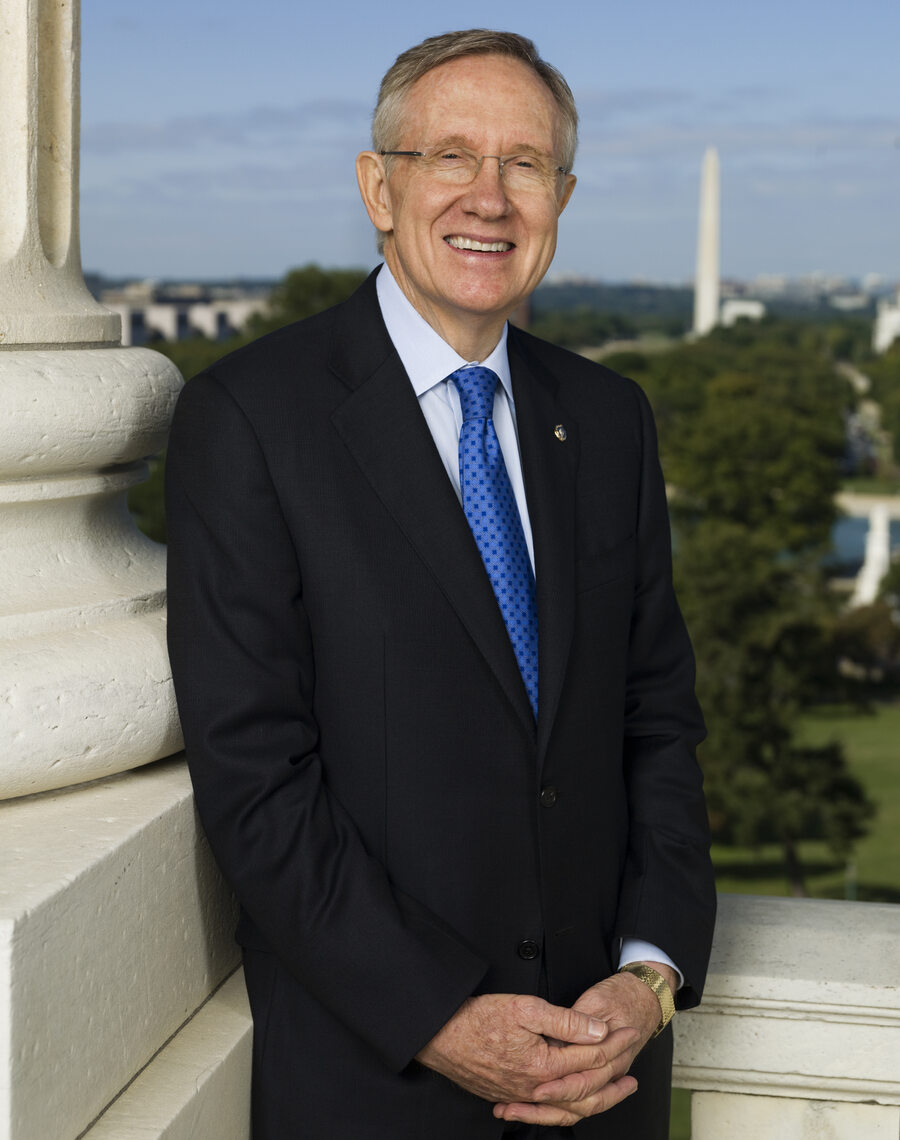
Harry Reid spent nearly three decades in the United States Senate representing Nevada, rising to become the Senate Majority Leader and one of the most powerful Democrats in the institution's modern history. His legislative legacy encompasses healthcare reform, financial regulation, and energy policy. It also encompasses something far less expected: the secret appropriation of 22 million dollars to fund the Pentagon's most significant study of Unidentified Aerial Phenomena in the post-Cold War era. Reid died in December 2021. In his final years, he spoke with unusual candour about what he had done, why he had done it, and what he believed it meant.
Reid's interest in UAPs was shaped, in part, by his close relationship with Robert Bigelow, the Las Vegas billionaire and aerospace entrepreneur who had spent decades collecting UAP data and who would eventually receive the contract to manage the programme Reid created. But Reid has been careful in interviews to distinguish between his personal curiosity and his legislative motivations. What drove him, he explained, was not Bigelow's theories but the testimony he received from military pilots — credible, experienced aviators who had encountered objects that no known aircraft explained, and who had been systematically discouraged from reporting what they had seen.
The programme Reid championed, the Advanced Aerospace Threat Identification Program, was funded through a classified budget annex — a “black money” appropriation that did not require the standard congressional authorisation process. It was co-sponsored by Senators Daniel Inouye of Hawaii and Ted Stevens of Alaska, both of whom sat on the Senate Appropriations Committee and both of whom, by the time the programme began, were dead. Reid was the sole surviving Senate sponsor when the programme's existence was revealed in December 2017, and he became the most prominent official voice explaining and defending what had been done.
In the years after the disclosure, Reid gave a series of interviews in which he made clear that he believed the government's understanding of the UAP subject was far more extensive than anything that had been publicly acknowledged. He expressed confidence that materials related to UAP encounters — including possible physical evidence — were being held by defence contractors rather than within official government channels, specifically to avoid the oversight mechanisms that would otherwise apply. He called for a full congressional investigation. He said, on multiple occasions, that he believed UAPs were “real” and that the subject deserved to be treated with the same seriousness that any other national security question would receive.
Harry Reid did not live to see the July 2023 hearing at which former intelligence officer David Grusch testified under oath to the existence of a non-human craft retrieval programme. But the institutional architecture that made that hearing possible — the UAP Task Force, the All-domain Anomaly Resolution Office, the congressional reporting requirements — traces its lineage directly to the appropriation Reid quietly inserted into the defence budget in 2007. The senator from Nevada who built his career on the politics of the desert Southwest left, as one of his more improbable legacies, the infrastructure through which the United States government began, however cautiously, to tell the truth.
