
The concept of panspermia, which posits that life, or the building blocks of life, might exist throughout the cosmos and can be transported between celestial bodies, has fascinated scientists and thinkers for centuries. This intriguing idea suggests that life on Earth, and perhaps life elsewhere in the universe, may not have originated independently, but rather through the exchange of organic material across space. In this essay, we will delve into the fascinating world of panspermia, exploring its history, different hypotheses, and its implications for the search for extraterrestrial life.
I. Historical Perspectives on Panspermia
Panspermia is not a new idea. It has its roots in ancient philosophy and mythologies. The Greek philosopher Anaxagoras (circa 500-428 BCE) was one of the earliest proponents of the concept, suggesting that life on Earth may have been seeded by cosmic particles. However, panspermia remained largely speculative until the modern era when scientific advancements allowed for a more rigorous exploration of the idea.
II. Hypotheses of Panspermia
There are several hypotheses within the overarching concept of panspermia. These can be broadly categorized into three main types:
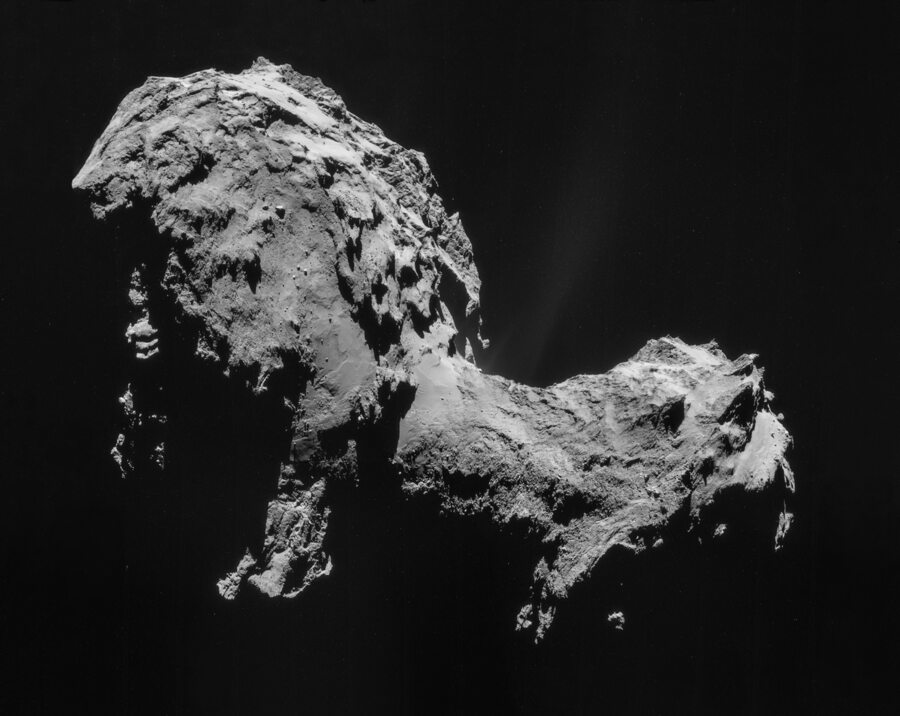
Lithopanspermia: This hypothesis proposes that life or prebiotic organic molecules can hitch a ride on rocks, meteorites, or comets and be transported between celestial bodies. When these objects impact another world, they may deliver the seeds of life, which could then flourish under the right conditions.
Radiopanspermia: Radiopanspermia suggests that life could survive the harsh conditions of space, including cosmic radiation, and travel from one planet or celestial body to another. Some extremophiles on Earth, which thrive in extreme conditions, have led to the idea that life may be more resilient and adaptable than previously thought.
Directed Panspermia: Proposed by Nobel laureate Francis Crick and chemist Leslie Orgel, this hypothesis speculates that intelligent extraterrestrial civilizations intentionally send microbial life or genetic material to other planets, including Earth, in order to seed life. The idea is that life may be a universal phenomenon with a common genetic code.
III. Evidence and Supporting Research
While panspermia remains a hypothesis, several pieces of evidence and studies lend support to the idea:
Meteorites: Some meteorites have been found to contain complex organic molecules, amino acids, and even water. These findings suggest that the building blocks of life may exist in space and could have been delivered to Earth.
Microbes in Space: Experiments conducted on the International Space Station have shown that certain microorganisms can survive in the harsh conditions of space for extended periods. This resilience hints at the possibility of life's interplanetary travel.
Astrobiology and Extremophiles: The discovery of extremophiles on Earth, thriving in extreme conditions such as deep-sea hydrothermal vents and acidic hot springs, has expanded our understanding of where life can exist, making panspermia more plausible.
IV. Implications for the Search for Extraterrestrial Life
The concept of panspermia has profound implications for astrobiology and the search for extraterrestrial life:
Expanding the Habitable Zone: Panspermia suggests that the habitable zone for life may extend beyond traditional boundaries. If life can be transported across space, then more celestial bodies, even those previously considered inhospitable, become potential candidates for life.
Origins of Life: Panspermia raises questions about the origin of life itself. If life on Earth was seeded from elsewhere, it shifts the focus of the origin of life from a terrestrial process to a cosmic one.
Exoplanet Exploration: As scientists explore exoplanets, they must consider the possibility of panspermia in their search for signs of life. The presence of organic molecules or even simple life forms on other worlds could indicate a panspermic influence.
Panspermia, though still a hypothesis, offers a captivating perspective on the origins and distribution of life in the universe. As we continue to explore the cosmos and search for extraterrestrial life, this concept challenges our understanding of the boundaries of habitability and the interconnectedness of celestial bodies. Whether life on Earth is a product of panspermia or not, the pursuit of this idea broadens our horizons and enhances our appreciation of the intricate tapestry of the cosmos.
Here are some books that delve into the concept of panspermia
"Panspermia & the Tardigrade: Lifeforms that can Live in Space" by Rhawn Gabriel Joseph - This book explores the idea of panspermia through the study of tardigrades, microscopic organisms known for their resilience to extreme conditions, including the vacuum of space.
"Seeds of Life in Space (SOLIS): Organic Matter in Comets, Interstellar Dust, and Proto-planetary Disks" by Maria Elisabetta Palumbo, et al. - A collection of scientific papers discussing the presence of organic compounds in space, which are considered as potential seeds of life that could be transported via panspermia.
"Astrobiology: The Search for Life Elsewhere in the Universe" by Graham Lau - While not solely focused on panspermia, this book provides a comprehensive overview of astrobiology and discusses how life might travel between celestial bodies.
"Life in the Universe: Expectations and Constraints" by Dirk Schulze-Makuch and Louis N. Irwin - This book discusses the various forms life might take in the universe and the possibility of its distribution through mechanisms like panspermia.
"Cosmic Biology: How Life Could Evolve on Other Worlds" by Louis Neal Irwin and Dirk Schulze-Makuch - It explores the idea of life in the universe, including the potential for its spread from one planet to another through natural means.
"The Biological Universe: The Twentieth-Century Extraterrestrial Life Debate and the Limits of Science" by Steven J. Dick - This historical account looks at the scientific debate over extraterrestrial life throughout the last century, which includes discussions on the possibility of panspermia.
"Rare Earth: Why Complex Life is Uncommon in the Universe" by Peter D. Ward and Donald Brownlee - While the central theme is about the rarity of complex life, the book touches upon the likelihood of microbial life spreading between planets.
These books range from highly technical to more accessible and cover the subject of panspermia from different angles. Some are more focused on the scientific aspects, while others also consider the broader philosophical implications of life spreading throughout the cosmos.
Watch
Panspermia Theory Documentary
Recommended Reading