
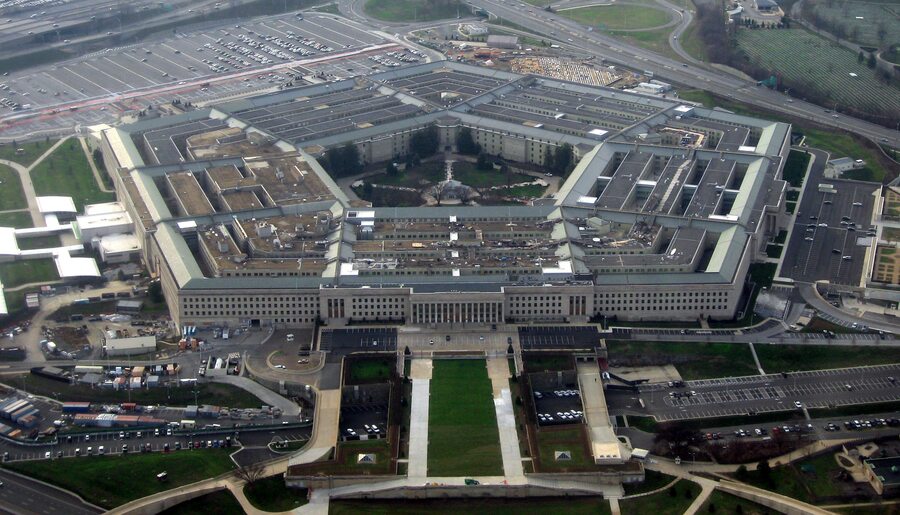
In August 2020, the United States Department of Defense announced the establishment of the Unidentified Aerial Phenomena Task Force — a bureaucratic step whose significance was easy to understate but impossible, on reflection, to dismiss. For the first time since the Air Force closed Project Blue Book in 1969, the United States military had a dedicated, formally constituted body charged with the collection and analysis of UAP-related data from across the armed services. It was a small organisation. It was, by most accounts, inadequately resourced. But it existed — and its existence represented an acknowledgment that could not be taken back.
The Task Force was the product of a convergence of forces that had been building for years. The New York Times investigation of December 2017 had exposed the existence of the Advanced Aerospace Threat Identification Program and compelled the Navy to revise its UAP reporting guidelines — changes that produced an immediate increase in the number of formally logged incidents. Congressional pressure, driven primarily by the Senate Intelligence and Armed Services Committees, had made continued institutional silence untenable. And the videos — the Tic-Tac, the Gimbal, the Go Fast — that the Pentagon had confirmed as genuine depictions of unidentified objects had made the subject impossible to dismiss as a public relations problem that could be managed by ignoring it.
The Task Force was housed within the Office of Naval Intelligence, a placement that reflected both the Navy's disproportionate role in generating the post-2017 UAP public record and, some observers noted, the desire to contain the enterprise within a structure that could be overseen and, if necessary, controlled. Its first unclassified report, delivered to Congress in June 2021, was nine pages long and covered 144 incidents. It resolved one. The language of the report — careful, hedged, committed to neither explanation nor dismissal — was read by UAP researchers as reflecting institutional caution rather than a genuine absence of available information.
The Task Force's successor, the All-domain Anomaly Resolution Office, was established in 2022 with a broader mandate and greater interagency reach. AARO was charged with coordinating UAP reporting and analysis across all military services and relevant intelligence agencies, and with providing annual unclassified reports to Congress. Its first director, Dr. Sean Kirkpatrick, testified before Congress in 2023 and offered the most detailed official picture of the UAP problem to date: hundreds of unresolved cases, a significant percentage involving objects that exhibited flight characteristics inconsistent with known technology, and a reporting environment in which stigma continued to suppress disclosure by military personnel who feared professional consequences.
The history of the UAP Task Force — from its quiet establishment in August 2020 to the extraordinary July 2023 congressional hearing it helped make inevitable — is the story of an institution attempting to manage a disclosure process whose pace and scope it cannot fully control. The question that has animated that process, and that no official report has yet answered, is whether the task force and its successors are genuinely at the frontier of what the government knows, or whether they are the visible face of an accountability structure designed to satisfy legislators while the most significant programmes remain, as they have always been, elsewhere.