
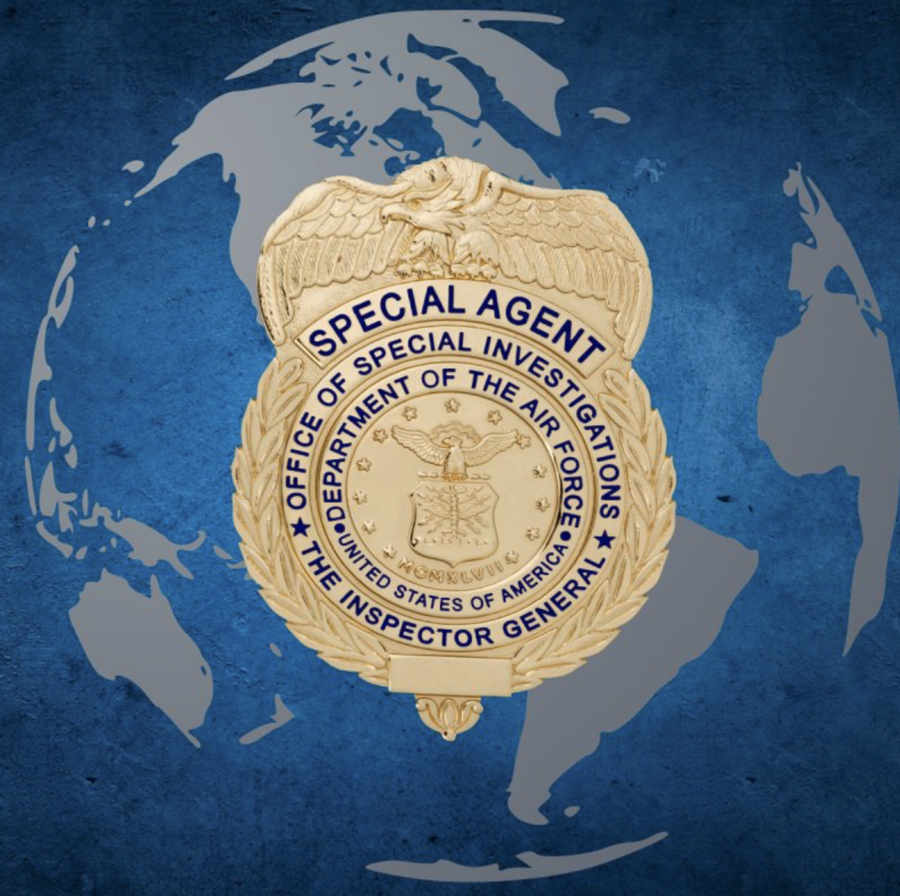
Richard Doty served as a special agent with the Air Force Office of Special Investigations, stationed primarily at Kirtland Air Force Base in New Mexico during the late 1970s and early 1980s. In that role, he became one of the most controversial figures in the history of UFO research — a man who has admitted to conducting deliberate disinformation campaigns against civilian UFO investigators, who has made extraordinary claims about classified programmes he was supposedly privy to, and who has never, in decades of interviews and public appearances, provided the documentary evidence that would allow his claims to be independently verified.
The case of Paul Bennewitz is the episode that defined Doty's public reputation. Bennewitz was an Albuquerque businessman and UFO researcher who, in the late 1970s, became convinced that he was intercepting electronic communications from alien craft near Kirtland Air Force Base. He brought his findings to AFOSI. Doty, by his own later admission, was assigned to manage Bennewitz — which meant, in practice, feeding him a steady stream of fabricated documents and false information designed to drive him toward increasingly extreme beliefs and, ultimately, to discredit him. The campaign worked. Bennewitz suffered a mental breakdown and was hospitalised. He never fully recovered.
Doty's explanation for the Bennewitz operation has shifted over the years. In some tellings, it was a straightforward counterintelligence exercise: Bennewitz had inadvertently discovered a genuine classified programme at Kirtland, and the disinformation was designed to redirect his attention. In others, Doty implies that Bennewitz was coming close to truths that certain elements of the intelligence community wanted buried. Neither version is fully verifiable. What is not disputed is that a civilian researcher was deliberately targeted by a government agent, psychologically manipulated, and destroyed — and that the operation was conducted with institutional sanction.
The additional layer of complexity in Doty's case is that he has, over the years, made a series of dramatic claims about what he was privy to during his AFOSI tenure: that the U.S. government recovered crashed extraterrestrial craft, that it had established communication with alien beings, that a secret treaty existed between the U.S. government and an extraterrestrial civilisation. These claims — delivered in interview after interview, in books, in documentary films — have never been supported by verifiable documentation. Serious researchers are divided on whether Doty is a disinformation agent still operating, a damaged man confabulating a significance he never had, or a genuine insider whose admissions are calibrated to reveal only what he can safely reveal.
What Doty's story illustrates — whatever the truth of his specific claims — is a documented reality: agents of the U.S. government have engaged in deliberate, targeted disinformation campaigns against civilian UFO researchers. The mechanisms exist. The precedent exists. In an era when Congress is demanding transparency about UAP programmes and witnesses are coming forward with claims of retaliation and suppression, the Doty case serves as a permanent reminder that the institutional capacity for manipulation, in this domain, is not hypothetical.