
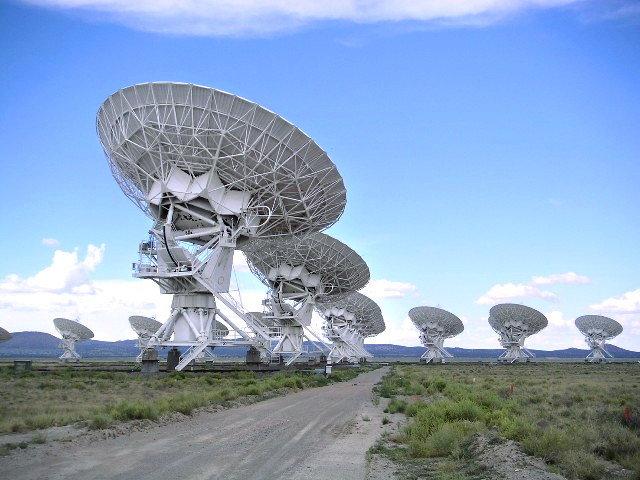
The Search for Extraterrestrial Intelligence (SETI) is a scientific endeavor dedicated to the exploration of the cosmos in pursuit of potential signals or evidence of intelligent life beyond Earth. This comprehensive exposition will delve into SETI's objectives, methodologies, history, and its enduring significance in the quest to answer one of humanity's most profound questions: Are we alone in the universe?
I. Objectives of SETI:
Detection of Extraterrestrial Signals: The primary objective of SETI is to detect and decipher signals or transmissions originating from technologically advanced extraterrestrial civilizations. Such signals may include radio waves, optical signals, or any other form of electromagnetic communication.
Confirmation of Technosignatures: In addition to direct signals, SETI also seeks to identify indirect signs or technosignatures of advanced extraterrestrial technology, such as megastructures, energy sources, or unusual cosmic phenomena that could be indicative of intelligent manipulation.
II. Methodologies and Approaches:
Radio Astronomy: The most well-known method involves using radio telescopes to scan the sky for narrowband or broadband radio signals that stand out from the naturally occurring background noise. The iconic Arecibo Observatory in Puerto Rico and the Allen Telescope Array in California have played significant roles in these efforts.
Optical Search: Optical SETI employs specialized telescopes to search for optical signals, laser pulses, or unusual light patterns that might indicate intelligent communication.
Targeted and Sky Survey Searches: SETI researchers perform both targeted searches, focusing on specific stars and planetary systems likely to harbor intelligent life, and wide-field sky surveys, scanning large portions of the sky for potential signals.
Signal Processing and Data Analysis: SETI relies on advanced signal processing and data analysis techniques to distinguish potential signals from noise and to verify the credibility of any detected candidate signals.
III. History and Milestones:
Project Ozma (1960): The first modern SETI experiment was conducted by astronomer Frank Drake at the Green Bank Observatory. Named Project Ozma, it observed the stars Tau Ceti and Epsilon Eridani for potential radio signals.
The Wow! Signal (1977): A strong, unexplained narrowband radio signal was detected at Ohio State University's Big Ear radio telescope, known as the Wow! Signal. It remains one of the most tantalizing, unexplained events in SETI history.
SETI Institute (1984): The nonprofit SETI Institute was founded, becoming a hub for scientific research and public outreach related to SETI efforts. The Institute conducts research, educational programs, and collaborates with observatories worldwide.
IV. Significance and Future Prospects:
Understanding Cosmic Loneliness: SETI addresses one of the most profound questions in science and philosophy: Are we alone in the universe? The search not only holds the potential for contact but also contributes to a deeper understanding of our place in the cosmos.
Technological Advancements: The development of advanced signal processing, data analysis, and radio telescope technology for SETI research has practical applications in other fields such as telecommunications, radar, and data science.
Public Engagement: SETI captures the public's imagination, fostering interest in science, space exploration, and the possibility of extraterrestrial life. It serves as a bridge between scientific research and the broader community.
Continued Expansion: Future prospects for SETI involve the advancement of technologies, increased international collaboration, and the expansion of the search into new areas, such as the study of exoplanets and their atmospheres for potential biosignatures.
The Search for Extraterrestrial Intelligence (SETI) stands as a testament to humanity's curiosity and determination to explore the cosmos. Its objectives, methodologies, historical milestones, and enduring significance underscore its importance in the ongoing quest to answer the age-old question: Are we truly alone in the vast universe? As technology advances and our understanding of the cosmos deepens, SETI remains a beacon of hope for the possibility of making contact with intelligent beings beyond our home planet.
Watch
SETI Institute documentary
Recommended Reading
The Eerie Silence: Renewing Our Search for Alien Intelligence — Paul Davies (2010)
The most rigorous contemporary examination of the Fermi Paradox and SETI’s failure to find a signal — Davies proposes that we may be searching in the wrong spectrum, for the wrong kind of intelligence, using the wrong assumptions.
View on Amazon →Cosmos — Carl Sagan (1980)
The foundational popular science text on humanity’s search for extraterrestrial intelligence — Sagan’s treatment of the Drake Equation, galactic civilisations, and the probability of contact remains essential reading fifty years on.
View on Amazon →Is Anyone Out There? The Scientific Search for Extraterrestrial Intelligence — Frank Drake & Dava Sobel (1992)
The founder of SETI’s own account of the search — Drake describes the development of the equation that bears his name, the first SETI observation, and what he learned from decades of listening to the cosmos.
View on Amazon →