
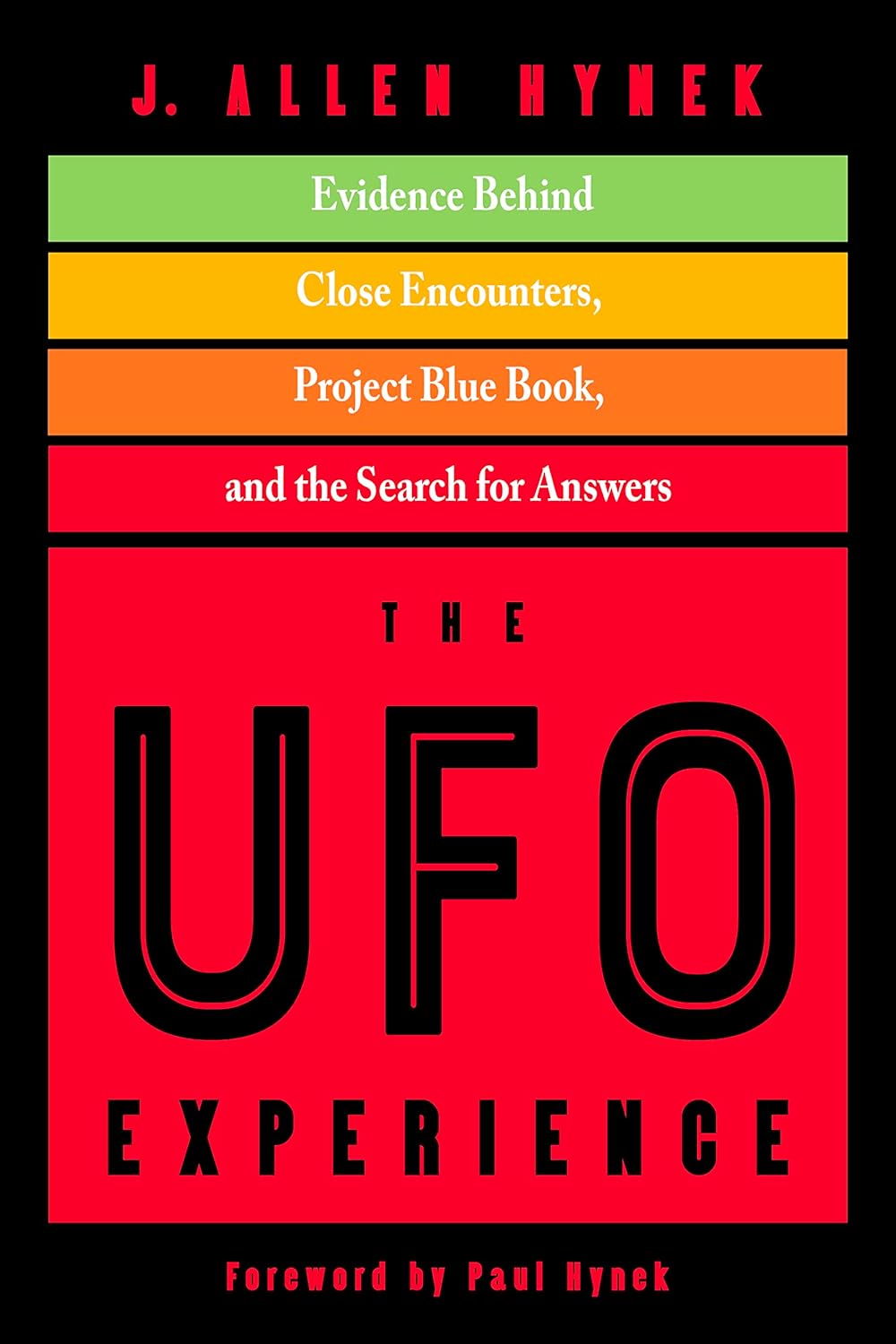
Published in 1972, The UFO Experience: A Scientific Inquiry was the book that gave UFO research its first rigorous scientific framework — and gave the world the “Close Encounters” classification system that Steven Spielberg would later borrow for his landmark 1977 film. It was written by a man who, at the start of his career, had been paid by the United States Air Force to make UFOs go away.
J. Allen Hynek spent nearly two decades as the Air Force’s scientific consultant on Project Sign, Project Grudge, and Project Blue Book. He was, in the beginning, a skeptic — a trained astronomer who expected to find simple explanations for what seemed to be naive sightings by untrained observers. What he found instead, over twenty years and thousands of cases, was a residual category of reports that he could not dismiss: accounts by pilots, police officers, military personnel, and scientists that defied conventional explanation no matter how rigorously he applied his astronomical expertise.
The book is methodical, careful, and deeply influential. Hynek distinguishes between nocturnal lights, daylight discs, and radar-visual cases, and then introduces the Close Encounter categories: Close Encounters of the First Kind (CE1: UFO sighted at close range), Second Kind (CE2: physical evidence left), and Third Kind (CE3: beings observed). The categories were not invented for drama — they were tools for organizing and communicating data. They remain in use today.
What makes the book remarkable, beyond its scientific value, is the portrait it contains of a man revising his worldview in real time — honest about what he could not explain, honest about what that uncertainty meant, and courageous enough to say so publicly while still employed by an institution that wanted the opposite conclusion.