
■ The UFO Times Assessment
The footage documents lights whose source has not yet been identified. It does not presently demonstrate extraordinary performance, non-human technology or an extraterrestrial origin. Drone systems, illuminated kites, conventional aircraft and manipulated or incorrectly contextualized footage remain possibilities. None has yet been established.
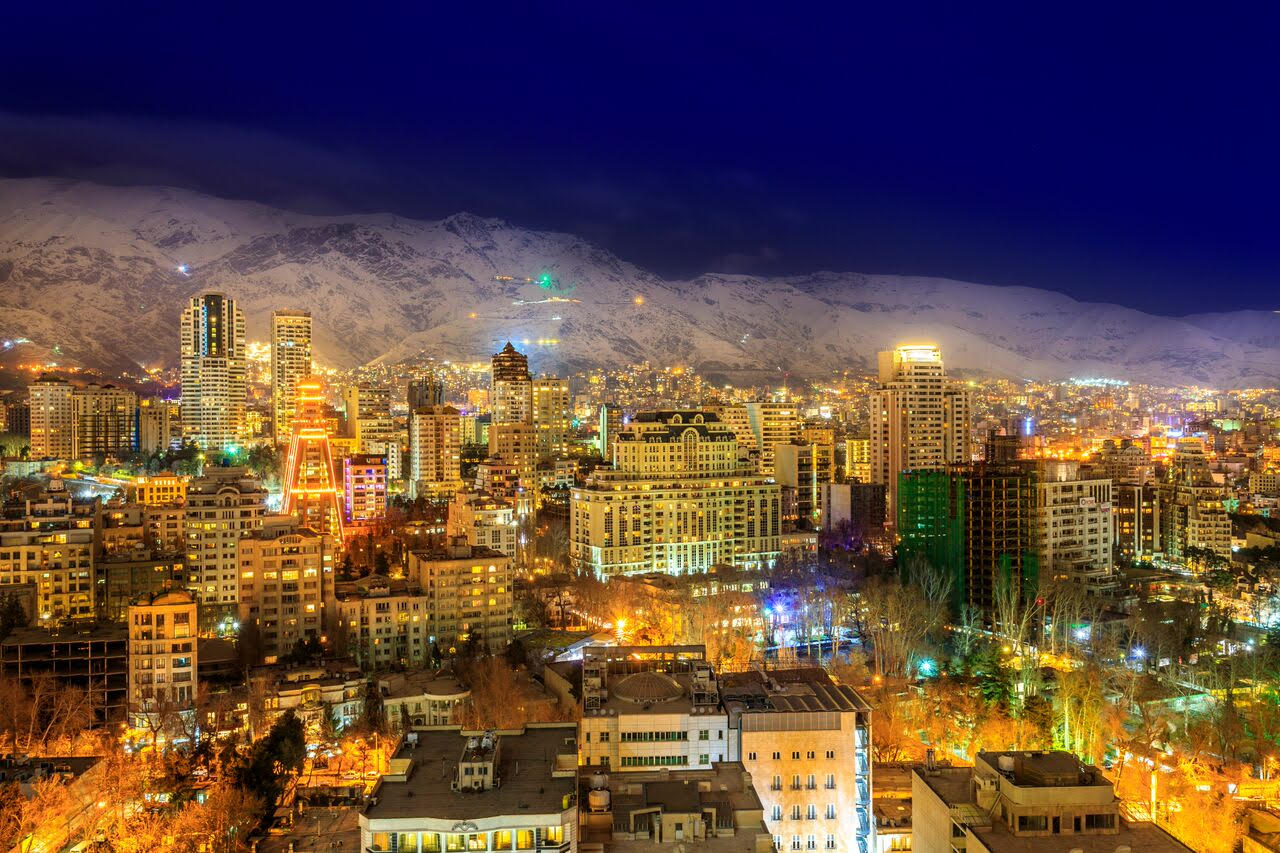
Videos showing multicolored lights in the night sky over Tehran began circulating on social media on September 20–21, 2026. An early traceable upload credited the footage to Ali Sedaghati and placed the filming location near the Azadegan Expressway in the Iranian capital. Reuters Connect, citing the agency Spectee, listed a recording time of approximately 7:30 p.m. on September 20 — but Reuters expressly stated that it did not verify or endorse the supplied material.
No publicly available evidence presently establishes the object’s size, altitude, distance, speed or identity. In that literal sense, “UFO” or “UAP” is accurate: the lights remain unidentified. That accuracy does not imply an extraordinary origin. This article examines what the footage establishes, what it cannot tell us and what additional evidence would be required before any stronger conclusion is warranted.
1. What Was Reported Over Tehran?
The sighting was reported as occurring on Sunday, September 20, 2026, at approximately 7:30 p.m. local time, near the Azadegan Expressway in Tehran. Those details come from supplied footage descriptions and social-media reporting. The precise filming position has not been independently geolocated, the camera bearing has not been established, and the claim that the footage shows the Azadegan Expressway area rests on the attribution accompanying the circulating clips rather than on any independent verification.
Iranian news outlets including ISNA, Asr Iran citing Fars, and Hamshahri reported on the footage within 24 hours of its first circulation. Several reports noted that the exact location and identity of the lights were not independently confirmed and acknowledged the evidentiary limits of social-media video.
2. What the Videos Show
The circulating footage shows multicolored points or clusters of light against a dark sky. In portions of the footage the lights appear to move slowly. One sequence appears to show lights arranged in a curved or semicircular formation. A separate sequence shows a different configuration, including what appears to be a blinking colored light. Iranian reporting consequently cautioned that the compilation may show at least two different objects filmed on different occasions, angles or distances and assembled into a single social-media post.
The lights appear small relative to the frame and are not accompanied by any confirmed foreground reference that would allow size or distance estimation. No confirmed original audio has been released that would establish whether the object was silent or audible. Describing the lights as “LED-like” is a reasonable visual characterization; calling them confirmed LEDs or attributing them to a specific technology is not supported by the footage alone.
3. What the Videos Cannot Tell Us
Night-sky video recorded on a consumer device provides very limited physical information without additional reference data. The following are absent from currently available material:
- Reliable foreground reference points that would allow distance or altitude estimation
- Original full-resolution files and embedded metadata (capture time, GPS coordinates, device model)
- Confirmed camera position and pointing direction
- Multiple independently authenticated viewing angles from different locations
- Any independently verified measure of the object’s distance, altitude, dimensions or speed
- Verified radar data from civil or military sources
- Named first-person witnesses available for interview and cross-examination
- A documented chain of custody for every circulating clip
Apparent speed, shape and angular size in a night video cannot be reliably translated into physical measurements without knowing the distance between the camera and the object. A slow-moving light near the camera and a fast-moving light at high altitude can appear identical on screen. Without that distance information, no performance claim is warranted.
4. What Iranian Aviation Reporting Actually Said
Asr Iran, citing Fars, reported that follow-up inquiries with Iran’s Civil Aviation Organization had not identified a specific flight on radar that could be associated with the sighting. The organization reportedly offered no determination of the object’s nature.
⚠ Attribution Note
This is a media report about an inquiry, not a direct technical report released by the aviation organization. “No identifiable associated flight found on radar” must not be rewritten as “the craft was invisible to radar.” Small drones, kites and low-altitude objects may not appear as identified civil flights regardless of their nature. No military radar record has been made public.
5. Plausible Explanations — None Yet Proven
The following hypotheses are consistent with the available footage. None has been established; each requires specific evidence that has not yet been produced.
-
Hypothesis 1 — Consumer or commercial drone with decorative lights
Supports it: Consumer drones fitted with colored LEDs are widely available and produce exactly the kind of multicolored slow-moving lights visible in the footage. Missing: No drone-operation permit, flight log or ground-level sighting of a drone has been reported.
-
Hypothesis 2 — Multiple drones operating in formation
Supports it: The apparent change in light configuration between sequences is consistent with separate drones at different positions or moments. Missing: No coordinated flight record or witness account of multiple distinct units.
-
Hypothesis 3 — Illuminated kite or tethered aerial object
Supports it: Tethered illuminated objects can appear to hover or move slowly, and would not produce a civil aviation radar return. Missing: No ground-level confirmation of a tether or of wind conditions consistent with a kite.
-
Hypothesis 4 — Conventional aircraft at uncertain angle or distance
Supports it: Aircraft navigation lights and strobes can produce unexpected visual effects when viewed at oblique angles against a dark sky, particularly through atmospheric distortion. Missing: The Civil Aviation Organization inquiry did not identify an associated flight, though the scope and method of that inquiry have not been detailed.
-
Hypothesis 5 — Separate recordings combined in a social-media compilation
Supports it: The differing light configurations across sequences is consistent with different objects, different times or different locations being edited together. Iranian reporting raised this possibility explicitly. Missing: Original unedited files with intact metadata that would confirm or rule out editing.
-
Hypothesis 6 — Digitally altered, AI-generated or incorrectly contextualized footage
Supports it: No original file has been released for forensic examination. Incorrectly labeled archive footage is a documented feature of viral UAP claims. Missing: No independent forensic examination of any original file has been published.
Nothing presently visible in the recordings requires an extraterrestrial explanation. That does not identify the lights; it establishes only that extraordinary conclusions are unsupported by the evidence currently available.
6. Why the 1976 Tehran Case Returned to the Discussion
On September 19, 1976 — one day before the approximate anniversary of the 2026 sighting — reports of a bright aerial object reached Iranian authorities. Iranian F-4 aircraft were dispatched. A U.S. defense attaché report subsequently documented pilot observations, reported equipment interference, and radar-related information. The United States government later declassified the relevant records, which are available directly from the NSA:
The 1976 records do not establish that the object was extraterrestrial or that the documents prove non-human technology. They document that an unidentified object was observed and that the episode was significant enough to generate a formal defense report and subsequent declassification.
The following table compares the evidentiary situation of the two incidents:
| Evidence | Tehran 1976 | Tehran 2026 |
|---|---|---|
| Witness reporting | Multiple reports documented | Social-media videos; witnesses not fully documented |
| Military response | F-4 aircraft dispatched | No confirmed military response |
| Radar information | Radar-related information appears in official reporting | No radar record released publicly |
| Instrument effects | Reported by aircrews | None reported |
| Primary records | Declassified government documents | Original files and metadata unavailable |
| Identification | Unresolved | Unresolved |
The two incidents share a city, a near-identical calendar date and the characteristic of unidentified lights. No evidentiary connection between them has been established. Anniversary proximity is not evidence of a relationship.
7. What Would Move the Case Forward
The following evidence would allow investigators to move toward a more specific conclusion. None has been made available as of publication:
- Original uncompressed video files with intact embedded metadata
- Exact filming coordinates and confirmed camera direction
- Named first-person witness interviews and signed statements
- Additional synchronized viewpoints from independently confirmed locations
- Civil or military radar records covering the reported time window
- Drone-operation records or permits for the Azadegan Expressway area on the evening of September 20
- Astronomical, aviation and weather-condition checks for that time and place
- A direct statement from Iranian civil aviation or defense authorities
- Independent digital forensic examination of original files
8. Final Assessment
The September 20 recordings deserve documentation, but not exaggeration. They show unexplained lights over a location reported as Tehran. They do not yet show extraordinary flight characteristics, and they do not establish an extraterrestrial origin. Until original files, witness details and technical records become available, the most accurate classification is unresolved.
Sources and Further Reading
-
Reuters Connect / Spectee — footage description and verification disclaimer
reutersconnect.com -
ISNA — evidence summary and historical comparison
isna.ir/news/1405063020450 -
Asr Iran (citing Fars) — Civil Aviation Organization inquiry
asriran.com/fa/news/1193244 -
Hamshahri — report acknowledging location and identity were not independently confirmed
hamshahrionline.ir/news/1070591 -
NDTV — summary of circulating footage and evidentiary limits
ndtv.com -
NSA — declassified 1976 Tehran incident report (PDF)
nsa.gov — us_gov_iran_case.pdf -
Wikimedia Commons — hero image source and license
commons.wikimedia.org — View of Tehran at Night
■ The UFO Times
Follow every development
We will update this story as new primary source material, witness statements or official records become available. Our weekly briefing, direct to your inbox.