
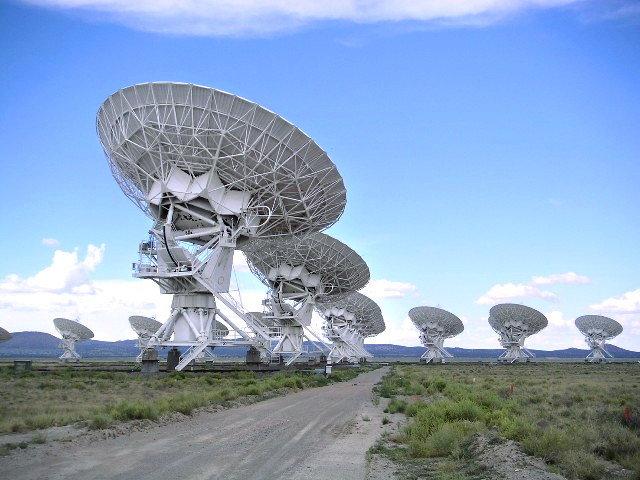
These instruments were built to search the universe — not to confirm what we hoped to find in it. They gather what is actually there, without deciding in advance what the answer should be. That is what science requires. It is also what honest journalism requires. The UFO Times holds itself to both.
Something is happening in the skies above us. Governments acknowledge it. Military pilots have filed official reports about it. The United States Senate has passed legislation around it. Harvard astronomers are building instruments to study it. The conversation has moved — decisively, perhaps irreversibly — from the fringe to the floor of Congress.
And the commentary surrounding it is, too often, a disaster.
Every radar anomaly becomes proof of alien visitation. Every blurry photograph becomes a fleet. Every anonymous post becomes a revelation from inside the deep state. Whistleblowers are treated as either prophets sent to rescue us from official lies or frauds working to deceive us — and the choice between those two readings is made instantly, before the evidence is examined, based on whether the claim confirms what the reader already believes.
Skeptics are either voices of scientific reason or agents of institutional suppression, depending on whose side you're on. Believers are either courageous truth-seekers or credulous victims of disinformation. The subject that may be the most important one in human history — the question of whether we are alone, and whether the answer has already been discovered — is being drowned in the noise of a conversation that stopped listening to evidence a long time ago.
The UFO Times was founded to be something different.
This manifesto explains what that means in practice — not as a corporate mission statement, but as a working document. A set of commitments we hold ourselves to, published here so that our readers can hold us to them too.
"The subject that may be the most important one in human history is being drowned in the noise of a conversation that stopped listening to evidence a long time ago."
Who We Are — and Who We Are Not
The UFO Times is not here to prove that extraterrestrials are visiting Earth. We do not have a predetermined conclusion waiting for evidence to catch up to it. We are not advocates for disclosure, and we are not defenders of official denial. Both of those positions require the same intellectual failure: deciding what the answer is before the investigation is complete.
We are also not here to dismiss. The reflexive skepticism that treats every witness as a fool, every unexplained incident as a misidentification, and every government admission as a limited hangout designed to deceive — that is not skepticism. That is its own kind of faith, equally resistant to evidence, equally useless as a tool of honest inquiry.
We are journalists. That means we follow evidence. It means we verify what can be verified, acknowledge what cannot, consult primary documents rather than secondary summaries of them, name our sources when we can and explain why we cannot when we can't. It means we cover the story that exists rather than the story we wish existed.
The UFO Times has been doing this since 2010. We have watched the landscape transform around us — from fringe curiosity to legitimate national security concern, from professional embarrassment to Senate floor debate. We are glad it happened. But transformation brings its own risks. When a subject gains mainstream attention quickly, every opportunist arrives with it, and the standards that should be foundational get abandoned in the rush for engagement.
We have not abandoned them. This document is our proof.
The Three Hardest Words in This Field
In a subject where certainty is rewarded — where the person who commits most confidently to the most dramatic conclusion attracts the largest audience — intellectual honesty is a professional risk. It means writing "this claim has not been verified" and watching readers choose the outlet that didn't bother to check. It means saying the extraordinary thing you want to be true is not yet proven, and accepting that some readers will find that disappointing.
We've watched this happen. We've chosen differently.
The three hardest words in this field are: we don't know.
They are also the most important. Because you cannot find the truth if you have already decided what it is. Because an unresolved case is not proof of extraterrestrial technology — and the absence of an official explanation is not evidence that nothing unusual occurred. Because the gap between "unexplained" and "alien" is enormous, and pretending otherwise is not courage. It is laziness dressed up as conviction.
We say "we don't know" when we don't know. We say it clearly, without embarrassment, as a statement of professional integrity rather than defeat. We believe our readers are intelligent enough to understand that honest uncertainty is more valuable than confident fiction.
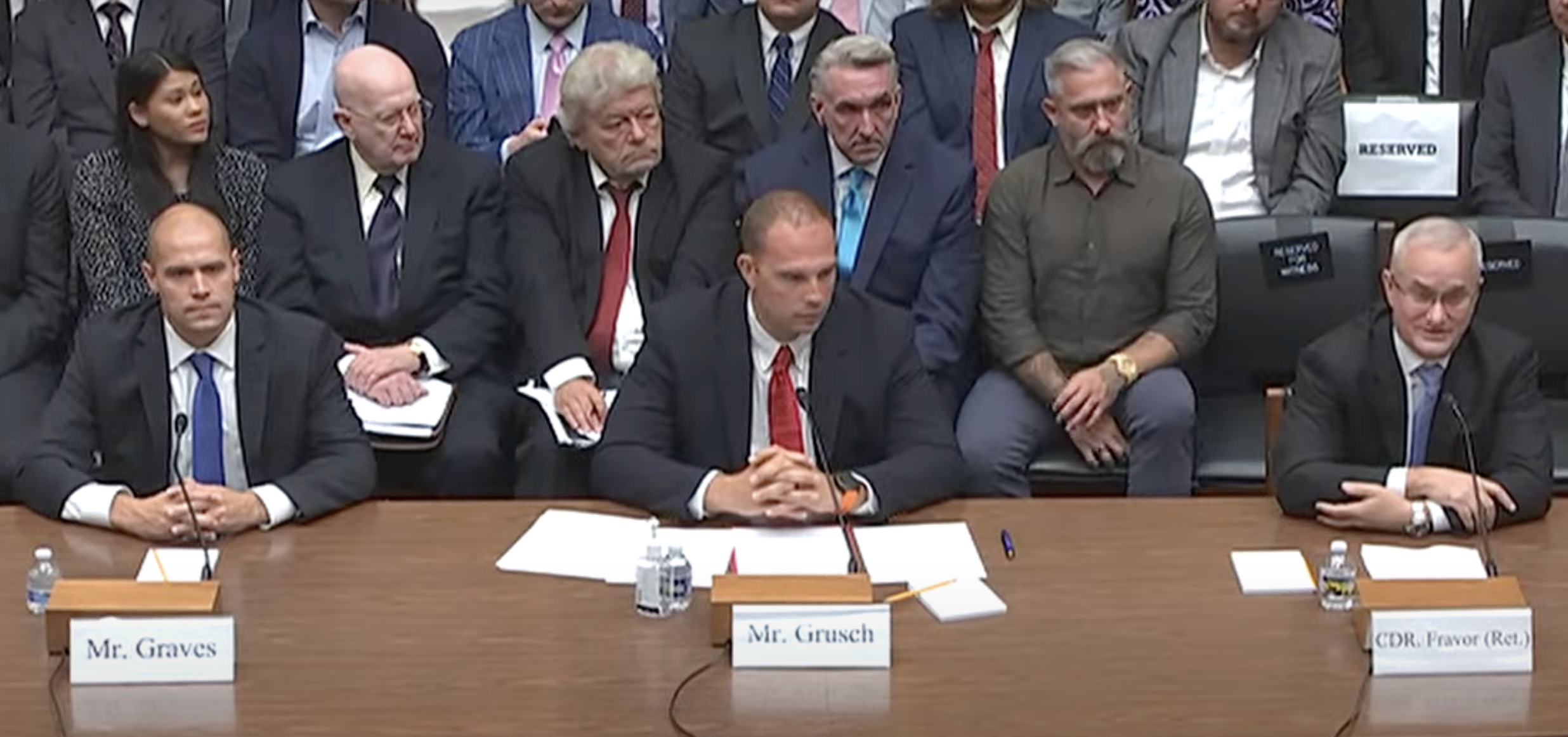
The July 2023 House Oversight Committee hearing on UAP. Credentialed insiders testified under oath. Legislation followed. The conversation changed permanently. But the shift toward mainstream attention makes rigorous standards more important, not less — because the audience that now pays attention deserves accuracy, not sensationalism dressed up as investigation.
The UFO Times Evidence Scale
To make our editorial standards visible — not just a promise but a daily practice — The UFO Times evaluates every significant claim using a four-tier framework we call the Evidence Scale. We apply it consistently across our investigations, and we mark major claims with the appropriate designation so readers can see exactly how we're thinking.
This is not a gimmick. It is a commitment. Evidence does not sort itself into neat categories without effort, and making that effort visible is part of what distinguishes investigation from opinion. Here is the scale:
We apply this framework in every investigation we publish. Where a claim sits on this scale is not our final judgment of its truth — it is our honest assessment of the evidence available at the time of publication. That assessment can change. When it does, we update our reporting.
Why This Matters More Now Than It Did Before
The conversation around UAP has shifted in ways that make these standards more urgent, not less.
In 2023, the central public debate was: are UFOs real? That question has been partially answered. Something is real. Something is unidentified and is being reported by credible witnesses through official channels. Governments have acknowledged that they have encountered phenomena they cannot explain. The old dismissal — "there's nothing there" — is no longer tenable as a serious position.
In 2026, the debate has moved to a harder, more consequential question: who controls the information?
That is a political question. An institutional question. A question about power, accountability, and the gap between what governments know and what citizens are told. It requires journalism — careful, documented, adversarial-when-necessary journalism — not advocacy for any particular answer. The institutions surrounding this subject — government agencies, intelligence services, advocacy organizations, think tanks, media outlets — all have interests. We have one: accuracy.
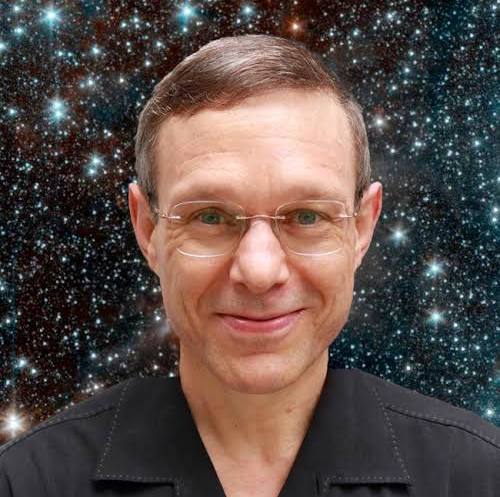
Harvard astronomer Avi Loeb, founder of the Galileo Project — the most methodologically rigorous scientific effort to study UAP ever undertaken. Loeb's position: the subject deserves the same tools and intellectual seriousness as any other unsolved scientific problem. That is exactly the standard The UFO Times applies to journalism.
Our Promise to Every Reader
Every investigation published by The UFO Times will answer three questions explicitly:
1. What do we know?
The facts that are established — documented, verified, sourced. This is the ground beneath everything else.
2. What do we think we know?
Claims that are credible but unverified, hypotheses that fit the evidence, conclusions that seem likely but have not been confirmed. We mark these clearly and explain our reasoning.
3. What do we not yet know?
The honest map of uncertainty. What questions remain open. What evidence would change our assessment. What we are still investigating.
Those three questions are not a formula. They are a discipline. Applying them to every story is harder than writing what the headline demands, harder than giving readers the confirmation they came looking for, harder than being the loudest voice in the room.
We think it is worth it.
A Final Word on Mystery
We want to be clear about something that could be misread.
None of this means we think the answer is boring. None of it means we are skeptical in the lazy, incurious sense — the kind of skepticism that mistakes certainty for rigor and dismissal for intelligence. We cover this subject because we find it genuinely extraordinary. Because the questions it raises — about the nature of consciousness, about the age and scale of the universe, about what human civilization actually knows and does not know about the world it inhabits — are among the most profound questions that have ever been asked.
The universe is 13.8 billion years old. It contains somewhere between 200 billion and two trillion galaxies, each containing hundreds of billions of stars, many of them orbited by planets. The idea that nothing interesting has ever happened in it besides us is not a conservative scientific position. It is an extraordinary claim that requires extraordinary evidence of its own.
So is the claim that we are being visited right now, that recovered craft exist in classified hangars, that the answer has already been found and is being hidden from the public.
Both claims require evidence. Evidence requires standards. Standards require the discipline to sit with genuine uncertainty rather than resolving it prematurely in whichever direction feels more satisfying.
Mystery does not disappear when examined carefully. It deepens. The careful examination is what makes it worth the trouble.
That is what The UFO Times is here to do.
■ The UFO Times Editorial Board
Facts First.
Mystery Second.
Speculation Last.
theufotimes.com — Est. 2010
■ The UFO Times Editorial Principles
— The UFO Times Editorial Board · theufotimes.com · Est. 2010