
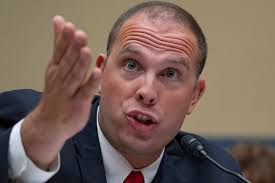
David Grusch, a former intelligence officer and National Reconnaissance Office representative to the UAP Task Force, testified under oath before Congress in July 2023 that the United States government is in possession of recovered non-human craft and biological materials. His testimony was the most explosive public claim in the history of the UAP disclosure movement.
On July 26, 2023, a former Air Force intelligence officer named David Grusch sat before the House Oversight Committee's National Security subcommittee and, under penalty of perjury, said something that no official of the United States government had ever said in public before.
He said that the United States government, through a network of highly classified programs that he had personally investigated, had recovered craft of non-human origin. That it had recovered biological materials of non-human origin. That people who had tried to come forward with this information had been threatened, intimidated, and in some cases harmed.
Grusch was not a fringe researcher. He was not a conspiracy theorist with a website. He was an Air Force veteran with 14 years of service, a combat veteran of Afghanistan, a recipient of the Intelligence Commendation Medal, and the former representative of the National Reconnaissance Office to the UAP Task Force — one of the most sensitive intelligence bodies in the American government. He had filed a formal whistleblower complaint with the Intelligence Community Inspector General, which had been assessed as "credible and urgent."
His testimony was broadcast live. The room was standing-room-only. And it marked the moment the word "whistleblower" became the most important word in the disclosure debate.
What It Means to Blow the Whistle on a Black Program
To understand why whistleblowers in the UAP space matter — and why there aren't more of them — you need to understand what it costs to be one.
The United States operates an elaborate system of classified access. Security clearances are not simply permits; they are the foundations of careers. Losing a clearance doesn't just mean losing access to classified information — it typically means losing your job, your career field, and your professional network overnight. For intelligence and defense contractors, a revoked clearance is professional death.
More consequentially, the Espionage Act and other statutes create serious criminal liability for unauthorized disclosure of classified information — even in cases where the information concerns illegal government activity. The conventional whistleblower protections that apply to civilian federal employees do not extend fully to those in the intelligence community. A CIA officer who believes their agency is engaged in illegal activity has far fewer legal protections than an EPA employee in the same position.
The people who have come forward on UAP did so knowing all of this. Several of them have described active retaliation — security clearance challenges, career setbacks, informal pressure to retract or stay silent. Grusch himself has stated that he was the subject of what he described as "administrative action" after he began asking questions about legacy recovery programs.
"I was informed, in the course of my official duties, of a multi-decade UAP crash retrieval and reverse-engineering program to which I was denied access." — David Grusch, sworn testimony to the House Oversight Committee, July 26, 2023
This is the context in which every UAP whistleblower disclosure should be read. These are not people who had nothing to lose. They had everything to lose — and many of them lost significant portions of it.
Luis Elizondo: The Man Who Walked Out of the Pentagon
Before David Grusch, there was Luis Elizondo.
Elizondo spent two decades in counterintelligence and worked in some of the most sensitive programs in the American national security apparatus before becoming, in approximately 2010, the director of the Advanced Aerospace Threat Identification Program — AATIP — a classified Pentagon program investigating UAP encounters reported by military personnel.
From inside AATIP, Elizondo saw the raw data: videos, pilot reports, radar tracks, and sensor readings from encounters that defied conventional explanation. He saw objects performing maneuvers that no known aircraft could perform — no wings, no exhaust plumes, no apparent propulsion, violating the known laws of physics in their acceleration and direction changes. He encountered institutional resistance at every turn: briefings declined, memos ignored, access requests denied.
In October 2017, Elizondo resigned from the Department of Defense. His resignation letter — addressed to Secretary of Defense James Mattis — cited the Department's failure to take the UAP threat seriously despite "overwhelming evidence" and "bureaucratic challenges and internal headwinds." He did not go quietly. Within weeks of his resignation, the New York Times published its landmark investigation into AATIP, featuring Elizondo's account and the now-iconic videos of the Tic Tac and other encounters.
What followed was a years-long campaign of institutional pushback against Elizondo personally. The Pentagon, in successive statements, questioned whether he had actually run AATIP, whether the program existed in the form he described, and whether the videos he had helped release were actually associated with AATIP's work. Elizondo has consistently maintained his account. A 2022 declassified report and subsequent congressional testimony from other officials have largely corroborated the existence of AATIP and its mandate.
The attacks on Elizondo's credibility are worth examining not because they definitively prove or disprove his account, but because they illustrate a pattern that repeats throughout the whistleblower cases: the government's first response to UAP disclosure has consistently been to question the messenger rather than address the message.
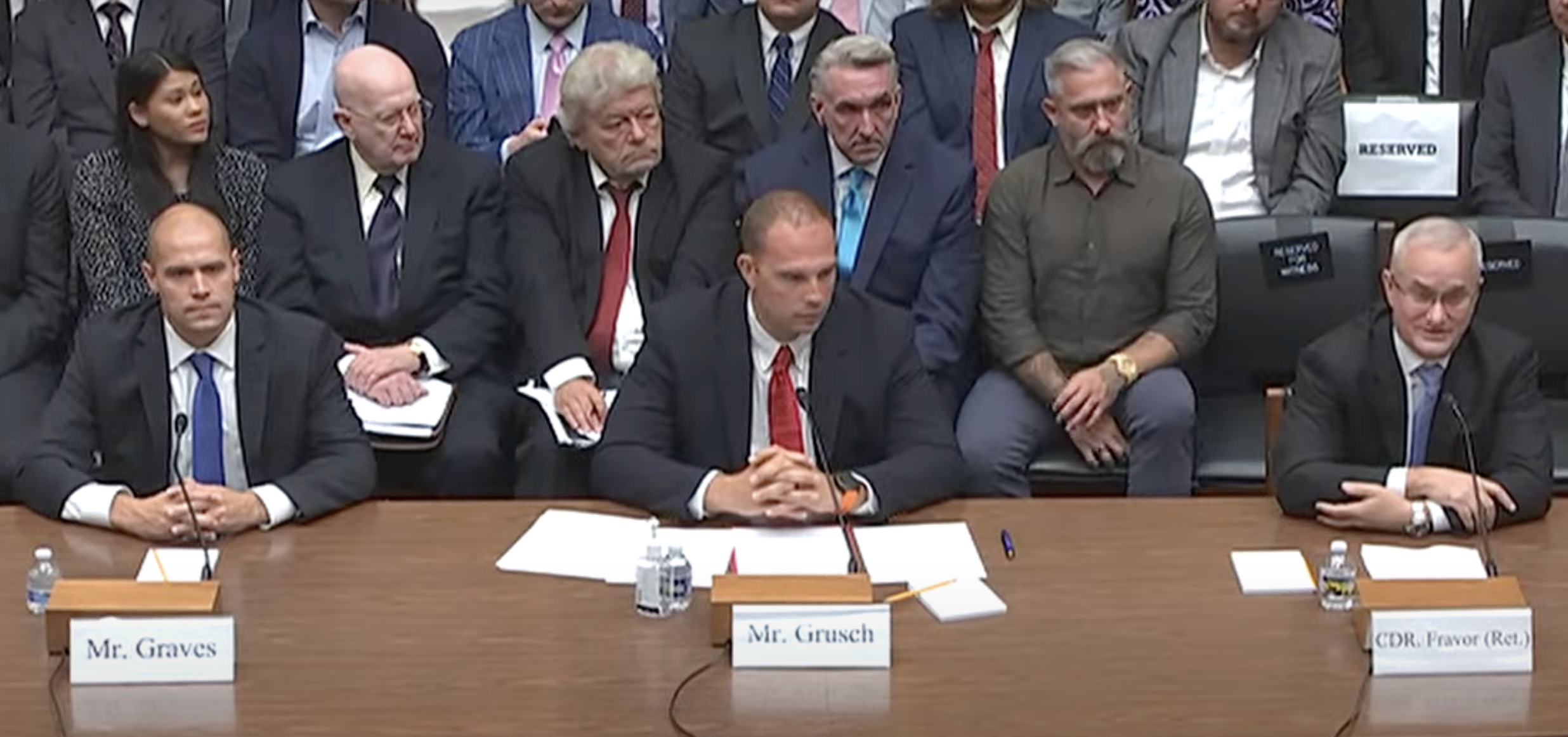
The July 26, 2023 House Oversight Committee hearing on UAP. Left to right: Ryan Graves (founder of Americans for Safe Aerospace, former Navy F/A-18 pilot), David Grusch (former NRO representative to the UAP Task Force), and David Fravor (retired Navy Commander, Nimitz Tic Tac encounter). All three testified under oath. Grusch's testimony that the government holds recovered non-human craft dominated global headlines for days.
Ryan Graves: The Pilot Who Couldn't Stay Quiet
Ryan Graves is a different kind of whistleblower. He isn't claiming knowledge of classified recovery programs or black budget operations. He is a former Navy F/A-18 Super Hornet pilot who, beginning around 2014 and continuing through 2015, regularly encountered unidentified aerial objects in restricted military airspace off the East Coast of the United States — and was told, in effect, to keep it to himself.
The objects Graves and his colleagues encountered were not fleeting, ambiguous sightings. They were daily occurrences. They were tracked on multiple sensor systems simultaneously — radar, infrared, the naked eye. They appeared to station themselves in military training corridors, holding fixed positions in high-wind conditions that would be impossible for any known aircraft. They displayed no visible means of propulsion and no flight control surfaces. On at least one occasion, an object nearly collided with an F/A-18.
Graves reported the encounters through official channels. The response was bureaucratic silence. No investigation was launched. No explanation was offered. The objects kept appearing.
In 2019, after Politico reported on the encounters based on other sources, Graves went on the record publicly. He testified before the Senate Armed Services Committee in 2023. He founded an organization called Americans for Safe Aerospace — ASA — to provide a safe reporting channel for military pilots and aviation professionals who have had similar encounters but fear career consequences from official disclosure.
Graves has been explicit about what he believes is happening: military pilots are encountering unknown objects in restricted airspace on a routine basis, are not reporting them out of fear of reputational damage, and the result is a massive blind spot in the U.S. understanding of what is operating in its own airspace. His testimony has been corroborated by multiple other former military aviators who have spoken on record through ASA.
David Fravor: "I Know What I Saw"
Retired Navy Commander David Fravor was the commanding officer of the Black Aces — Strike Fighter Squadron 41 — aboard the USS Nimitz in November 2004, when his unit was directed to investigate an anomalous contact that the Princeton's radar had been tracking for two weeks.
What Fravor and his wingman encountered has been described in exhaustive detail in his congressional testimony, multiple media interviews, and documented sensor records: a white, oblong object, approximately 40 feet long, with no wings, no exhaust plume, and no control surfaces, hovering above a disturbance on the ocean surface. When Fravor began a spiraling descent toward the object, it accelerated toward him, stopped, then in an instant disappeared — reappearing moments later on the radar at a point more than 60 miles away, a transit that, by any calculation, represented a velocity far beyond any known aircraft.
The encounter lasted approximately five minutes. The sensor footage — the FLIR1 video, one of three declassified UAP videos released by the Pentagon in 2020 — captured part of it. Fravor has never changed a single element of his account across nearly two decades of retelling.
"I'm not a UFO guy," Fravor has said repeatedly. "I was a skeptic. I am still a skeptic about many things. But I know what I saw. And what I saw was not made by any nation on this earth in 2004."
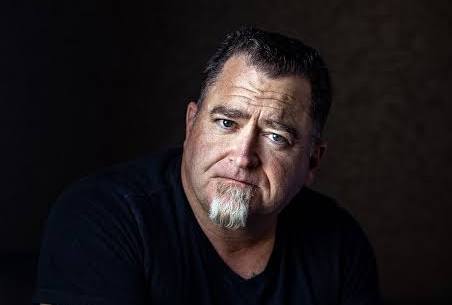
Luis Elizondo, the former director of AATIP — the Pentagon's Advanced Aerospace Threat Identification Program. Elizondo resigned from the Department of Defense in October 2017, citing the Pentagon's failure to take UAP seriously. His resignation triggered the New York Times investigation that broke the story of AATIP to the world and launched the modern era of UAP disclosure.
David Grusch: The Explosive Claim
If Elizondo cracked the door open and Graves and Fravor held it ajar, David Grusch blew it off the hinges.
Grusch's career gave him unusual access to the UAP question from the inside. As the NRO's representative to the UAP Task Force from 2019 to 2021, and later as the co-lead of UAP analysis at the National Geospatial-Intelligence Agency, he had both the clearances and the mandate to ask questions about what the intelligence community actually knew about UAP. What he found — he says — was not a mystery. It was a managed secret.
In interviews with investigative journalist Leslie Kean and Ralph Blumenthal — who had co-authored the original 2017 AATIP story for the New York Times — Grusch described a picture that, if accurate, represents the most significant cover-up in human history: a multi-decade program to recover, reverse-engineer, and exploit materials from crashed non-human vehicles, hidden within the "Special Access Program" architecture of the defense establishment, funded through mechanisms that concealed it from Congressional oversight, and actively protected by a culture of intimidation that discouraged anyone with knowledge from speaking out.
Grusch's specific claims are significant not only for their content but for their form. He did not make them anonymously. He filed a formal whistleblower complaint with the Intelligence Community Inspector General — the IC's internal watchdog — and the complaint was assessed as "credible and urgent," the highest possible designation. He then testified before Congress, under oath, in open session. He submitted a classified version of his testimony providing more specific details to members with appropriate clearances.
He has named no specific location. He has produced no physical evidence in public. But he has said, repeatedly and unequivocally: the programs exist, the materials exist, the knowledge is real, and the cover-up is ongoing.
Eric Davis and the "Off-World Vehicles" Claim
Grusch is not the only credentialed insider to have made explosive claims. Eric Davis — a physicist with a PhD who worked as a subcontractor on AATIP and has decades of involvement in classified aerospace research — gave briefings to the Defense Intelligence Agency in 2020 and to members of the Senate Armed Services Committee in 2021 that were later described, through leaked documents and subsequent reporting, as including claims that the U.S. government possesses "off-world vehicles not made on this earth."
Davis has not testified publicly before Congress. He has declined most media requests. But his name appears in documents obtained by journalists, and multiple sources with knowledge of his briefings have confirmed their contents. Like Grusch, Davis is not a sensationalist. He is an aerospace scientist with institutional affiliations and a publication record. His claims carry weight precisely because they are so far outside what scientists in his position typically say.
The Government's Response
AARO — the All-domain Anomaly Resolution Office whose creation we examined in Part III — released what it called a Historical Record Report in March 2024, covering its investigation into claims of past UAP programs. The report's conclusion was unambiguous: AARO found no verifiable evidence to support claims that the U.S. government has recovered non-human materials or vehicles. It characterized many of the claims as arising from misidentifications, rumor, and the conflation of classified conventional programs with UAP phenomena.
The report's credibility was immediately questioned by disclosure advocates, who noted that AARO had itself acknowledged in earlier Congressional testimony that it had been denied access to certain Special Access Programs — meaning any report it produced could only reflect what it had been permitted to see. A watchdog that cannot access the filing cabinet cannot produce a complete audit.
The Pentagon has maintained its official position: there is no evidence of non-human technology in U.S. government possession. Congressional members who have received classified briefings have been notably reticent about what those briefings contained, citing classification constraints. Several, however, have made public statements strongly suggesting that the classified picture is more complicated than the official one.
Senator Marco Rubio, a member of the Senate Intelligence Committee and one of the architects of UAP legislation, stated in 2023 that multiple people with "very high clearances and high positions within our government" had come to him with information about legacy UAP programs — and that they were "very fearful" of the consequences of speaking out. He added that the claims being made by Grusch and others were consistent across multiple independent sources.
The Credibility Question
How should a reasonable, skeptically minded person assess these claims?
The honest answer is: carefully, and without premature conclusion in either direction.
On one hand, the whistleblowers carry substantial credibility markers. Grusch filed a formal legal complaint that was assessed as credible by the IC IG. He testified under oath, which carries criminal penalties for deliberate falsehood. Elizondo's account of AATIP has been substantially corroborated by subsequent official disclosures. Fravor's account of the Nimitz encounter has been corroborated by multiple other pilots, by radar operators, and by the sensor footage itself. Graves's accounts of East Coast encounters align with documented radar records and the accounts of multiple other naval aviators.
None of these people gain obvious personal benefit from their disclosures. They have faced significant professional and personal costs. They have not profited from book deals or speaking circuits in ways that create obvious financial motives to exaggerate. Their accounts have remained consistent over years of intense scrutiny.
On the other hand, the most extraordinary claims — recovered craft, biological materials, multi-decade cover-ups — rest largely on testimony rather than physical evidence. Grusch has acknowledged that he has not personally seen the materials he describes; he learned of them through colleagues and through his investigative work within the intelligence community. The chain from "Grusch heard from sources" to "the U.S. government has non-human spacecraft in a hangar somewhere" involves several inferential steps that have not been independently verified.
What can be said with confidence is this: multiple credentialed insiders with relevant access have made consistent, legally sworn claims that go far beyond anything the official government position acknowledges. The gap between what they are saying and what the government is saying is not a small one. It is enormous. And that gap itself — whatever its ultimate explanation — demands serious, sustained attention.
The Larger Pattern
Step back from the specific claims and a broader pattern becomes visible across all of the whistleblower cases.
In each case, the individual encountered the UAP question through legitimate, official channels — not through personal curiosity or fringe research, but through their jobs. In each case, they found that the official channels did not adequately address what they were seeing or learning. In each case, when they attempted to raise the issue internally, they met resistance — not scientific counter-argument, not alternative explanations, but institutional pressure to disengage. And in each case, the decision to speak publicly was made only after years of internal effort had failed.
This pattern does not prove that the most extraordinary claims are true. But it does suggest that something unusual is happening within the national security apparatus — something that has caused multiple serious, credentialed people, at significant personal cost, to stake their reputations on claims they know the government will deny.
The question that Part V of this series will attempt to answer is: where does this leave us? What does disclosure actually look like? And is the world ready for what might come next?
UFO Times Evidence Assessment
- ESTABLISHED AATIP existed. The Tic Tac, Gimbal, and GoFast videos are authentic DoD footage. The Nimitz encounter involved multiple witnesses and sensor systems.
- ESTABLISHED Grusch filed a formal IC IG complaint assessed as "credible and urgent." He testified under oath before Congress.
- CREDIBLE Multiple insiders independently report being told about recovery programs. The pattern of institutional resistance described by all whistleblowers is internally consistent.
- SPECULATIVE The existence of specific recovery programs with non-human materials. Grusch's information comes from sources, not direct observation.
- UNSUPPORTED Any specific claim about the nature, origin, or location of recovered materials. No physical evidence has been produced in the public domain.
Continue Reading
Next in the Series
Part V: What Happens Next — The Road to Full Disclosure
Congress has new UAP legislation. The whistleblowers have spoken. AARO has issued its report. So what happens now? Part V examines what the path to full disclosure might actually look like — and what the world would do if the answer turned out to be yes. Coming soon.
Recommended Reading
Skinwalkers at the Pentagon — James T. Lacatski, Colm Kelleher & George Knapp (2021)
Written by programme insiders with security clearances — the closest thing in print to a whistleblower account of what the U.S. government’s classified UAP programmes actually found and were prevented from reporting.
View on Amazon →The Day After Roswell — Col. Philip J. Corso (ret.) & William J. Birnes (1997)
The original government whistleblower account — a U.S. Army colonel’s claim that he personally oversaw reverse-engineering of Roswell debris at the Pentagon’s Foreign Technology division. The foundational text in the whistleblower tradition.
View on Amazon →UFOs and the National Security State — Richard Dolan (2002)
The historical record from which all whistleblower claims can be verified or contextualised — Dolan’s exhaustive document-based research is the essential framework for evaluating what insiders say they know.
View on Amazon →Go Deeper
Essential Reading on UAP Disclosure
The witnesses have spoken. Now read the investigations. Our curated bookstore includes Leslie Kean's UFOs: Generals, Pilots and Government Officials Go on the Record, Richard Dolan's UFOs and the National Security State, and other essential texts on government secrecy and the UAP phenomenon.
Browse the Bookstore →