
Washington D.C. The UAP disclosure battle is being fought simultaneously in Congress, the Pentagon, the intelligence community's inspector general offices, and the federal courts. More legislation has been passed in the last four years than in the previous seven decades combined. Whether any of it will produce the answer — and what that answer might be — is the question this series has been building toward.
We have spent four installments getting to this point. We have traced the end of the UFO stigma, the entry of Congress into the debate, the creation and apparent failure of AARO, and the extraordinary testimony of the whistleblowers. All of it has been building toward a single question:
What happens now?
The honest answer is that we are at a moment unlike any in the history of the UAP subject. More legislation has been passed, more credentialed insiders have spoken publicly, more classified material has been acknowledged, and more Congressional attention has been directed at UAP in the last five years than in the previous seven decades combined. And yet the fundamental question — what are these things? — remains officially unanswered.
The gap between what the whistleblowers are saying and what the government is saying is not narrowing. If anything, it is widening. Understanding why that gap exists — and what it would take to close it — requires understanding the structural obstacles that stand between where we are and full disclosure.
The Legislative Architecture
Congress has been remarkably active on UAP since 2022. The UAP Disclosure Act of 2023, modeled in part on the JFK Assassination Records Collection Act, passed the Senate unanimously as an amendment to the National Defense Authorization Act. It called for the creation of a UAP Records Review Board with the authority to declassify documents and compel disclosure from government agencies. Its most significant provision: a presumption of disclosure — meaning records would be released unless there was a specific, documented reason to keep them classified.
The provision was stripped from the final NDAA in conference committee — removed in closed session, without public debate, by lawmakers who have never publicly explained why. This removal, in the view of disclosure advocates, is itself revealing: if there were nothing to disclose, there would be no reason to fight the legislation.
Similar disclosure provisions have been introduced and partially stripped in subsequent NDAAs. The pattern is consistent: the Senate passes strong disclosure language, it goes to conference with the House, and comes back weakened or absent. The identity of who is driving this resistance — which agencies, which officials, which committee chairs — has not been established on the public record.
What has passed: mandatory reporting requirements for UAP encounters, extended whistleblower protections for UAP disclosures, requirements for AARO to receive and investigate reports from personnel who claim to have been threatened for coming forward, and a requirement for the DNI to produce annual unclassified reports on UAP. These are meaningful — they create institutional architecture that did not exist before — but they fall well short of the kind of compelled disclosure that would settle the question.
The Classification Problem
The deepest structural obstacle to disclosure is the classification system itself.
The United States classification system is not a single thing. It is a layered architecture of classification levels, compartments, and Special Access Programs — SAPs — that function as entirely separate information universes. A person with a Top Secret/Sensitive Compartmented Information clearance has access to an enormous amount of classified material — and may still be entirely excluded from any given SAP, which requires separate, specific authorization. You can be among the most highly cleared individuals in the American government and still know nothing about what is in a SAP you have not been specifically read into.
The whistleblowers' central claim — that UAP recovery and reverse-engineering programs exist within the SAP architecture — is significant precisely because it would explain why so many senior officials, up to and including AARO's director, have said they found no evidence of such programs. If the programs exist in compartments that AARO was not authorized to access, AARO's finding of "no evidence" is literally accurate and completely misleading simultaneously.
"There are dozens of black programs running at any given time that Congress doesn't know about, that the Secretary of Defense doesn't know about, that the President may not know about. The UAP programs, if they exist as described, would be in that category." — Former senior defense official, speaking on background
Breaking through the SAP architecture requires either a Congressional majority willing to exercise its constitutional oversight authority aggressively — including holding individuals in contempt for non-compliance — or a senior executive branch official willing to order disclosure. Neither has happened yet. The question is whether the current trajectory of legislation and public pressure eventually produces one or both.
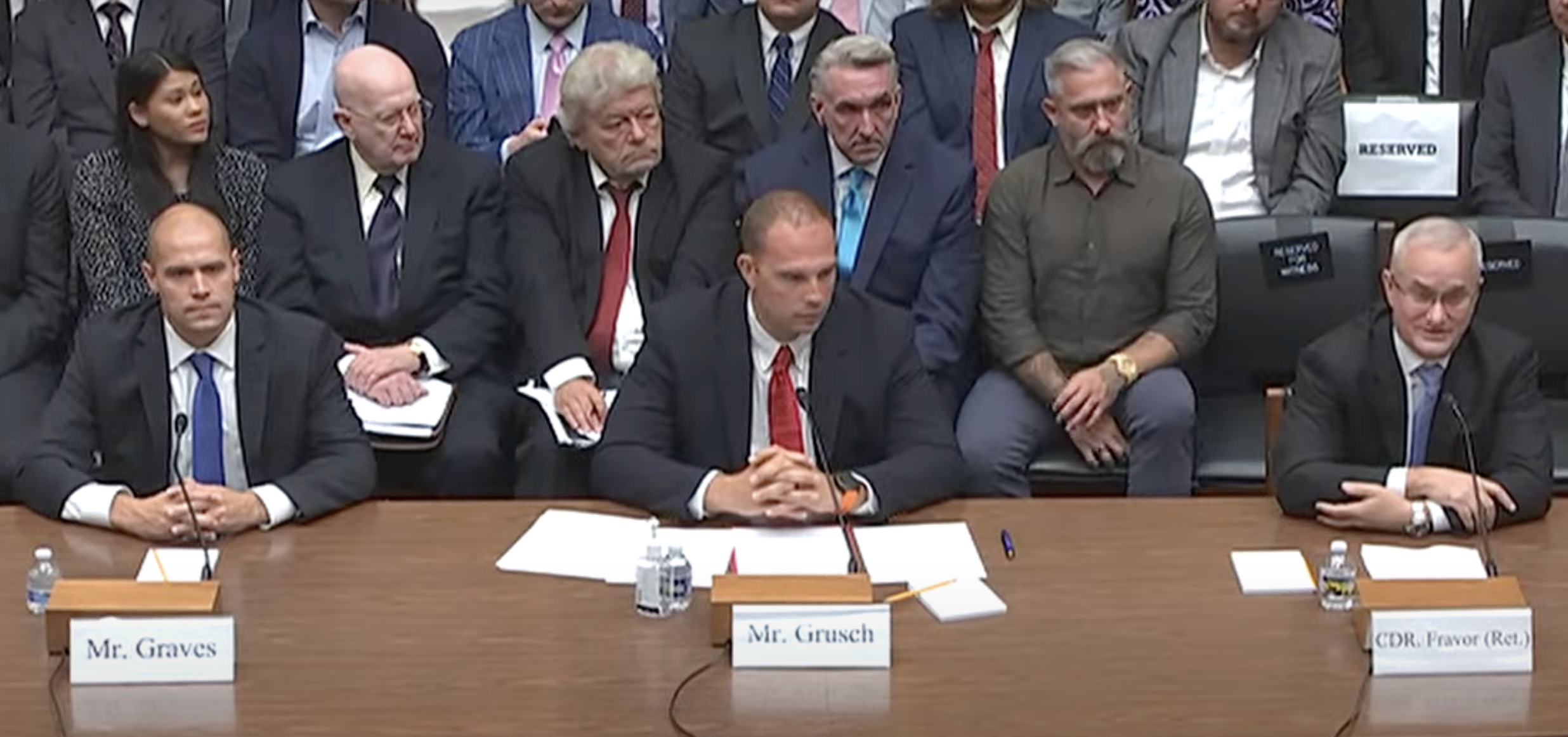
The July 2023 House Oversight Committee hearing on UAP. Grusch's testimony under oath — that the government has recovered non-human materials — created a political moment that cannot easily be walked back. Members of Congress who sat in that room and heard the classified version of his testimony have since introduced legislation. The question is whether legislative momentum can overcome institutional resistance.
The Scenarios
What does disclosure actually look like — practically, politically, institutionally? There are several plausible scenarios, ranging from the incremental to the world-altering.
Scenario 1: Managed incremental release. The most likely near-term outcome. Over the next several years, additional declassified documents, sensor data, and official reports acknowledge a broader range of UAP phenomena. AARO or its successor produces reports that acknowledge more anomalous cases. The public picture expands, gradually, without any single dramatic revelation. Disclosure happens the way Hemingway described bankruptcy: gradually, then suddenly.
Scenario 2: Congressional compelled disclosure. A sufficiently motivated Congressional majority, armed with subpoena power and backed by public pressure, compels senior officials to testify in closed session about SAP programs. The results of those briefings drive additional legislation. Key documents are declassified over the objection of the intelligence community. This has precedent — the Church Committee's exposure of CIA abuses in the 1970s followed exactly this pattern.
Scenario 3: Executive order disclosure. A President or senior executive branch official, briefed on the classified picture and concluding that the public interest in disclosure outweighs the security interests in continued secrecy, orders a comprehensive declassification. This would be the fastest path — and the most politically costly for whoever initiates it.
Scenario 4: Inadvertent disclosure. A document leak, a foreign government disclosure, or a technological event — an encounter captured on civilian sensors so broadly that it cannot be contained — forces the question into the open in a way that institutional management cannot contain. History suggests this is more likely than most people assume.
Scenario 5: Nothing changes. The institutional resistance is stronger than the legislative and public pressure. The SAP architecture holds. The whistleblowers are discredited or marginalized. AARO continues to produce reports finding no evidence of non-human technology. The cycle of partial revelation and official denial continues indefinitely. This has been the pattern for seventy years.
What Happens If the Answer Is Yes
This is the question that official Washington seems least prepared to address — and that the public has, perhaps, already partially internalized.
If it were confirmed that the United States government has recovered non-human craft and biological materials, the implications would cascade across virtually every domain of human thought and organization. Religion would face the question of where non-human intelligence fits into theological frameworks developed over millennia. Science would face the question of how physics, biology, and cosmology must be revised. Geopolitics would be transformed by the question of what other nations know, who else has recovered materials, and whether advanced technology derived from non-human sources has already altered the military balance.
The most profound implication would be epistemological. If this has been known and hidden for decades, what else has been known and hidden? The credibility of every institution that participated in the cover-up — the military, the intelligence community, the scientific establishment, the press — would be permanently altered.
This is why, some researchers argue, disclosure has not happened despite the building pressure: not because the answer is no, but because the institutions that would have to deliver the answer yes cannot survive the delivery. The cover-up, in this reading, is self-perpetuating — not because of malice but because of institutional self-preservation.
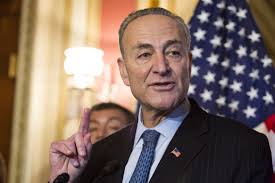
Senate Majority Leader Chuck Schumer was the lead sponsor of the UAP Disclosure Act of 2023 — the most aggressive UAP transparency legislation ever introduced in the United States Congress. The bill passed the Senate unanimously. Its key provisions were stripped in the House-Senate conference committee. Schumer has since reintroduced elements of the legislation in subsequent defense authorization bills.
Where We Stand
At the end of this five-part investigation, what can be said with confidence?
The stigma is gone. Military personnel report UAP encounters without the career consequences that silenced them for decades. Congress takes the subject seriously enough to write legislation and hold hearings. The scientific community is beginning to engage — the Galileo Project, led by Harvard astronomer Avi Loeb, is conducting systematic sky surveys specifically designed to detect anomalous aerial phenomena. The old consensus — that UAP is not a serious subject for serious people — has collapsed.
Multiple credentialed insiders have made sworn, legally protected claims that the U.S. government possesses recovered non-human materials. These claims have not been independently verified and have been officially denied. The denial comes from an office — AARO — that has acknowledged it was denied access to certain programs. The gap between claim and denial is not a small one.
Congress has built more institutional architecture for UAP transparency in the last five years than in the previous seven decades. That architecture is incomplete and has been actively resisted. But it exists — and it is growing.
The public is ready. Poll after poll shows that majorities in every demographic group believe it is possible that intelligent life beyond Earth exists and that the government is not telling the full truth about UAP. The political cost of disclosure, once thought prohibitive, may be lower than the political cost of continued denial.
What happens next is not yet written. But the trajectory is clear: the pressure for disclosure is building, the institutional resistance is weakening, and the people who know what is in those classified programs are running out of good reasons to keep it secret.
This series will continue as the story develops. The UFO Times will be here.
UFO Times Evidence Assessment — Series Summary
- ESTABLISHED The UAP stigma has ended. Congress has passed meaningful UAP legislation. Multiple credentialed insiders have made sworn disclosures. AARO's access to certain programs has been limited by its own admission.
- CREDIBLE The SAP architecture could conceal programs from AARO's investigation, making AARO's "no evidence" finding consistent with such programs' existence. Congressional resistance to disclosure legislation suggests institutional motivation to prevent it.
- SPECULATIVE That full disclosure is coming within a defined timeframe. The institutional forces for and against disclosure are real; which prevails is genuinely uncertain.
- UNSUPPORTED Any specific claim about what disclosed programs contain, what recovered materials consist of, or what their origin is. The most extraordinary claims remain unverified by independent physical evidence.
Read the Complete Series
Recommended Reading
A.D. After Disclosure — Richard Dolan & Bryce Zabel (2012)
The most rigorous treatment of the post-disclosure world — what happens to governments, religions, markets, and institutions when the truth becomes official? More prescient today than when it was written.
View on Amazon →American Cosmic: UFOs, Religion, Technology — D.W. Pasulka (2019)
Pasulka’s ethnographic study of the UAP subculture inside Silicon Valley and the defence establishment — a portrait of what disclosure is already producing among those closest to the phenomenon.
View on Amazon →UFOs and the National Security State — Richard Dolan (2002)
Before you can understand where we’re going, you need to understand where we’ve been. Dolan’s comprehensive history of the national security state’s relationship to UAP is the essential baseline.
View on Amazon →Go Deeper
Essential Reading on UAP Disclosure
Richard Dolan's UFOs and the National Security State provides the most comprehensive history of government UAP secrecy. Leslie Kean's UFOs: Generals, Pilots and Government Officials Go on the Record remains the gold standard for credentialed witness testimony. Both are in our bookstore.
Browse the Bookstore →