
■ Science Analysis — November 8, 2026
Gas Near a Martian Volcano: What the New Evidence Means for the Search for Life
A European orbiter has detected hydrogen chloride above a Martian volcano at an unexpected time of year. Researchers propose that hydrogen chloride could have a volcanic source — but the measurement, the proposed explanation, and the implications for life all require careful separation.
By The UFO Times Editorial Desk • November 8, 2026
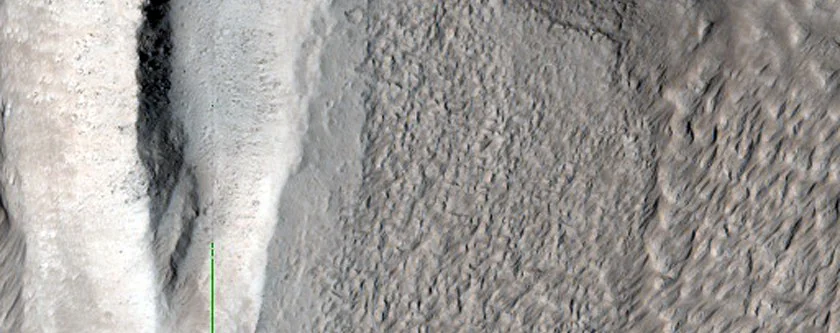
On 4 November 2026, researchers published a study in Science Advances describing something unexpected: a European spacecraft had detected hydrogen chloride (HCl) gas above Alba Mons, a broad shield volcano in Mars’s northern hemisphere, at a time of year when the detections differed from the usual seasonal pattern.
The finding was made by the ExoMars Trace Gas Orbiter (TGO), a joint mission of the European Space Agency (ESA) and Russia’s Roscosmos, using its Atmospheric Chemistry Suite (ACS) spectrometers. The lead author is Alexander Trokhimovskiy of the Space Research Institute in Moscow; co-lead is Prof. Daniel Mège of the Polish Academy of Sciences. Dr Kevin Olsen, formerly of Oxford’s Department of Physics and now at the Canadian Space Agency, also contributed to the analysis and provided public commentary.
The study makes no claim that life has been detected, that an eruption is occurring, or that liquid water is present. What it reports is a measurement, an anomaly in the timing of that measurement, and a proposed geological mechanism that may explain it. These three things are distinct — and keeping them separate is essential to reading the evidence correctly.
What Was Measured
Mars has a known seasonal HCl cycle. At perihelion — when the planet is closest to the Sun and dust storms are most common — hydrogen chloride appears in the atmosphere at measurable concentrations across much of the northern hemisphere. The prevailing explanation, well-established from prior TGO observations, is that dusty salt particles react with water vapour during the storm season to release HCl. This perihelion-season signal reaches roughly 180 kilograms per second across the whole planet.
What the new study reports is different: an HCl detection above Alba Mons during the aphelion season — cold, early northern summer, when the planet is far from the Sun, when dust storms are rare, and when the standard chemical mechanism should produce little or no HCl. The detection was at parts-per-billion concentrations in a localised region above the volcano’s flanks.
These detections differed from the usual seasonal pattern: they occurred near Alba Mons in early northern summer, when atmospheric hydrogen chloride generally becomes less abundant.
What the Instrument Found: Fissures on the Flank
The TGO was not limited to atmospheric chemistry. Its camera system, CaSSIS, imaged Alba Mons during the same observing period. The imaging revealed something that had not been previously identified in this location: fresh and narrow fissures on topographic ridges along the volcano’s flanks, in some cases hundreds of metres long and associated with surface colour changes. In some places they formed organised swarms along ridge lines.
Fissures of this type on volcanic flanks are geologically significant. They can form above buried lava tubes, through fracturing from subsurface pressure, or along fault lines related to past volcanic inflation. Their presence is not direct evidence of current activity, but their geometry — ridge-following, narrow, organised — is consistent with structural features that could serve as pathways from depth to the surface.
The Proposed Mechanism: Volcanic Gas Through Permafrost
The researchers propose a specific mechanism to link the fissures to the HCl detection. It proceeds as follows: magmatic gases — including chlorine-bearing compounds — rise from depth through the fissures. Mars has extensive ice-rich permafrost at this latitude. In the cold Martian winter, this ice blocks the upper portions of the fissures, trapping the gases underneath. When early summer arrives and solar energy increases, the ice sublimates (transitions directly to vapour), and the trapped gases are released into the atmosphere as a pulse.
This mechanism is proposed, not confirmed. It would explain the timing: the aphelion release matches the period when surface ice begins to sublimate. It would explain the localisation: the gases emerge from a specific volcanic region rather than globally. And it would explain the magnitude: the implied emission rate is small, consistent with slow seepage rather than an eruption.
Importantly, the mechanism does not require an active eruption, a thermal anomaly detectable from orbit, or liquid water. No eruption has been observed. No thermal hotspot has been confirmed in this region. This study did not detect liquid water or evidence of life. These are facts about what was not found, and they matter as much as what was.
The researchers describe this as a permafrost-valve mechanism: ice seals the upper fissures in winter, then sublimates in early summer and releases accumulated gases. It is a plausible explanation for the timing, but it remains a hypothesis. The team explicitly notes that confirming it would require follow-up observations and that alternative explanations have not been fully ruled out.
What This Means — and What It Does Not
Alba Mons is an old volcano by Martian standards. It formed billions of years ago and shows no confirmed signs of recent eruptions. But “old” in Martian geological terms does not mean “completely dead.” There is a live scientific debate about whether Mars retains any residual magmatic heat in isolated regions. This study adds evidence to that debate, but it does not resolve it.
What the detection suggests, if the volcanic mechanism is correct, is that Mars may have localized geological processes still capable of moving gases from depth to the surface — not eruptions, but slow seepage. This is different from dead rock.
The question of life arises only at the conditional end of a long chain. If there is subsurface heat, and if that heat makes liquid water possible at some depth, then the conditions for microbial life cannot be fully ruled out. This is a chain of unconfirmed steps. No heat has been detected. This study did not detect liquid water. No biosignature has been detected. The HCl detection does not, by itself, change the probability that life exists on Mars in any quantifiable way.
What it does do is provide a new, specific observational target. If fissures at Alba Mons are releasing gases, the same fissures are testable locations for future instruments. The ESA project scientist Colin Wilson described it this way:
Context: The Broader Search for Habitable Environments
The search for environments where life could exist — or could have existed — has increasingly focused on subsurface and interface zones rather than the Martian surface, which is bombarded by radiation and chemically hostile. The same reasoning applies elsewhere in the solar system. At Saturn’s moon Enceladus, confirmed hydrothermal activity powers continuous plumes of water vapour and organic compounds from a subsurface ocean. We covered that story in depth: Enceladus: What the Latest Plume Studies Say About the Odds of Life.
The Alba Mons detection is a different category of evidence — atmospheric chemistry suggesting possible subsurface heat on a rocky, desiccated world, rather than confirmed liquid water beneath ice. But the underlying question is the same: where are the zones where chemical energy and water could meet? This study maps one candidate location more precisely than before.
The study also illustrates the value of multi-instrument missions. The HCl signal from ACS and the fissure geometry from CaSSIS came from the same spacecraft during the same observing period. Neither finding alone would have been as interpretable. Together, they build a coherent, testable hypothesis.
What the Study Does Not Establish
It is worth being explicit. The researchers did not detect: an eruption, a lava flow, a thermal anomaly, liquid water, an organic molecule, or any biosignature. The word “hints” in the institutional press release is accurate. The study identifies an anomalous gas detection, provides a geological framework that could explain it, and maps the physical structures that make the mechanism plausible. It does not confirm the mechanism, and it does not confirm any downstream implication.
The strength of the finding is proportional to whether the aphelion HCl detection above Alba Mons can be reproduced in subsequent orbits, whether the fissure mapping can be extended or confirmed with higher resolution imaging, and whether any complementary thermal or chemical signal can be identified. These are the follow-up questions the community will now pursue.
Evidence Assessment: TGO/ACS Alba Mons Detection (Science Advances, Nov 2026)
Confirmed measurement
HCl detected at parts-per-billion concentrations above Alba Mons by the TGO Atmospheric Chemistry Suite (ACS) during the aphelion season (early northern summer). Detection timing is anomalous relative to the known perihelion-season HCl cycle.
Confirmed observation
Fresh, narrow fissures identified by TGO’s CaSSIS camera on topographic ridges along Alba Mons’s flanks, some hundreds of metres long and associated with surface colour changes. Some form organised swarms. These features were not previously mapped at this location.
Proposed mechanism (hypothesis)
Magmatic gases rising through fissures, trapped in winter by ice-rich permafrost, released in early summer when ice sublimates. The mechanism is plausible but unconfirmed.
Not detected
No eruption. No confirmed thermal anomaly. No liquid water. No organic compounds. No biosignature. The study makes no claim that any of these were found.
Remains unknown
Whether residual magmatic heat exists under Alba Mons; whether the HCl detection will be reproduced in subsequent orbits; whether the proposed permafrost-valve mechanism is correct; whether subsurface conditions could support microbial life.
Sources and Primary References
- Primary paper: Trokhimovskiy, A. et al. (2026). “Enigmatic HCl detections as a potential signature of igneous activity on Mars.” Science Advances, vol. 12(45), 4 November 2026. DOI: 10.1126/sciadv.aeb9422
- Institutional press release: University of Oxford, Department of Physics. “European orbiter detects hints of volcanic activity on Mars”, 4 November 2026.
- HiRISE observation: ESP_036915_2210, “Fractures and Pits on Alba Mons.” NASA/JPL-Caltech/UArizona, 2014. hirise.lpl.arizona.edu/ESP_036915_2210
- ExoMars TGO mission: European Space Agency. ESA ExoMars Trace Gas Orbiter overview.