
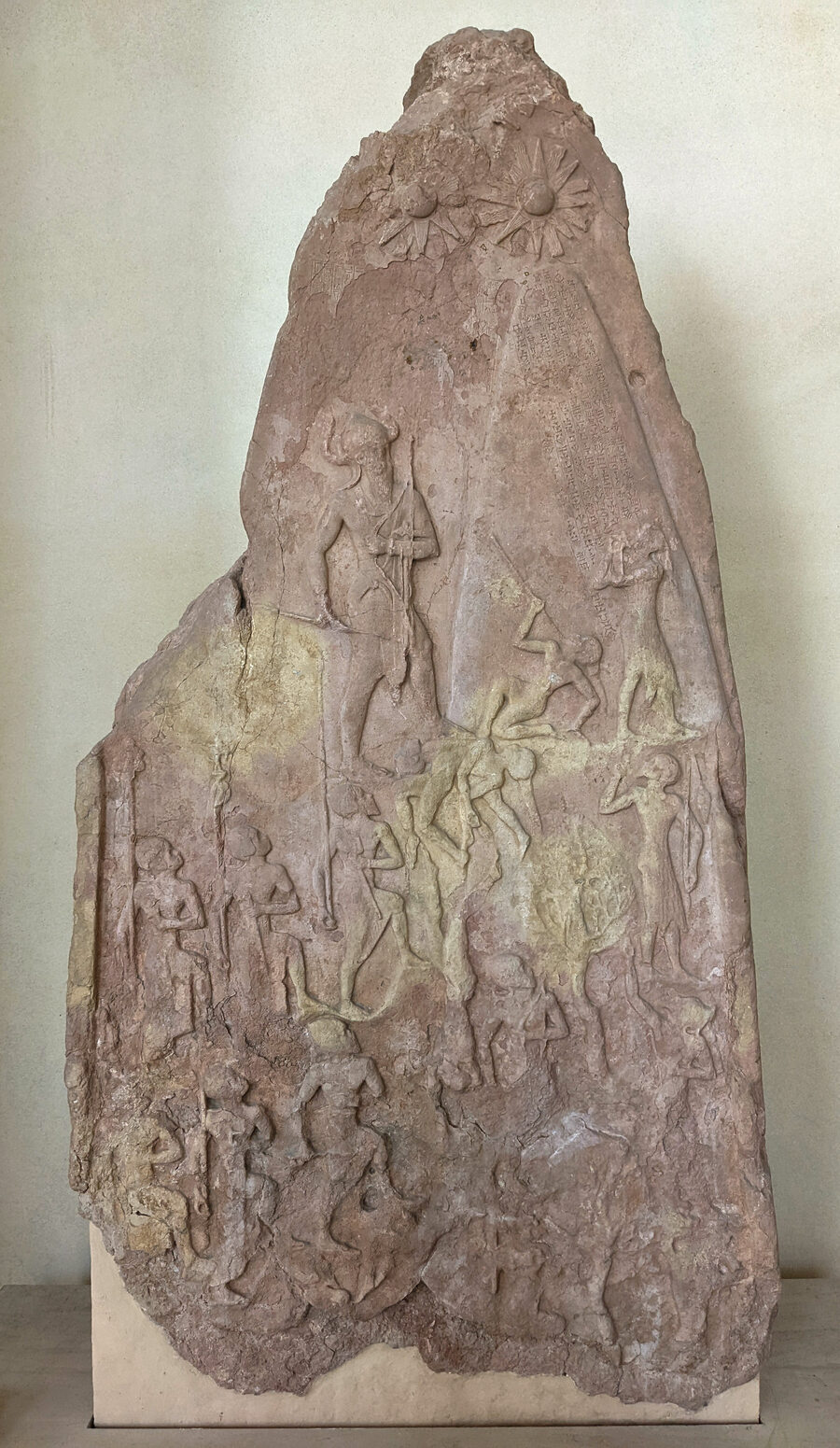
The Sumerian civilisation emerged in the river delta of southern Mesopotamia around 4500 BCE with a suddenness that has troubled historians of the ancient world ever since. Within a relatively short span, a people who had been farming the alluvial plains between the Tigris and Euphrates were operating complex city-states with written language, codified law, astronomical observatories, sophisticated mathematics, organised religion, and international trade networks. The Sumerians did not describe a gradual cultural evolution toward these achievements. They described a gift. According to their own texts—thousands of clay tablets recovered from sites including Nippur, Ur, Lagash, and Eridu—civilisation had been given to them by beings they called the Anunnaki.
The Anunnaki, in the Sumerian textual tradition, were divine beings—"those who came from the sky" or, in some translations, "from heaven to earth." They were not abstract deities operating from a remote celestial plane. The texts describe them in physical terms: beings of specific appearance, with specific roles, specific ranks, and specific rivalries. They established the first cities. They taught the Sumerians agriculture, mathematics, and the measurement of time. They built structures. They mined. They ate and drank. The Sumerian King List—one of the oldest historical documents in existence—records kings ruling for impossibly long periods before a great flood divided the antediluvian age from the age of mortal human governance. What the King List does not record is when the Anunnaki departed or ceased their direct rule.
Zecharia Sitchin, a Soviet-born author who spent decades arguing that Sumerian cuneiform texts, properly translated, described an extraterrestrial race from a twelfth planet (which he called Nibiru) that had visited Earth approximately 450,000 years ago, genetically engineered Homo sapiens as a slave species, and then departed, leaving behind both the civilisations of Mesopotamia and the mythological frameworks that became the world's religions. Sitchin's translations have been challenged by professional Assyriologists, who argue that his readings are non-standard and that the texts do not say what he claims they say. His broader interpretation—that the Anunnaki were literal extraterrestrials—has no support in mainstream academia. Yet his books remain among the most widely read interpretations of Sumerian mythology.
What mainstream academia does not contest is that the Sumerian texts exist, that they are primary historical documents, and that they describe exactly what Sitchin claims they describe—beings who came from the sky, engineered humanity, and ruled over the early Sumerian city-states. The contention is not about what the texts say; it is about what interpretation is permissible. To accept Sitchin's reading would require accepting that the oldest written records in human history describe actual historical events rather than mythological narratives. This is precisely the position that institutional academia refuses to adopt, not because of evidence against it, but because of institutional commitments to a different framework of human history.
Michael Tellinger's work in South Africa adds a geographic dimension to the Anunnaki hypothesis. Tellinger has identified approximately 200,000-year-old stone circles in the Mpumalanga region that he argues are remnants of Anunnaki mining settlements. The placement of these structures corresponds with Sitchin's account of African gold-mining operations conducted by the Anunnaki. Tellinger's research has not been widely adopted by mainstream archaeology, but the stone circles themselves are real and their age is genuine. The question is simply whether they are natural geological formations or constructed structures. Tellinger's case that they are constructed, and that they represent industrial-scale mining operations, remains unrefuted by mainstream geology.
The genetic bottleneck question is where the Anunnaki hypothesis transitions from ancient astronaut speculation to genuine scientific intrigue. Modern genomic research has confirmed that human populations experienced severe genetic bottlenecks at multiple points in prehistoric history. One particularly acute bottleneck occurred approximately 70,000 years ago, when the human population is estimated to have dropped to as low as 2,000–10,000 individuals. Additionally, modern genomic analysis has identified segments of human DNA—approximately 3% of the modern human genome—that have no clear homologous matches in primate genomes or with older human populations. The source and origin of these unique human genomic regions remain unexplained by evolutionary biology. The Anunnaki hypothesis is not the scientific explanation for these findings. But it is the only pre-scientific narrative that predicted them. What it means that the oldest written records in human history describe exactly the genetic intervention that genomics has since found evidence of is precisely the question that institutional science has not been willing to address.