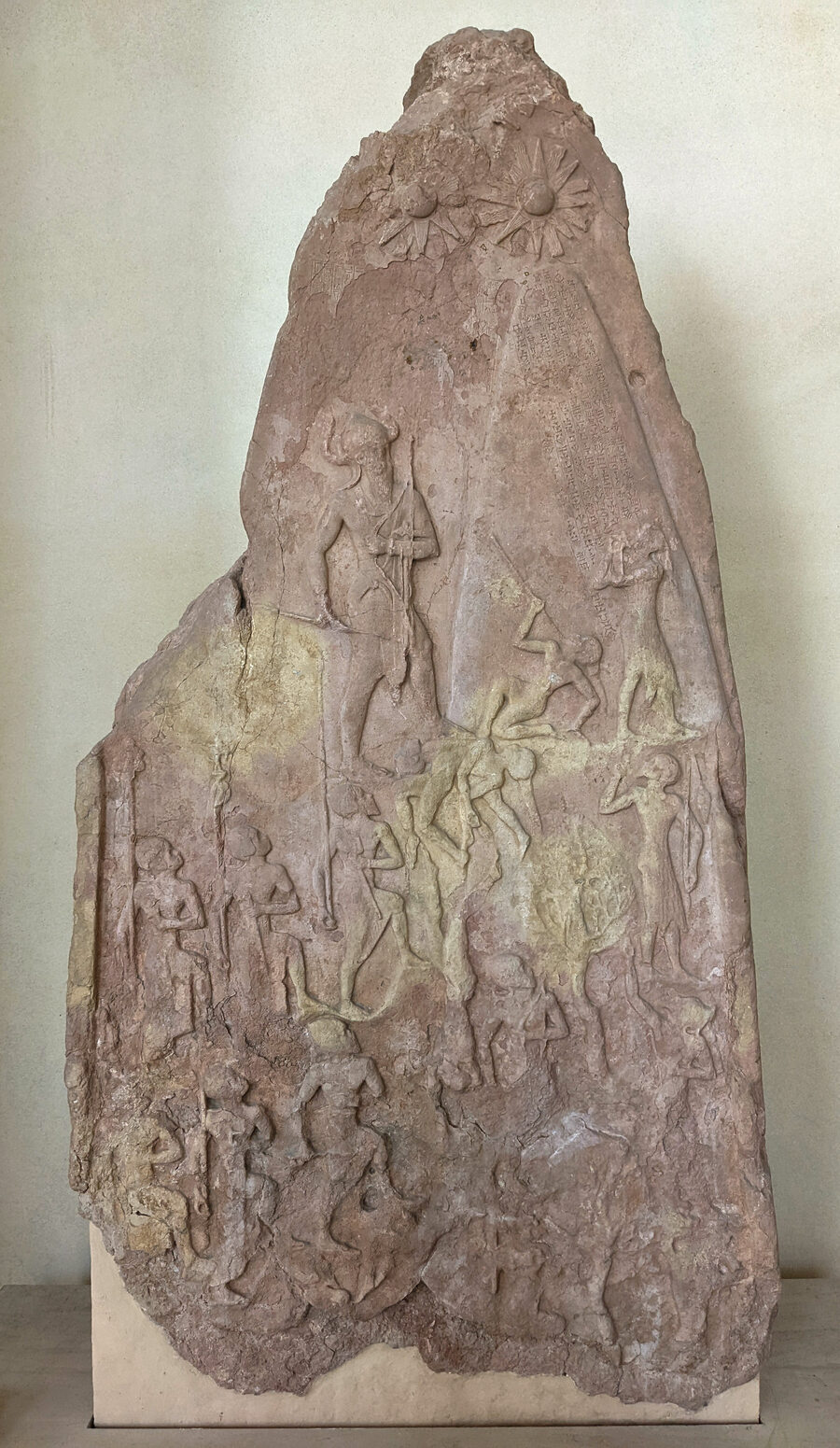
Ancient Mesopotamian relief carvings — which Sitchin spent decades arguing contained literal accounts of extraterrestrial visitors who created the human race as a genetic labour force.
Ancient Aliens
Zecharia Sitchin and the Earth Chronicles: Decoding the Anunnaki
A scholar who spent forty years reading the oldest written records in human history concluded that the gods of ancient Mesopotamia were real. The implications have never been satisfactorily dismissed.
Zecharia Sitchin was not a popular writer who stumbled into archaeology. He was a scholar who spent forty years mastering Sumerian and Akkadian cuneiform — one of only a handful of people outside professional academia capable of reading the oldest written records in human history — and who concluded, after that four-decade immersion, that the consensus interpretation of those records was catastrophically wrong.
Born in Baku, Azerbaijan in 1920 and raised in what was then British Mandatory Palestine, Sitchin studied economic history at the University of London before building a career in journalism and business. He studied Hebrew, Aramaic, and the ancient Semitic languages as a young man, then spent decades extending his linguistic reach into Sumerian. In 1976, he published The 12th Planet, the first of twelve books in what he called the Earth Chronicles series.
Sitchin’s central argument was this: the Anunnaki, described in Sumerian texts as gods who came from the heavens, were the crew of a spacefaring civilisation from a planet he called Nibiru — a body in a highly elliptical orbit that brings it into the inner solar system approximately every 3,600 years. According to Sitchin’s reading of the Sumerian tablets, the Anunnaki came to Earth roughly 450,000 years ago in search of gold, created modern Homo sapiens through genetic modification of existing hominids to serve as labour, and eventually departed, leaving behind the civilisations of Sumer, Akkad, and Egypt as their administrative legacy.
The specific Sumerian texts Sitchin drew on are not obscure or disputed. The Enuma Elish — the Babylonian creation epic — describes the formation of the solar system in a sequence that Sitchin argued matched the modern heliocentric model with remarkable precision, including the existence of a planet between Mars and Jupiter whose destruction created the asteroid belt. The Atrahasis Epic describes the creation of humanity explicitly as a genetic project: the lesser gods, exhausted by mining labour, petitioned their superiors to create a new being to carry the burden. What followed was a process of biological engineering. The Sumerian King List records monarchs who reigned for tens of thousands of years before the flood — a narrative that parallels the antediluvian patriarchs of Genesis so closely that the genetic connection between the two traditions is no longer seriously contested.
Professional Assyriologists have rejected Sitchin’s translations comprehensively, arguing that his readings are selective, idiosyncratic, and driven by a predetermined conclusion. The astronomer Phil Plait and others have pointed out that no planetary body with Nibiru’s alleged orbital characteristics has been detected, and that such an orbit would be gravitationally unstable over geological timescales. These are serious objections that Sitchin never fully resolved.
What his critics rarely engage with is the extraordinary specificity of the Sumerian texts themselves. The description of gold-mining operations in southern Africa in the Anunnaki narratives corresponds with geological evidence of ancient mines in Zimbabwe that predate any known civilisation. The anatomical precision in the Atrahasis account of human creation — references to blood, clay, and the “essence” of the gods — reads differently once you know what genetic modification looks like as a process. Sitchin did not require his critics to accept his interpretation. He required them to offer a better one. In forty years, none did.
His influence on the culture surrounding ancient mysteries has been enormous — larger, arguably, than any other writer in the field. The Anunnaki have become a permanent fixture of alternative history, conspiracy culture, and speculative fiction. The Ancient Aliens television series, now in its twentieth season, returns repeatedly to Sitchin’s framework as its foundational architecture. Whether or not Nibiru exists, and whether or not the Anunnaki were real, the questions Sitchin raised about the origins of civilisation, the purpose of ancient religious texts, and the biological history of the human species are questions that orthodoxy has never convincingly answered. He died in 2010, having sold millions of books and converted millions of readers to the conviction that humanity’s origin story is not what the textbooks say.
Watch: Zecharia Sitchin — The Anunnaki and the 12th Planet
Sitchin lays out his core thesis on the Anunnaki, Nibiru, and the origins of Sumerian civilisation — the argument that consumed forty years of his scholarly life.
Watch: The Sumerian Tablets — What Do They Actually Say?
An investigation into the primary Sumerian source texts — the Enuma Elish, the Atrahasis Epic, and the King List — and what the literal translations reveal about the ancient astronaut hypothesis.
The Zecharia Sitchin Library
The 12th Planet (1976)
The book that started everything. Sitchin’s full translation of the Sumerian creation texts, the case for Nibiru, and the argument that the Anunnaki created humanity as a genetic labour force. The foundation of the Earth Chronicles series.
The third Earth Chronicles volume. Sitchin reconstructs the ancient conflicts between the Anunnaki factions from Sumerian, Akkadian, and biblical texts — including a re-reading of the destruction of Sodom and Gomorrah as a nuclear event.
Sitchin reconstructs the missing autobiography of Enki — the Anunnaki leader credited with creating humanity — using surviving Sumerian tablet fragments. A more accessible entry point to his work than the earlier Earth Chronicles volumes.