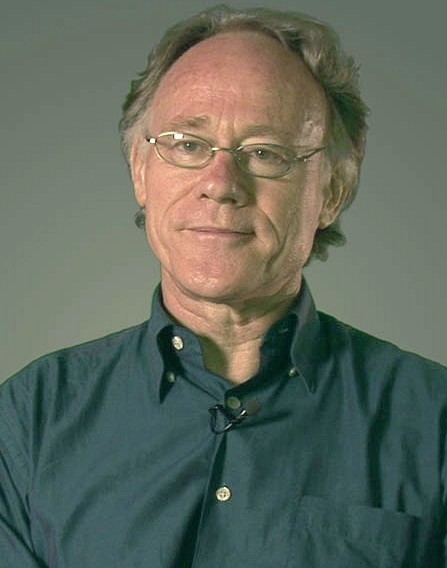
Graham Hancock — journalist turned investigator, author of Fingerprints of the Gods, Magicians of the Gods, and America Before. His thirty-year case for a lost Ice Age civilisation has gone from fringe to mainstream debate.
Ancient Aliens
Graham Hancock and the Lost Civilisation: The Case That Won’t Go Away
A British researcher spent thirty years assembling evidence for a sophisticated civilisation destroyed at the end of the last Ice Age. The academic world called him a pseudoscientist. Then the geological data started catching up with him.
In 1995, Graham Hancock published Fingerprints of the Gods and proposed something the archaeological establishment considered not just wrong but professionally unacceptable: that a sophisticated civilisation had existed before the dawn of recorded history, had been destroyed by a catastrophic event at the end of the last Ice Age, and had left its memory — and perhaps its knowledge — encoded in the monuments, myths, and astronomical alignments of cultures scattered across the globe.
The book sold six million copies. The academic response was dismissive. Hancock, a former journalist for The Economist and the Guardian, was not a credentialled archaeologist, and the archaeological community treated his lack of institutional affiliation as sufficient grounds for ignoring the evidence he presented. This was a mistake — not because every claim in Fingerprints is correct, but because the underlying question turned out to be one that science itself would eventually be forced to take seriously.
Hancock’s central argument rests on three interlocking observations. The first is the uncanny structural and mythological similarities between ancient cultures with no documented contact: the global flood narratives, the recurring figure of the wise teacher who arrives from the sea or sky bearing the gifts of civilisation, the shared astronomical knowledge encoded in monuments aligned to stars and solstices with a precision that demands explanation. The second is the existence of anomalously sophisticated ancient sites — Göbekli Tepe in Turkey, the underwater structures off Yonaguni in Japan, the cyclopean masonry of Sacsayhuamán in Peru — that predate or outperform what conventional timelines assign to their builders. The third, and most scientifically consequential, is the Younger Dryas impact hypothesis.
The Younger Dryas was a period of abrupt climate cooling that began approximately 12,800 years ago and lasted around 1,200 years. When Hancock first wrote about it, the cause was unknown. In 2007, a team of twenty-six researchers led by Richard Firestone of Lawrence Berkeley National Laboratory published a paper in the Proceedings of the National Academy of Sciences presenting evidence that the Younger Dryas was triggered by the impact or airburst of a comet or asteroid — an event of civilisation-ending scale. The evidence included impact markers — nanodiamonds, platinum group elements, magnetic spherules, and shocked quartz — found in a geological layer dated to 12,800 years ago across three continents. In his 2015 follow-up, Magicians of the Gods, Hancock incorporated this research directly. His thesis was not fringe anymore. It had data.
The Comet Research Group, a consortium of credentialled scientists working on the Younger Dryas impact hypothesis, has since published more than fifty peer-reviewed papers expanding the evidence base. The impact layer has been identified at sites in Europe, North America, the Middle East, and South Africa. Mainstream geology has not accepted the hypothesis wholesale, but the debate is live, active, and conducted in the pages of serious journals. The catastrophe Hancock described in 1995 as the end of a lost civilisation is now a recognised possibility within the scientific literature. The civilisation itself remains Hancock’s inference — but the catastrophe that would have erased it is no longer his alone.
Göbekli Tepe is Hancock’s most powerful exhibit. Discovered in the 1990s in southeastern Turkey by German archaeologist Klaus Schmidt, it is a complex of massive carved stone pillars — the tallest over five metres high, weighing up to twenty tonnes — arranged in circular enclosures and covered with sophisticated animal reliefs. It was built approximately 12,000 years ago, before pottery, before writing, before agriculture. The accepted archaeological consensus held for decades that complex architecture required settled civilisation. Göbekli Tepe demolished that premise. More unsettling still: around 10,000 BCE, its builders deliberately and carefully buried the entire complex under tonnes of fill. No one knows why. Hancock argues they were preserving it from something they knew was coming.
In 2022, Netflix aired Ancient Apocalypse, an eight-part documentary series in which Hancock presented his thesis to a mainstream audience for the first time at scale. The response from the archaeological establishment was immediate and disproportionate. The Society for American Archaeology wrote an open letter to Netflix calling the series “dangerous” and accusing Hancock of a “harmful” implicit racism — the claim being that positing an external source for ancient civilisation diminishes indigenous achievement. Hancock rejected the charge. His lost civilisation, he argues, would itself have been a human civilisation. The debate became a cultural moment. The series was Netflix’s most-watched documentary of 2022.
The question of what Graham Hancock has actually proved is less interesting than the question of what his work has done. He has forced a generation of readers to look seriously at the archaeological record and ask whether the official timeline of human civilisation is as settled as it is presented. He has drawn mainstream attention to the Younger Dryas impact hypothesis, to the anomalies at Göbekli Tepe, to the global pattern of flood mythology, to the underwater archaeology that remains systematically underfunded. Whatever his critics say about his credentials, the anomalies he identified are real. The case he built around them is contested. But it is not going away.
Watch: Graham Hancock — Ancient Apocalypse (Netflix Trailer)
The 2022 Netflix documentary series that brought Hancock’s lost civilisation thesis to a global audience — and triggered a furious response from the archaeological establishment.
Watch: Graham Hancock — The Younger Dryas Catastrophe Explained
Hancock in conversation with Lex Fridman — one of the clearest presentations of his core thesis, including the comet impact evidence.
The Graham Hancock Library
Fingerprints of the Gods (1995)
The book that started everything. Hancock’s forensic examination of shared global myths, astronomical alignments, and the evidence for a pre-Ice Age civilisation. Six million copies sold.
The sequel incorporating the Younger Dryas impact research. New geological and archaeological evidence that a comet impact triggered a global catastrophe 12,800 years ago.
Hancock’s investigation of the evidence for advanced humans in the Americas before the official date of 15,000 years ago — including a site that pushes the timeline back by over 100,000 years.