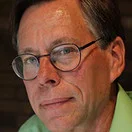
Bob Lazar — the physicist who in 1989 claimed to have reverse-engineered extraterrestrial propulsion systems at a classified facility called S-4, adjacent to Area 51. His account has never been definitively refuted.
UFO Experts
Bob Lazar: The Man Who Said He Worked on a Flying Saucer
In 1989 he described a propulsion system running on Element 115 — an element that did not officially exist. Sixteen years later, scientists synthesised it. His employers denied he existed. Some of his records later turned up.
Bob Lazar’s story is the most contested and most significant single account in the history of UFO testimony — not because it is the most dramatic, but because it is the most specific, and because the specific claims it contains have, in at least one crucial instance, been subsequently verified by science.
In May 1989, Lazar gave an interview to Las Vegas journalist George Knapp, appearing initially with his face obscured and using the pseudonym “Dennis”. He claimed to have been employed as a physicist at a classified facility designated S-4, located approximately fifteen miles south of the main Area 51 complex at Groom Lake, Nevada. His assignment, he said, was to reverse-engineer the propulsion system of one of nine recovered extraterrestrial craft housed at the facility. The propulsion system, he explained, operated on an antimatter reactor fuelled by an element with atomic number 115 — a stable, superheavy element not then known to science, which he called “moscovium.” The reactor produced a gravity wave that could be amplified and focused to distort spacetime around the craft, producing movement without conventional thrust.
The immediate response from authorities was denial. The DoD stated that no such facility existed. Los Alamos National Laboratory, where Lazar claimed to have previously worked, initially denied any employment record. The University of Technology in Los Angeles, where he claimed to have earned a master’s degree in physics, had no record of him. These denials were cited extensively by sceptics as evidence of fabrication.
What followed over subsequent years complicated that narrative considerably. George Knapp located a Los Alamos internal phone directory listing Lazar as a contractor. A 1982 article in the Los Alamos Monitor mentioned Lazar by name in the context of a jet car he had built. His W-2 tax form listed the DoD as his employer and “MAJ/EG&G” as the workplace — a contractor designation consistent with classified Nevada test site operations. The credential records remained disputed, but the employment records that had been categorically denied began to surface.
In 2003, Russian and American scientists synthesised Element 115, which was officially named Moscovium in 2016 — the name Lazar had used for it fourteen years before its synthesis. Lazar had described specific isotopic properties of his element 115 that differed from the synthesised version, which was highly unstable. His version, he maintained, was a stable isotope not yet producible in laboratory conditions. The verified existence of the element is not proof of his account. But describing a then-nonexistent element by the correct atomic number, giving it the same name scientists would later assign, and providing a technically coherent account of its properties is not consistent with fabrication from publicly available science in 1989.
Lazar has been remarkably consistent across three decades of interviews. His technical descriptions have not changed, his account of the craft’s operational characteristics has remained stable, and he has never attempted to expand or embellish the claims beyond their original scope. He has consistently declined to speculate about what the craft’s origin meant, who built it, or what the government intended to do with the technology. He describes what he says he saw and worked on, and stops there.
Jeremy Corbell’s 2018 documentary Bob Lazar: Area 51 & Flying Saucers brought his account to a new generation of viewers and introduced additional corroborating context, including testimony from people who knew Lazar during the claimed employment period. The FBI’s 2017 raid on his business — ostensibly related to a separate investigation, but conducted in a manner Lazar described as selective and unusual — suggested ongoing official interest in him that is difficult to explain if his account is simply the fabrication of a private citizen.
Watch: Bob Lazar on Joe Rogan: Area 51, Element 115 Bob Lazar — Area 51 & Flying Saucers (Full Documentary)amp; S-4 (Full Interview)
Bob Lazar sits down with Joe Rogan to discuss S-4, the nine recovered craft, the Element 115 reactor, and the consequences of going public. One of the most-watched UFO interviews in history.
Essential Reading
Dreamland: An Autobiography — Bob Lazar with George Knapp
Lazar’s own account of his life, his work at S-4, and the consequences of going public. Written with the journalist who first broke his story.
UFOs and the National Security State — Richard Dolan (2002)
Dolan’s forensic reconstruction of the classified program infrastructure that Lazar claimed to be part of — the most thoroughly documented account of how UAP secrecy was built and maintained.
UFOs: Generals, Pilots and Government Officials Go on the Record — Leslie Kean (2010)
The broader documented evidence that places Lazar’s claims in their proper context — credible military and intelligence witnesses describing encounters with craft that match what Lazar described.