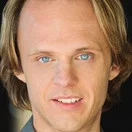
David Wilcock is polarising. Critics object to his cross-disciplinary synthesis—the way he moves from Edgar Cayce readings to quantum physics anomalies to Sumerian tablets without the gatekeeping that keeps academic disciplines separate. They argue that this kind of thinking produces false correlations, retrofitted narratives, and the kind of intuitive leaps that feel true but dissolve under scrutiny. His supporters argue almost exactly the opposite: that compartmentalisation is the problem. That the structures which protect institutional credibility—peer review, disciplinary boundaries, funding dependencies—are precisely the obstacles that prevent us from seeing the patterns that connect. In the current disclosure environment, which side is vindicated depends on whether you believe the truth has been hidden or whether the lack of institutional validation actually means something.
David Wilcock was born in 1973 and came to public attention in the early 2000s not through academia but through the UFO and ancient astronaut communities. His entry point was the Edgar Cayce readings and the Ra Material—channelled sources that describe a unified consciousness field underlying matter and that propose elaborate metaphysical frameworks for understanding human evolution. From there he moved into quantum physics anomalies: peer-reviewed studies on coherent photons in biological systems, the work of Hal Puthoff on zero-point energy, the quantum Zeno effect, and the mountain of anomalous phenomena that mainstream physics acknowledges but does not yet integrate. This became the foundation of his synthesis: the argument that ancient cosmologies, mystical traditions, and cutting-edge quantum research are all describing the same underlying reality.
The Source Field Investigations (2011) is his most ambitious work—a 500-page assembly of over a thousand peer-reviewed studies arranged to build the case for a unified field underlying matter, energy, and consciousness. The book is methodologically transparent: the citations are real, the studies are verifiable, and the argument is that if you read them in sequence and allow the implications to unfold, they converge toward something that looks like what the mystics called the source field, what physicists call vacuum energy, what Lao Tzu called the Tao. Whether Wilcock's connections hold is debatable. Whether the studies themselves are real is not.
The Synchronicity Key (2013) takes the argument into history. The thesis is that major civilisational events repeat in structured patterns across millennia—that the same numerical and astrological cycles repeat, creating what Wilcock calls the synchronicity key. Critics dismiss this as pattern-seeking. His case is statistical and somewhat rigorous: the cycles are there if you look for them, and the question is whether they are causal or coincidental. This is where Wilcock's work becomes harder to dismiss casually—not because the answer is obvious, but because the patterns are actually there to see.
Wilcock's role in disclosure has been primarily as a public voice amplifying whistleblowers, particularly Corey Goode. The Cosmic Disclosure series (which began as web series in 2015) presents Goode's account of life in secret space programs, bases on Mars and the Moon, and the extraterrestrial and breakaway civilisation presences that Earth governments have been in contact with for decades. Wilcock conducts the interviews; his role is to hold the narrative steady and ask the questions that make sense of Goode's claims within the broader context of ancient astronaut theory and quantum consciousness frameworks. Whether Goode is accurate is not something Wilcock proves. What he does is create a coherent space in which Goode's testimony becomes part of the same picture as Sumerian tablets, quantum anomalies, and geographical patterns. This is synthesis as a form of epistemology.
The Law of One and the Ra Material form the metaphysical backbone of Wilcock's entire project. According to Ra, humanity is part of a galactic cycle of spiritual evolution—a progression through seven densities of consciousness, with each cycle lasting about 75,000 years. We are at the transition point between the third and fourth density, which manifests as the breakdown of the old paradigm (institutional control, separation consciousness) and the emergence of the new (unity consciousness, spiritual integration). The ancient sites—the pyramids, the temples, the stone circles—were constructed by advanced civilisations as anchors for this evolutionary process, using sacred geometry and earth energy to facilitate the consciousness shift. This is not mystical metaphor in Wilcock's reading; it is a description of how consciousness field engineering works. The question is whether this framework, which sounds like fantasy, might actually be the most parsimonious explanation for why so many ancient sites encode the same astronomical and mathematical constants.
Wilcock's actual value, separated from the controversies, is that he functions as a synthesiser rather than a specialist. He is not credible as a peer-reviewed physicist or Egyptologist. But he is relentlessly curious about anomalies—the things that don't fit the standard paradigm—and he follows the implications wherever they lead. The anomalies he identifies are real: consciousness does behave non-locally in laboratory settings; the pyramids are aligned to astronomical positions that require knowledge of precession; the Sumerian tablets do describe beings who came from the sky and engineered humanity. Whether Wilcock's connections are correct is a different question. But in an environment where the standard institutions have strong incentives to keep these anomalies compartmentalised, his willingness to hold the full picture—even speculatively—serves a function. He identifies the contradictions. And once a contradiction is named, it can be examined. That is synthesis as methodology.