
Jean-Pierre Petit, the Janus Model and Ummo: Can His Physics Explain UFOs?
Jean-Pierre Petit is one of the most unusual figures in the history of UFO research: a credentialed physicist whose peer-reviewed contributions to magnetohydrodynamics are a matter of record, but whose published books argue that the Ummo affair — a decades-long correspondence claiming to be from alien visitors — contained genuine scientific knowledge ahead of its time. Separating what the physics establishes from what the extraterrestrial hypothesis requires is the project of this article.

Jean-Pierre Petit pursued a substantial research career within France’s CNRS and attained the rank of director of research in 1990. His published work covered plasma physics, magnetohydrodynamics, astrophysics and cosmology. His scientific bibliography, archived in the INSPIRE database maintained by CERN, covers papers in mainstream international journals on subjects that have nothing to do with UFOs. That record matters here, because Petit is also one of the most prominent physicists in the French-language UAP debate — and the two sides of his career are not as easily reconciled as his admirers suggest.
The argument that circulates most widely is simple: here is a credentialed physicist who takes UFOs seriously and whose physics provides a framework for understanding them. The reality is more complex. Some of what Petit has published is genuine science. Some of what he argues in popular books and lectures goes far beyond what that science supports. The distinction is worth making carefully, because the credibility earned in one domain is frequently used — in public discourse if not by Petit himself — to validate claims that belong to a different domain entirely.
This article works through both. It treats his magnetohydrodynamics research on its scientific merits, examines his Janus cosmological model in the light of peer review and the criticisms it has received, and assesses his long engagement with the Ummo affair against the evidence available in the public record. Readers who want only the bottom line will find it in the assessment table near the end. Those who want to understand why the bottom line looks the way it does should read the whole piece.
The Evidence at a Glance
A Scientist Before He Became a UFO Controversy

Jean-Pierre Petit was born in 1937. He pursued his research career within CNRS-associated institutions and later at the Marseille Observatory, attaining the rank of director of research in 1990. His scientific output across several decades covered magneto-fluid dynamics, hypersonic flows, plasma-enveloped aerodynamic bodies, and the theoretical properties of conducting fluid systems subject to electromagnetic fields.
His record in peer-reviewed literature is not in doubt. The papers exist, were published in international physics journals, and addressed topics with independent applications in aerospace and energy research. His later MHD work was also presented within established aerospace and physics venues, including an AIAA hypersonic-systems conference.
In parallel with his research career, Petit also produced a long-running series of popular science comics, the Anselme Lanturlu series, which used fictional characters to explain concepts in special relativity, quantum mechanics, thermodynamics and cosmology to a general audience. The series won recognition from French educational institutions and established Petit as one of France’s more effective science communicators of the 1980s. The habit of working simultaneously in rigorous and popular registers — treating them as compatible rather than incompatible — defined his career from early on.
What Is Magnetohydrodynamics?
Magnetohydrodynamics (MHD) describes the behaviour of electrically conducting fluids — primarily plasmas and liquid metals — in the presence of magnetic fields. A plasma is a gas in which a sufficient fraction of atoms have been ionised: electrons have been stripped away, leaving a mixture of ions and free electrons capable of carrying electric current and interacting with electromagnetic fields.
The coupling between fluid dynamics and electromagnetism in such systems produces effects absent from ordinary fluid flows. A magnetic field applied to a conducting fluid exerts a body force on it — accelerating, decelerating or redirecting the flow. Conversely, a moving conducting fluid generates electrical currents and modifies the magnetic field it passes through. The governing equations — the Navier-Stokes equations of fluid dynamics coupled with Maxwell’s equations of electromagnetism — are non-linear, making MHD one of the more computationally demanding areas of applied physics.
Petit’s specific contribution was theoretical work on MHD-based propulsion for hypersonic vehicles. The core concept was that a plasma layer maintained around a high-speed airframe, ionised by a combination of heating and electromagnetic induction, could interact with externally applied magnetic fields to reshape the shock wave ahead of the vehicle. This would in principle reduce aerodynamic drag, lower thermal loads on the airframe, and permit additional aerodynamic control by influencing the asymmetry of the plasma envelope. A 2009 paper by Petit and Julien Geffray, “MHD Flow-Control for Hypersonic Flight,” published in Acta Physica Polonica A, and a paper by Petit, Geffray and Fabrice David, “MHD Hypersonic Flow Control for Aerospace Applications,” presented at an AIAA/DLR/DGLR International Space Planes and Hypersonic Systems and Technologies Conference, are representative examples of this work.
None of this is contested. The question of whether MHD propulsion systems of the kind Petit described are practical at the energy scales required for advanced aerospace applications is a legitimate engineering debate within mainstream aerospace research — one that has continued in various defence research contexts. But the underlying physics is not in dispute.
Why UFO Researchers Noticed MHD
UAP researchers with technical backgrounds had long argued that certain reported characteristics of unidentified aerial phenomena required a propulsion framework outside the bounds of conventional aviation. The attributes most frequently cited were: abrupt acceleration without apparent inertial effects on occupants or structure; angular manoeuvres executed without deceleration; near-silent or entirely silent operation; and what witnesses frequently described as a luminous or electrically charged envelope around the objects.
Petit’s work provided, for those inclined to see it that way, a bridge between established physics and these claimed attributes. If a craft could maintain an ionised plasma shell and apply magnetic body forces to reshape its aerodynamic environment, some of the described behaviours became at least partially imaginable within known physics — in a way that anti-gravity formulations or warp-drive proposals are not. A plasma-enveloped vehicle that produced large-scale ionisation might appear luminous at night. If electromagnetic flow control could substantially alter shock-wave formation, it might affect the acoustic signature associated with supersonic flight — though that possibility remains dependent on conditions and energy levels not demonstrated for any operational vehicle. Asymmetric electromagnetic forces might provide an additional method of aerodynamic control in a sufficiently ionised flow. They would not, by themselves, explain instantaneous turns, inertial cancellation or extreme accelerations reported in some UAP cases.
Petit himself made this connection explicit in public lectures and popular publications beginning in the late 1980s. He argued that the UAP propulsion problem was amenable to an MHD solution and that certain observation characteristics were consistent with the signatures one would expect from a plasma-enveloped vehicle operating at high field strengths. This is where his public positioning began to diverge from his academic publications: the scientific papers presented MHD propulsion as an aerospace engineering concept; the public arguments presented it as a candidate explanation for the behaviour of objects that had not been identified as any known aircraft.
The distinction is important. The energy requirements for MHD effects at the scale and performance levels reported in UAP accounts — the rapid accelerations, the right-angle turns, the speeds estimated from radar or visual tracking — are enormous. No published engineering study has bridged the gap between what has been demonstrated in laboratory MHD research and what would be required to produce the observed performance. The physics is real. The gap remains.
From MHD to the Janus Universe
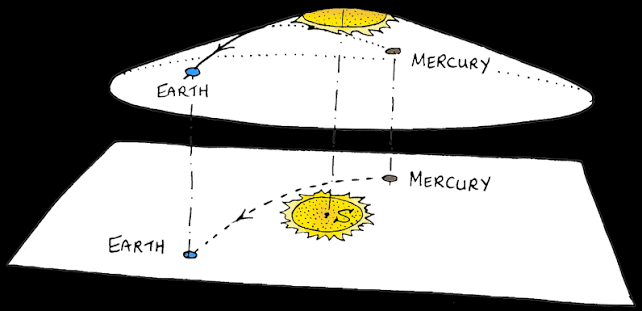
In parallel with his propulsion research, Petit developed a cosmological model he called the Janus Cosmological Model, named after the two-faced Roman deity who simultaneously faces in opposite directions. The model proposes that the universe contains two types of mass — positive and negative — existing in two distinct sectors that interact gravitationally across a shared geometry but cannot directly observe each other through electromagnetic radiation.
In the standard model of cosmology, the accelerating expansion of the universe and the anomalous rotational curves of galaxies are attributed to dark energy and dark matter respectively — entities whose physical nature remains entirely unknown and which have not been detected by any direct experimental means. Petit argued that both phenomena could be explained by the gravitational influence of the negative mass sector in the Janus model, without requiring new particles or energy fields of unknown character.
Petit’s approach draws partly on Andrei Sakharov’s work concerning a possible twin universe and develops it through a bimetric extension of general relativity — a framework in which two separate metric tensors govern the same underlying manifold. Several papers on the Janus model have appeared in peer-reviewed physics journals. The model has not achieved mainstream acceptance, but it is not a non-mathematical claim: the formalism exists and can be examined by specialists in relativistic cosmology.
Negative Mass: Mathematics or Physical Reality?
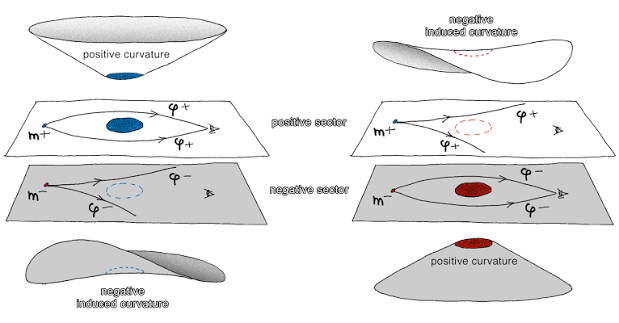
The concept of negative mass has a respectable theoretical lineage. The physicist Hermann Bondi discussed negative mass solutions in general relativity in a 1957 paper now considered a classic of theoretical physics. In classical Newtonian gravity, a negative mass would be repelled by a positive mass while the positive mass would simultaneously be attracted toward the negative mass — producing a runaway acceleration in which both objects accelerate indefinitely in the same direction without any energy source. Bondi treated this as a mathematical curiosity rather than a physical prediction.
In Petit’s Janus formulation, the interaction between positive and negative mass sectors is governed by modified field equations that he argues avoid the runaway problem while retaining the explanatory power needed to account for cosmological observations. The negative mass sector produces a repulsive effect at cosmological scales, which he argues explains the observed acceleration of the universe’s expansion; it also provides additional gravitational structure that he argues accounts for galaxy rotation curves without invoking conventional dark matter particles.
The mathematical machinery is non-trivial. Whether the formulation is internally consistent and whether its predictions match the precision of competing models is a question for specialists in relativistic cosmology. The mainstream reception has been sceptical, and the reason for that scepticism is addressed in the following section.
The Scientific Criticism
The most detailed public critique of the Janus model was published in 2019 by Thibault Damour, a member of the French Academy of Sciences and one of the leading figures in theoretical gravitational physics. Damour holds the chair of Theoretical Physics at the Institut des Hautes Études Scientifiques (IHÉS) near Paris — the same institution where Alexander Grothendieck worked — and has made major contributions to post-Newtonian gravitational theory, gravitational wave physics, and string cosmology.
Damour’s 2019 paper argued that the two Janus metrics carry separate Bianchi identities and therefore separate conservation laws. In his analysis, this means the same distribution of ordinary matter would be required to satisfy two different equations of motion simultaneously — a condition he regarded as a fundamental physical and mathematical inconsistency. He concluded that the model, in the form he examined, was not a viable physical theory.
Petit and his collaborators dispute that assessment and argue that later formulations of the model address the objections Damour raised. The criticism remains contested by the Janus authors, while the model has not achieved broad acceptance within relativistic cosmology. The UFO Times notes: the Janus model has not achieved acceptance in the peer-reviewed cosmological literature; its principal author is its primary advocate; and the most detailed formal critique, from one of France’s leading gravitational theorists, identifies what he regards as a fundamental inconsistency. These facts do not prove the model wrong, but they represent an honest description of where it currently stands.
Could Janus Permit Interstellar Travel?
This is where Petit’s chain of argument extends well beyond the cosmological physics and into the domain of speculation.
Petit has proposed that a sufficiently advanced technology might produce a transition or “mass inversion,” allowing a craft to follow the geodesics associated with the model’s negative-energy sector before returning to the positive sector near its destination. No mechanism capable of performing such an inversion has been demonstrated experimentally. The argument depends on each earlier step in the chain being established first: the Janus model being physically valid, negative-energy matter being accessible, and the inversion process being technically achievable.
Each step in this chain depends entirely on the one before it. The Janus model itself remains a minority hypothesis with a significant outstanding formal critique. The idea that negative mass material is accessible or manipulable is purely theoretical. The specific link between Janus-based physics and UAP propulsion is not published in any peer-reviewed form: it is an argument advanced by Petit in books and public lectures, not in the scientific literature where it could be assessed by specialists. This column of reasoning is, in the taxonomy The UFO Times uses, an unconfirmed minority hypothesis at best, and in its UAP-specific application, it has not been subject to the scrutiny that scientific claims require.
The Strange Arrival of the Ummo Letters
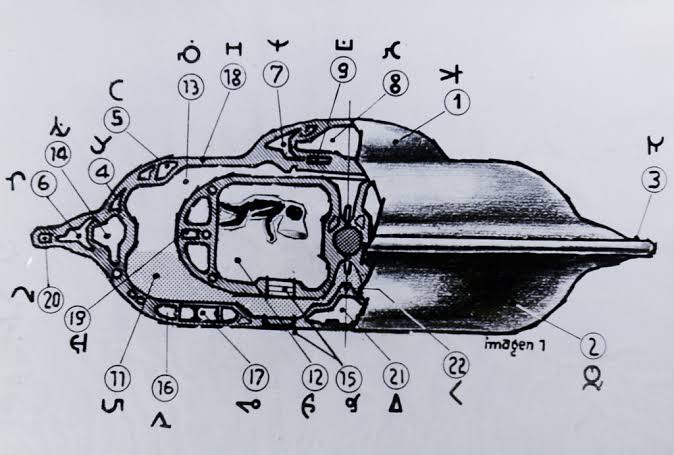
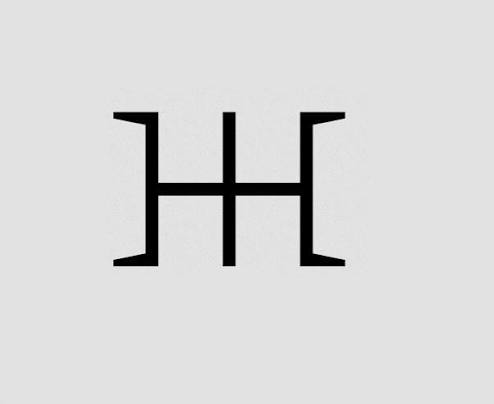
Beginning in 1965, a series of letters arrived at UFO researchers and private individuals across Spain, written in a distinctive typeface and signed with a distinctive emblem often described as an H-like sign with curved vertical elements. The letters claimed to originate with visitors from a planet called Ummo, in orbit around a star the authors identified as Wolf 424 — a red dwarf approximately 14 light-years from Earth.
What distinguished the Ummo correspondence from ordinary UFO contactee claims was its volume, consistency, and apparent intellectual sophistication. Over several decades, thousands of pages arrived, covering descriptions of the Ummites’ home world, social structure and biology, as well as extended discussions of physics, cosmology, and philosophy. The writing style remained consistent across letters spanning more than two decades. Petit and other defenders argued that portions of the correspondence displayed unusual scientific sophistication and anticipated later developments in physics. That claim has not been demonstrated through a comprehensive, peer-reviewed chronological comparison.
The 1967 sightings near Madrid added a visual dimension. On 1 June 1967, witnesses at San José de Valderas and Santa Mónica reported seeing and photographing a disc-shaped object bearing the Ummo symbol on its underside — a development that appeared to link the correspondence to a physical observation.
The San José de Valderas Photographs
Several photographs were circulated in connection with the June 1967 episode, purportedly showing the disc-shaped object from different vantage points. The Ummo symbol visible on the underside was treated by some investigators as among the more evidentially significant elements of the case. Their claimed independence and authenticity, however, later came under serious doubt — particularly after José Luis Jordán Peña acknowledged participating in the construction of the Ummo affair.
 Photograph — Authenticity Disputed
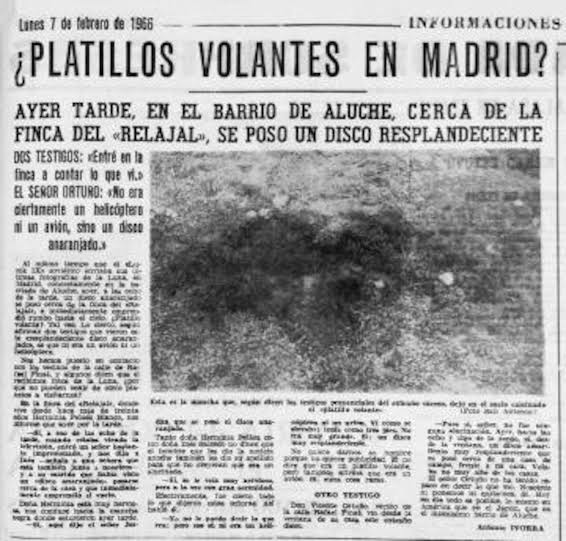
However, the photographs are now generally assessed as problematic by researchers who have examined the case in detail. The timing of the sighting — staged in the same year as the letters were gaining wider circulation in Spain — and the deliberate visibility of the symbol on the underside of the photographed object suggest a performance rather than an independent observation.
The reason these photographs are treated as likely fabrications — rather than merely unexplained — is addressed in the following section. That assessment does not rest on the photographs’ visual characteristics alone, but on what was subsequently disclosed about the origin of the Ummo affair as a whole.
The Confession
In the early 1990s — commonly dated to 1992, with accounts circulating more widely in 1993 — José Luis Jordán Peña admitted initiating the Ummo deception. Jordán Peña was a Spanish telecommunications technician with a strong interest in psychology and parapsychology. He said he had created the Ummo letters as a psychological experiment — a test of how UFO believers would respond to an elaborate fabricated mythology sustained over time. He claimed to have manufactured all of the correspondence, engineered the 1967 sighting, and sustained the fiction for nearly three decades across hundreds of letters and thousands of pages.
The confession was not universally accepted. Several researchers who had studied the Ummo case noted apparent inconsistencies in Jordán Peña’s account. Some questioned whether one person could have produced the full volume and internal consistency of the correspondence without assistance. Others argued that the physics content in some of the letters exceeded what Jordán Peña could plausibly have constructed alone. There was also suspicion that the confession itself might be strategic — a way of deflecting further investigation rather than truthfully concluding it.
The honest assessment, given the available evidence, is this: Jordán Peña’s account has not been fully corroborated in every detail, and it has not been conclusively refuted. The available confession, the disputed photographs, scientific inconsistencies and the absence of any authenticated extraterrestrial material make human fabrication the strongest explanation for the Ummo affair as a whole. No authenticated evidence of extraterrestrial origin has entered the public record at any point in the affair’s history.
The Wolf 424 Problem
The Ummo letters identified the visitors’ home star as Wolf 424 — a red dwarf with a visual magnitude of approximately 13, well below naked-eye visibility and therefore known primarily to astronomers with access to stellar catalogues. One argument advanced in favour of the letters’ authenticity is that Jordán Peña, as a non-astronomer writing in 1965, would have been unlikely to know enough about Wolf 424 to fabricate detailed references to it.
This argument has been contested. University libraries and popular astronomy publications available in Spain in the mid-1960s would have been sufficient for anyone willing to research stellar catalogues. The specific distance estimate and stellar classification of Wolf 424 were present in accessible reference material. The claim that fabricating the star choice required specialised knowledge a non-astronomer could not have obtained has not been established.
A more evidentially important issue concerns the distance figures used in early Ummo documents. An early document reportedly cited a distance close to an outdated estimate of approximately 3.7 light-years. More accurate measurements place Wolf 424 at roughly 14 light-years. Critics regard this as consistent with a human author who relied on obsolete astronomical reference material. Later attempts to explain the discrepancy through spacetime effects are retrospective and therefore provide weak evidence for authenticity. No confirmed planet is currently known at Wolf 424; the absence of detection is not proof of absence, but no evidence of a habitable world there has been found.
Did Ummo Contain Science Ahead of Its Time?
This is the argument Petit has pressed most persistently. He contends that certain concepts in the Ummo correspondence — relating to the topology of the universe, the behaviour of matter-antimatter pairs, and certain cosmological structures — appeared in the letters before they appeared in the peer-reviewed scientific literature, and that this is difficult to explain if the letters were entirely fabricated by a non-physicist.
The evidential difficulty is substantial. Establishing priority in informal correspondence, as opposed to dated scientific publications with clear submission records, is difficult to do rigorously. Several of the physics concepts cited as evidence of precocity can be traced to ideas present in the scientific literature at the time the letters were written, even if not yet widely publicised outside specialist circles. The argument from scientific anticipation requires a detailed chronological comparison of specific claims in the letters against the specific publication dates of the papers they are alleged to anticipate — and that analysis has not been conducted in a peer-reviewed setting.
The UFO Times does not dismiss the question. The Ummo correspondence is unusual and Jordán Peña’s account has not been fully corroborated in every detail. The threshold for inferring extraterrestrial origin, however, is high, and the available evidence does not approach it. Unusual sophistication in a fabrication, and gaps in the confessor’s account, do not convert an unsupported claim into a supported one.
Taking the Argument to the Public

In 2017, Petit co-authored with the journalist Jean-Claude Bourret the book OVNI — L’Extraordinaire Découverte, published by Trédaniel in France. Bourret, a television journalist and documentary maker who had worked on UAP subjects since the 1970s, brought a public communications profile to the project; Petit brought the scientific credentials. The book presented the MHD propulsion hypothesis, the Janus model, and the significance of the Ummo affair to a popular French audience, arguing that France had developed the tools to understand what remained mysterious elsewhere.

Book
OVNI : L’Extraordinaire Découverte
Jean-Claude Bourret & Jean-Pierre Petit · Guy Trédaniel, 2017 · 381 pages · French-language edition
The book sold well in France and prompted a series of public talks, television interviews and podcast appearances. The format — a popular book combining Petit’s legitimate physics with speculative extraterrestrial arguments — illustrates a dynamic worth naming. The scientific credibility earned through peer-reviewed work in plasma physics transfers rhetorically to speculative claims that the physics itself cannot support. Readers who trust Petit’s account of magnetohydrodynamics (well-founded) may extend the same trust to his account of the Ummo letters (not well-founded). The UFO Times notes this not to impugn Petit’s motives, which we are not in a position to assess, but because the dynamic is a general hazard of how scientific credibility functions in popular discourse, and it is worth making explicit.
Why Petit Remains Important
Despite the serious reservations about his extraterrestrial and Ummo claims, Jean-Pierre Petit remains a significant figure in any serious treatment of UAP research. There are two reasons for this, and they are separate.
The first is that his MHD propulsion work is genuine physics. The question of whether plasma-based propulsion and electromagnetic manoeuvring could produce some of the characteristics attributed to UAP is a legitimate scientific question that mainstream aerospace research has not fully investigated. The answer may well be no — the energy requirements are almost certainly prohibitive at the performance levels reported in many UAP cases — but the question does not require invoking extraterrestrial agency to be worth asking. It is the kind of question that should be addressed with instruments and engineering analysis, not dismissed on the grounds that it sounds like it comes from the wrong part of the conversation.
The second is that Petit’s career trajectory — from peer-reviewed plasma physicist to public advocate for extraterrestrial physics — is instructive about how the boundary between science and speculation can be crossed in ways that are not always visible to audiences who encounter the conclusions without the context. That trajectory, and the mechanisms by which it operates, are part of what any honest account of UAP research has to describe.
What Petit’s Work Can—and Cannot—Tell Us About UFOs
Petit’s MHD research establishes that plasma-based electromagnetic propulsion is a legitimate area of physics and aerospace engineering. It does not establish that any observed UAP was powered by such a system. The gap between these two statements is not a small one, and it is not bridged by the Janus model, by the Ummo affair, or by the arguments Petit has made in popular publications.
The Janus Cosmological Model is a minority hypothesis with a significant outstanding formal critique. Whether it survives further scrutiny remains to be seen. Its relevance to the UAP question depends entirely on a speculative chain of reasoning that has not been published in peer-reviewed form and has not been exposed to the methodological scrutiny that scientific claims require.
The Ummo affair is most likely a fabrication. The confession of Jordán Peña has not been verified in every detail, and some aspects of the affair remain unexplained. Unexplained, however, does not mean extraterrestrial. The available evidence does not support treating the Ummo correspondence as authentic communication from another civilisation. Treating it otherwise would require either disregarding the available evidence or setting a standard of proof so low as to be meaningless.
The UFO Times Assessment
| Claim | What the Evidence Shows | Assessment |
|---|---|---|
| Petit’s MHD propulsion research | Peer-reviewed, published in mainstream international journals. Documented in the CNRS and INSPIRE records. AIAA conference proceedings. Not contested. | Established |
| MHD as a framework for understanding UAP propulsion | Theoretically consistent with some reported UAP characteristics (luminosity, acoustic suppression, asymmetric manoeuvre). Energy gap between laboratory scale and reported UAP performance is large and unresolved. Not published in peer-reviewed form in this UAP-specific application. | Scientifically Legitimate but Incomplete |
| The Janus Cosmological Model | Published in peer-reviewed journals. Not accepted in mainstream cosmology. Damour’s 2019 formal critique argued two separate Bianchi identities impose incompatible equations of motion on the same matter distribution. Petit’s team contests that assessment; later formulations are cited in response. The criticism remains contested while the model has not achieved broad acceptance. Application to UAP propulsion is speculative and not peer-reviewed. | Minority Hypothesis |
| Ummo letters as extraterrestrial communication | Jordán Peña admitted initiating the deception in the early 1990s. Confession not fully corroborated in every detail but not refuted. Early Ummo documents used an outdated distance estimate for Wolf 424 consistent with human authorship relying on obsolete catalogues. No confirmed planet at Wolf 424; no authenticated physical evidence of extraterrestrial origin in the record. | Unsupported |
Where Physics Ends and the Mystery Begins
Jean-Pierre Petit spent several decades building two parallel structures: a body of published physics with genuine institutional standing, and a public argument connecting that physics to extraterrestrial claims that the physics itself cannot support. The two structures are not equally grounded in evidence, and conflating them — which popular discourse around his work regularly does — obscures what his science actually demonstrates.
What the underlying physics shows: laboratory experiments and theoretical studies demonstrate that electromagnetic forces can modify conductive flows, and whether such effects can be scaled into a practical aircraft with UAP-like performance remains undemonstrated. Negative-mass solutions can be explored mathematically, but no stable negative-mass matter of the type the Janus model requires has been detected.
What his science does not demonstrate: that any observed UAP was built by an extraterrestrial civilisation, that the Janus model accurately describes the universe’s structure at a level the peer-reviewed literature has validated, or that the Ummo letters were what they claimed to be.
The UFO Times covers Jean-Pierre Petit because the distinction between these two sets of statements — what the physics shows and what the extraterrestrial hypothesis requires — is precisely the kind of distinction this publication exists to make. See our evidence standards for how we apply this approach across all our coverage.
Sources and Further Reading
- Petit, J.-P. & Geffray, J. (2009). MHD Flow-Control for Hypersonic Flight. Acta Physica Polonica A, 115(6).
- Petit, J.-P., Geffray, J. & David, F. (2009). MHD Hypersonic Flow Control for Aerospace Applications. AIAA/DLR/DGLR International Space Planes and Hypersonic Systems and Technologies Conference.
- Petit, J.-P. & d’Agostini, G. (2014). Negative mass hypothesis in cosmology and the nature of dark energy. arXiv preprint.
- Janus Cosmological Model — author website: januscosmologicalmodel.com
- Damour, T. (2019). Critique of the Janus Cosmological Model. IHÉS preprint.
- Petit, J.-P. & Bourret, J.-C. (2017). OVNI — L’Extraordinaire Découverte. Trédaniel.
- Petit, J.-P. INSPIRE author record: inspirehep.net/authors/2313806
- Bondi, H. (1957). Negative mass in general relativity. Reviews of Modern Physics, 29(3), 423–428.