
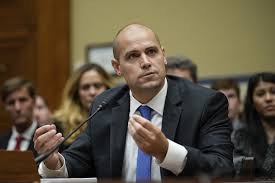
Ryan Graves spent eleven years flying F/A-18 Super Hornets for the United States Navy. He logged thousands of hours in one of the most capable combat aircraft ever built, trained extensively in threat recognition, and understood better than most what the sky looks like when something anomalous enters it. Which is why what he and his squadron began encountering off the Virginia coast around 2014 — and continued to encounter with near-daily regularity for years — could not be explained away as misidentification or instrument error.
The objects Graves and his fellow pilots observed were tracked simultaneously on multiple sensor systems: radar, infrared targeting pods, and direct visual observation. They appeared at altitudes above 30,000 feet, held their position against 120-knot winds — something no known balloon or drone could manage — and were occasionally observed descending at speed before stopping abruptly and hovering. On at least one occasion, two F/A-18s nearly collided with one of the objects during a training exercise. The pilots filed safety reports. The reports, Graves later said, went nowhere.
What distinguished Graves from the long history of military UAP witnesses who stayed quiet was his decision to go public — methodically and on the record. He first spoke to the New York Times for its landmark 2019 investigation into Navy UAP encounters, and he became one of the founding voices pushing for a formal reporting mechanism within the military. His argument was not that the objects were extraterrestrial; it was simpler and more troubling. Something was operating in restricted U.S. airspace on a near-daily basis, and no one in the chain of command appeared to know what it was or take the reports seriously.
In July 2023, Graves testified before the House Oversight Committee's national security subcommittee — the first congressional UAP hearing to place witnesses under oath. Appearing alongside former intelligence officer David Grusch and retired Navy commander David Fravor, Graves told lawmakers that UAP encounters represented a serious and underreported aviation safety issue. He described a culture of stigma within the military that discouraged pilots from reporting what they saw for fear of career consequences. Many of his former colleagues, he said, chose silence over scrutiny. The ones who did report were often met with indifference or quiet ridicule.
Graves founded Americans for Safe Aerospace, a nonprofit organization dedicated to creating safe and normalized reporting channels for military and commercial pilots who encounter UAPs. The organization reflects his core argument: that whatever these objects are — advanced foreign technology, something unknown, or something else entirely — the failure to investigate them rigorously is itself a national security failure. A military that cannot account for what is flying through its training ranges is a military operating with a dangerous blind spot.
His testimony and his subsequent advocacy represent something rare in the UAP conversation: a credible, active-duty-trained witness who is neither sensationalizing what he saw nor dismissing it, but demanding that institutions treat it with the seriousness it warrants. In an area of public life long dominated by speculation and ridicule, Ryan Graves has tried, with considerable discipline, to move the conversation onto firmer ground.
Watch
Ryan Graves — Congressional UAP Testimony (2023)
Recommended Reading