David Fravor’s Tic-Tac: The Encounter That Changed Everything
An 18-year Navy aviator with 6,000 hours of flight time describes an object that mirrored his movements, vanished instantly, and reappeared sixty miles away.

“All the Skies That Are Fit to Print”
An 18-year Navy aviator with 6,000 hours of flight time describes an object that mirrored his movements, vanished instantly, and reappeared sixty miles away.
Commander David Fravor is not a casual observer. He spent eighteen years in the United States Navy as a carrier-based aviator, logging over 6,000 flight hours and accumulating combat experience in multiple deployments. At the time of the November 2004 encounter, he commanded Strike Fighter Squadron 41 — the Black Aces — flying the F/A-18F Super Hornet from the USS Nimitz. His career record and professional credibility are the reason his account carries the weight it does. He is, in the taxonomy of UAP witnesses, exactly the kind of person whose testimony cannot be easily dismissed.
On the morning of 14 November 2004, Fravor and his wingman were vectored toward an anomalous radar contact approximately 100 miles off the coast of San Diego. The controller aboard the USS Princeton, which had been tracking the object for two weeks, directed them to a position where they could attempt a visual intercept. Below Fravor’s aircraft, he observed a disturbance on the ocean surface — a circular churning of water approximately 50 to 100 feet across — and above it, a white elongated object roughly the size of an F/A-18, with no wings, no exhaust ports, no visible means of propulsion. It hovered in place.
What happened next is the part of the account that has defined the case. As Fravor descended toward the object in a circular intercept pattern, the object began mirroring his movements — ascending as he descended, tracking his arc. When Fravor committed to a direct intercept run, the object accelerated away and vanished. Not rapidly. Instantly. Gone from visual range and from the Princeton’s radar simultaneously, in a way that no known aircraft can achieve.
The Princeton then picked up the object’s radar return sixty miles away at the combat air patrol rendezvous point that Fravor’s flight had been heading toward. The object appeared to have known the destination and positioned itself there before the aircraft arrived. Fravor’s wingman, Lieutenant Alex Dietrich, also observed the encounter. She confirmed Fravor’s account publicly in 2020 — the first time she had spoken on the record. Two trained combat aviators, from two separate aircraft, describing the same object making the same impossible manoeuvres.
In 2019, Fravor testified before the Senate Armed Services Committee. Under oath, he described the object’s performance characteristics in technical aviation terms: instantaneous acceleration with no visible propulsion system, hypersonic speed with no thermal bloom, the ability to hold station against a 60-knot wind without control surfaces, and an intercept pattern that suggested awareness of his intentions. His conclusion, stated directly, was that no nation on Earth possesses this technology. He has repeated that assessment in every subsequent public appearance.
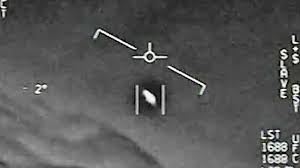
The distinction between the FLIR1 infrared video and Fravor’s visual intercept is important and often missed. The video shows what a later crew’s infrared camera recorded — a thermal signature at range. Fravor’s account is based on direct visual observation at close range from a combat aircraft. He has noted repeatedly that the video does not capture what he saw in terms of the object’s manoeuvrability. The visual encounter and the filmed encounter are separate data points that corroborate each other but do not duplicate each other.
Fravor has become the most credible single witness in the history of modern UAP research — not because of what he believes, but because of who he is and what he has consistently described. His 2019 Senate testimony is the pivotal document in the shift from UAP as a fringe subject to UAP as a national security matter. When the Pentagon established the All-domain Anomaly Resolution Office in 2022, and when Congress passed the UAP Disclosure Act in 2023, it was Fravor’s account — unchanging, technically precise, and delivered under oath — that most clearly made the case that the subject required serious institutional attention.
Fravor’s complete testimony under oath before the Senate — describing the object’s performance characteristics in technical aviation terms and explaining why no known technology accounts for what he observed.
The declassified infrared footage of the Tic-Tac object, officially released by the Pentagon in 2020 and confirmed as genuine by the U.S. Navy.
UFOs: Generals, Pilots and Government Officials Go on the Record (2010)
Leslie Kean’s landmark survey of military UAP witnesses — the essential context for understanding why Fravor’s testimony carries the weight it does.
View on Amazon →Imminent: Inside the Pentagon’s Hunt for UFOs — Luis Elizondo (2024)
The documentary history of American government UAP engagement — the Nimitz case is the pivot point around which the modern disclosure era turns.
View on Amazon →The Hunt for Zero Point — Nick Cook (2002)
Jane’s Defence Weekly journalist Nick Cook’s investigation into classified anti-gravity and propulsion research — the technological context that makes the Tic-Tac’s flight characteristics so significant to military analysts.
View on Amazon →Prefer to listen? These titles and thousands more are available on Audible.
🎧 Try Audible Free → 30-day trial