
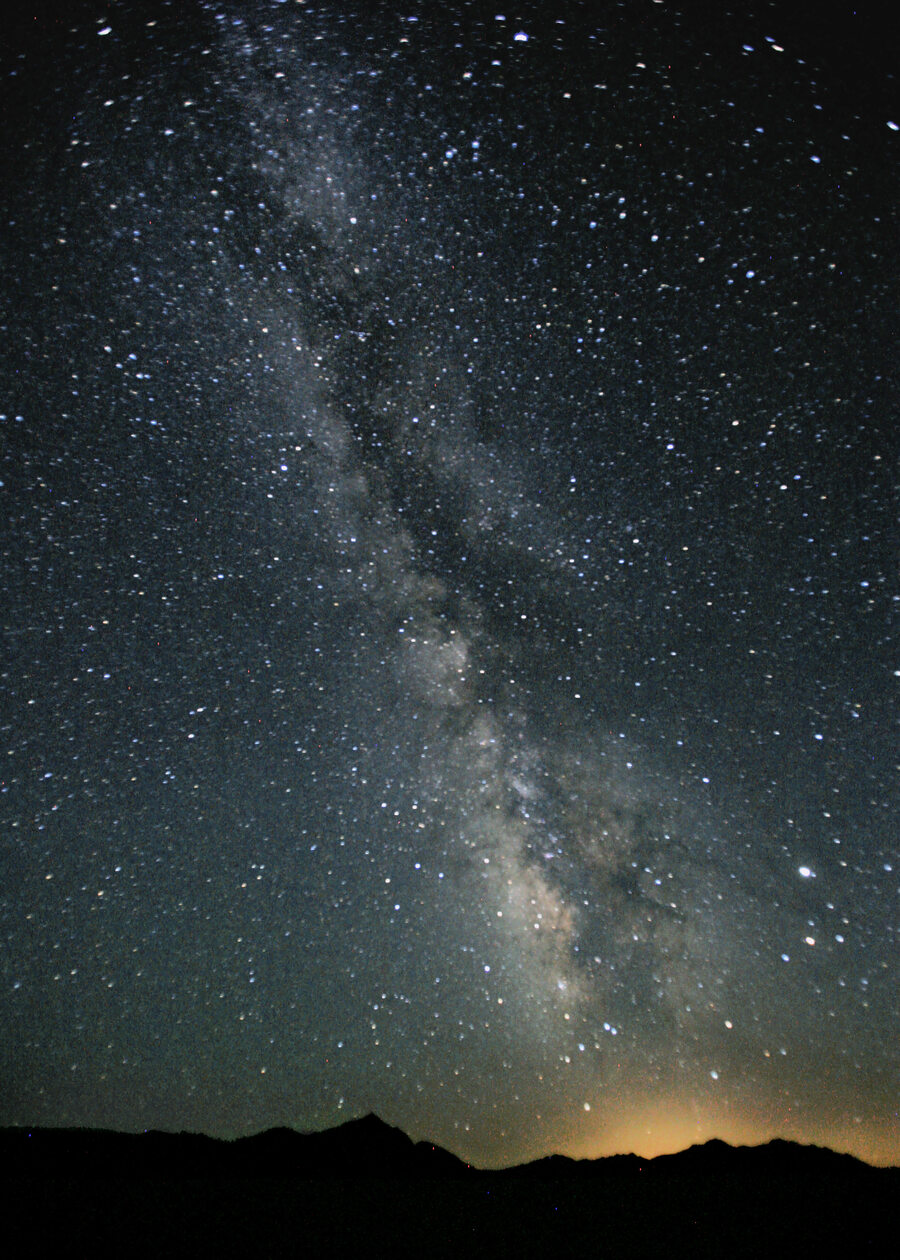
The universe has existed for 13.8 billion years. Humanity has been asking serious scientific questions about it for roughly three centuries. Every honest reckoning with that proportion leads to the same conclusion: most of what there is to know, we do not yet know.
Every month, The UFO Times publishes a list of questions.
Not answers. Not theories. Questions.
This is the first edition.
The ten questions below were chosen by a single criterion: each remains genuinely, scientifically unanswered. None assumes an extraterrestrial explanation. Some do not even assume an unusual phenomenon. All deserve a real answer — and do not yet have one.
That, in our view, is the most honest thing we can say about the current state of UAP research. The field has made real progress. Institutions have changed. Scientists have engaged. Governments have released records. And yet, when you strip away the press conferences and the headlines and the social media cycles, you are left with a long list of questions that still have no satisfying scientific answer.
Most UFO publications ask readers to believe. The UFO Times asks readers to examine. This feature is where that commitment becomes concrete: here is what we genuinely do not know, stated plainly, without pretending otherwise.
We will be back in August with ten more.
Question 01
What caused the 2004 Tic Tac encounter?
The USS Nimitz incident is arguably the most well-documented UAP event in American military history. Multiple trained pilots — experienced naval aviators with thousands of flight hours — observed an object exhibiting no visible propulsion system, no exhaust signature, and movement that appeared to violate basic principles of aerodynamics. The encounter was recorded on forward-looking infrared camera. Radar data was captured by multiple independent systems across different vessels. The footage was officially declassified and released by the U.S. Department of Defense in 2020.
And yet, no explanation has been formally confirmed.
AARO, the All-domain Anomaly Resolution Office, has not issued a definitive finding on the Nimitz case. Former Navy pilots who observed the object — including Commander David Fravor, who flew directly toward it — have maintained that it behaved in ways they could not account for with any known aircraft or natural phenomenon. Independent analyses have proposed everything from advanced drone platforms to atmospheric plasma phenomena, but none has achieved scientific consensus.
What caused it? After more than two decades, we do not know.
Question 02
Why do some UAP cases remain unresolved after official investigation?
AARO has reviewed hundreds of UAP reports. The majority have been resolved — misidentified civilian aircraft, weather balloons, commercial drones, atmospheric phenomena, sensor artifacts and calibration errors. Investigators with access to classified sensor data and military records are skilled at identifying the mundane.
But a meaningful fraction — approximately two to five percent depending on the reporting period — remains unresolved. Not "unexplained because the data was poor." Unresolved despite good data, expert analysis, and full access to the relevant records.
That fraction is the scientifically important one. Insufficient data is the most common reason a case remains open. But some cases resist explanation even when the data is relatively strong. The characteristics of that specific subset — what makes those cases different from the ones that resolve cleanly — have not been described in sufficient public detail to allow meaningful independent assessment.
Why do they remain unresolved? The full answer is not yet public.
Question 03
Why are orb reports increasing?
Military pilots, commercial aviators, and government surveillance systems are logging a statistically notable increase in reports of spherical or orb-shaped objects — often metallic in appearance, often at altitude, often moving in ways inconsistent with any identified drone platform currently in service.
There are at least four plausible explanations. The increase could reflect genuine proliferation of novel objects — whether adversarial technology, unknown atmospheric phenomena, or something else. It could reflect improved sensor technology now detecting objects that were always present but previously undetected. It could reflect a change in reporting culture — military personnel are now actively encouraged to report unusual observations rather than stay silent for fear of career consequences. Or some combination of all three.
The current data cannot reliably distinguish between these explanations. Each implies a fundamentally different response: proliferation of adversarial technology demands a national security reaction; atmospheric phenomena demand scientific investigation; improved detection demands recalibration of what counts as anomalous. Getting the answer wrong is expensive in different ways depending on which explanation is actually true.
We don't know which it is.
Question 04
Why do military sensors sometimes disagree?
One of the most consistent findings in serious UAP research is that radar and infrared systems — even when observing what appears to be the same event — sometimes produce conflicting data. An object detected on radar does not appear on infrared. An object captured on video does not appear on radar at all. Pilots visually confirm something that instruments do not register, or instruments register something pilots cannot see.
In many cases, the disagreement is explicable: different sensors detect different things, and some phenomena are visible to one part of the electromagnetic spectrum but not another. A plasma discharge might be visible optically without appearing on radar. A metallic object might appear on radar without emitting the thermal signature that infrared systems would register.
But in a documented subset of cases, the sensor disagreement is harder to account for and has not been formally explained in any public analysis. Either sensor systems have capabilities and limitations we have not fully characterized — or some observed phenomena interact with electromagnetic systems in ways that do not map to known physics. Both possibilities have serious implications. Neither has been ruled out.
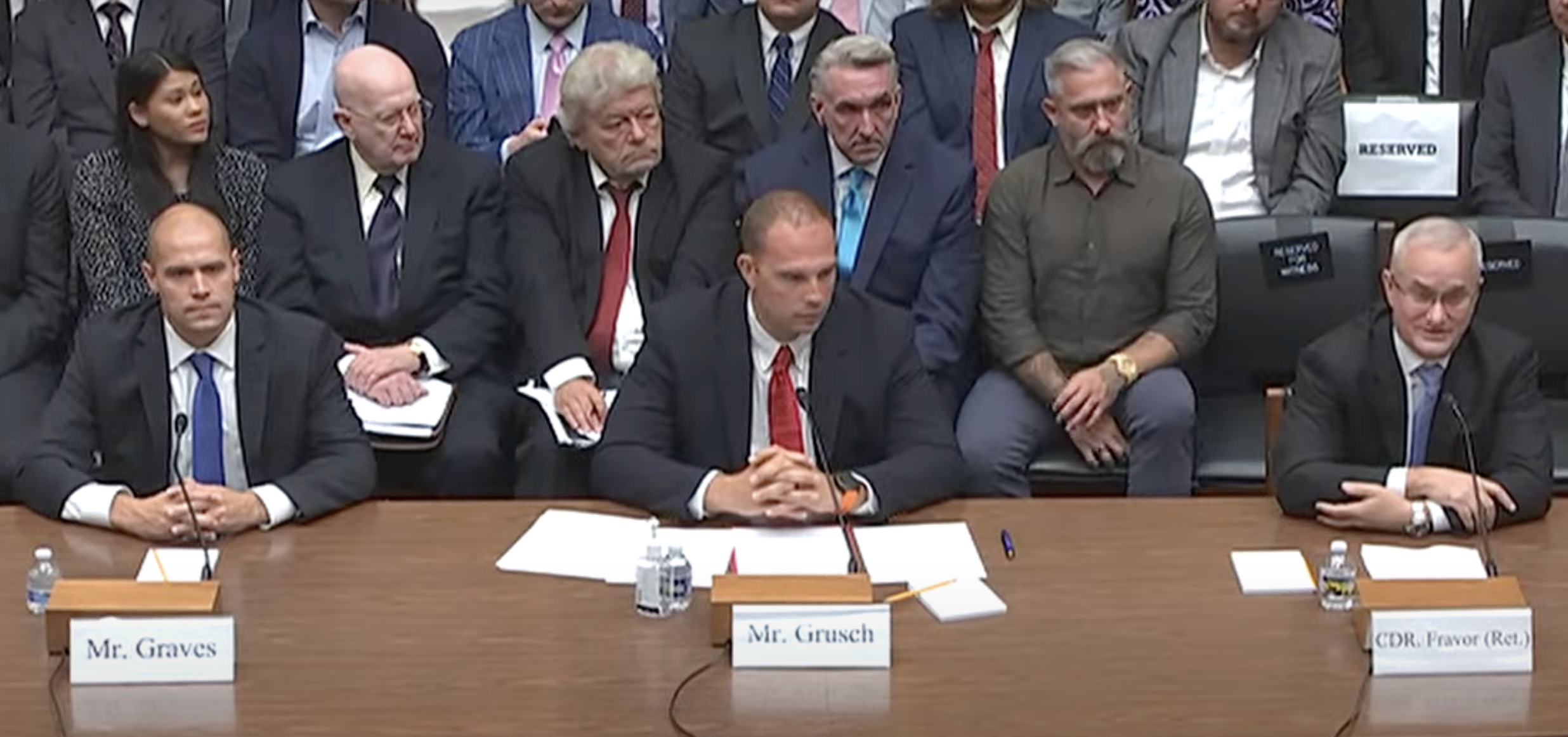
The 2023 Congressional UAP hearings marked a turning point: for the first time, elected officials publicly pressed intelligence officials not just for answers, but for explanations of why answers were being withheld. The question of classification — what is hidden, why, and by whose authority — became a matter of formal legislative concern.
Question 05
Why do governments classify some UAP data?
The U.S. government has declassified significant UAP materials since 2017 — sensor footage, incident reports, program names, budget figures. But classification remains applied to a substantial portion of UAP-related records. Not just the raw sensor data, but in some cases the analysis drawn from it and the conclusions reached about individual cases.
The standard public justification is source and method protection: releasing the data would reveal the capabilities and positioning of intelligence-gathering systems. That is a legitimate reason. Adversaries who learn what sensors can detect, and from what distances, gain a tactical advantage that no democratic government should hand over lightly.
But Congressional oversight committees have repeatedly expressed frustration that classification may be serving purposes beyond source and method protection. Some members of Congress have gone further, suggesting that certain UAP records are classified in ways that do not clearly serve national security — and that the classification system itself may have been used to limit oversight rather than enable it. Whether that is true, how widespread it is, and what the classified material actually contains, remain matters of genuine uncertainty.
The honest answer to why some data stays classified is that we don't fully know.
Question 06
What would constitute convincing evidence of non-human technology?
This question is rarely asked directly in public UAP discourse — and that omission is itself a problem.
The scientific standard for an extraordinary claim is extraordinary evidence. That standard, in the UAP context, is almost never defined with enough specificity to be useful. What would the evidence look like? What characteristics would need to be present? What tests would need to be run? What would rule out every known human or natural explanation with sufficient confidence to justify an extraordinary conclusion?
Without a defined evidential threshold — established in advance, publicly, with clear criteria — the conversation tends toward two unhelpful extremes: credulous acceptance of insufficient evidence on one end, reflexive dismissal regardless of evidence quality on the other. Neither is a scientific posture. Both are ways of avoiding the hard work of specifying what we would actually need to see before we could responsibly claim to know something important.
Defining what would constitute convincing evidence of non-human technology — in advance, rigorously, with input from the scientific community — is one of the most valuable things the research community could do. As far as we are aware, no authoritative body has attempted it in a published, peer-reviewable form.
Question 07
Can AI improve UAP anomaly detection?
Machine learning systems are increasingly applied to sensor data across military, scientific, and commercial domains. The question of whether AI tools could improve the detection and classification of UAP anomalies — particularly in real time, across multiple sensor types simultaneously — is an active research question with potentially significant implications.
Preliminary work suggests that machine learning can identify patterns in radar and infrared data that human analysts miss, particularly when processing volumes of data too large for manual review. The Galileo Project, led by Harvard astrophysicist Avi Loeb, is among the research efforts exploring systematic, sensor-based approaches to anomaly detection that could eventually be supported by AI classification.
But there is a methodological problem worth taking seriously. AI systems trained on catalogues of known aircraft and weather phenomena may systematically misclassify genuinely anomalous objects — forcing them into the nearest familiar category rather than flagging them as unrecognised. A system designed to recognise what it has already seen may be poorly suited to reliably detecting what it has never encountered. Whether AI will ultimately reduce ambiguity in UAP data or introduce new forms of it is not yet established. The research is underway. The results are not yet in.
Question 08
Are there natural atmospheric phenomena we still poorly understand?
The honest answer is yes — and this is more relevant to the UAP conversation than it usually receives credit for.
Ball lightning, a phenomenon reported by credible witnesses across cultures and centuries, remained scientifically controversial until relatively recently. Sprites — large-scale electrical discharges occurring above thunderstorms — were not photographed until 1989, despite almost certainly having occurred throughout human history. Elves, jets, and other transient luminous events in the upper atmosphere were similarly documented only after the development of sufficiently sensitive imaging technology. In each case, the phenomenon was real, had been observed by genuine witnesses, and was poorly characterised by science for a long time before becoming well understood.
The implication is worth taking seriously: the assumption that our catalog of atmospheric and electromagnetic phenomena is essentially complete may not be well-founded. If there are additional natural phenomena that remain poorly characterised — and that produce visual, radar, or infrared signatures consistent with reported UAP descriptions — then investigating our own atmosphere more rigorously is a legitimate scientific priority, independent of any claims about non-human technology.
What we don't know about our own atmosphere is worth investigating before drawing conclusions about what lies beyond it.
Question 09
What evidence would change scientific opinion?
Scientific consensus on UAPs has shifted significantly since 2017. Phenomena that were considered unworthy of serious investigation are now the subject of government programs, Congressional testimony, academic research, and peer-reviewed publication. That shift is real and important.
But the shift has been driven, in large part, by institutional and political developments rather than new physical evidence. It was the release of the FLIR footage, the credibility of military witnesses, and the pressure of Congressional attention that moved the scientific community — not a new physical object, a reproducible experimental result, or a definitive sensor measurement. The evidence that actually changed minds was largely testimonial and archival rather than physical and verifiable.
The question of what evidence would most effectively shift scientific consensus — in either direction, toward or away from extraordinary explanations — is important for understanding where research resources should be directed. For some scientists, the answer is a physical artifact of clearly non-human origin. For others, multi-sensor data of sufficient quality and provenance to rule out all conventional explanations. For others still, access to classified material that has not been made available to independent researchers. The scientific community has not converged on an answer. That lack of convergence is itself a significant issue for the field.
Question 10
What evidence would falsify extraordinary claims?
The most important question on this list — and the one most rarely asked.
Scientific claims are meaningful only if they can, in principle, be demonstrated to be wrong. A hypothesis that cannot be falsified is not a scientific hypothesis. It is a belief. The claim that some UAPs represent non-human technology, to be scientifically credible, must come with a specification of what evidence would disprove it. What would investigators need to find — or fail to find — for proponents to conclude that ordinary explanations are more likely than extraordinary ones?
This question is almost never posed directly in public UAP discourse. Proponents of the extraterrestrial hypothesis rarely specify what they would accept as a disproof. That omission is not a minor methodological gap. It is the difference between a scientific investigation and a conviction in search of supporting evidence. The latter is common in UAP discourse. The former is what the subject actually needs.
The UFO Times asks the question directly: what evidence, if discovered, would convince you that UAPs have conventional explanations? The answer matters. An investigation without an exit condition — a clear sense of what evidence would resolve the question in either direction — is not an investigation. It is something closer to a vigil.
We believe the question deserves a rigorous public answer. We are still waiting for one.
That Is July 2026
Ten questions. No answers — because the honest ones are not yet available.
We will be back in August with ten more. If you have a question you believe belongs on this list — one that is genuine, that has no current scientific answer, and that does not presuppose any particular conclusion — the editorial board wants to hear it. The best reader-submitted questions will appear in future editions.
The goal of this feature is not to accumulate mysteries. It is to document what remains unknown with enough precision that, eventually, the right people ask the right questions in the right places. That is how unknown things become known.
■ The UFO Times Editorial Principles
— The UFO Times Editorial Board · theufotimes.com · Est. 2010
Recommended Reading
UFOs: Generals, Pilots and Government Officials Go on the Record — Leslie Kean (2010)
The best single-volume survey of what credible witnesses have reported and what governments have acknowledged — essential for understanding what the evidence actually establishes versus what remains genuinely unknown.
View on Amazon →American Cosmic: UFOs, Religion, Technology — D.W. Pasulka (2019)
Pasulka’s ethnographic study of UAP research culture — a rare account of what the people closest to the phenomenon actually believe, and why the gap between public knowledge and insider knowledge remains so large.
View on Amazon →A.D. After Disclosure — Richard Dolan & Bryce Zabel (2012)
The most rigorous treatment of what the unknown questions ultimately require — what it would take to move from ‘we don’t know’ to official acknowledgement, and what that acknowledgement would actually produce.
View on Amazon →