
Records released on September 25, 2026 under FOIA case 26-F-1773 provide a significantly more detailed picture of the Pentagon’s August 2025 UAP data workshop — and document a separate engagement that AARO’s public report never mentioned: a planned meeting at the Pentagon between AARO personnel and representatives of Uruguay’s official UAP investigation body, with an explicit agenda item for “Discussion of Briefings and Future Collaboration.”
The records were obtained by researcher John Greenewald through The Black Vault and published September 25. According to Greenewald’s analysis of the release package, AARO identified 89 responsive pages. Nineteen were withheld entirely under FOIA Exemption (b)(5). Portions of the remaining released pages were redacted under Exemptions (b)(5) and (b)(6).
The most significant new material is twofold: a working agenda that names speakers and panelists absent from the generic schedule AARO published in its official workshop paper, and correspondence documenting pre-workshop contact between AARO and the Uruguayan Air Force commission responsible for UAP investigation.
What the 2025 Workshop Was
The workshop took place on August 5 and 6, 2025 in Vienna, Virginia, sponsored by AARO and hosted at the offices of Associated Universities, Inc. — a nonprofit research management organisation best known for operating the National Radio Astronomy Observatory. Approximately 40 people participated. The event was not publicly advertised in advance. AARO’s own paper, published February 13, 2026, acknowledged this explicitly: organizers “decided not to publicize the workshop online beforehand to limit outside attention and encourage comfort and open discourse among an intimate group of participants.”
That description accurately characterises the workshop’s scope. It was not a classified intelligence briefing and was not convened to evaluate whether any UAP report involved nonhuman technology. Its stated purpose was more specific and methodological: how to collect, preserve, standardize and analyze the large, heterogeneous body of narrative UAP reports that currently exists across military, civilian, archival and social-media sources.
A networking social took place the evening of August 4. The two main days covered six structured sessions: three breakout discussions, two plenary talks, two panel discussions and a series of participant lightning talks. AARO and Florida State University organized the event in collaboration with AUI. The final report was designated 26-P-0344.
Who Was Represented
AARO’s public paper described participants as coming from “government, academia, and independent research organizations,” selected based on expertise in AI and machine learning, UAP research and data, physical and natural sciences, information and data science, archives and records, cyberinfrastructure, and human and social sciences. The final group numbered 40; the invitation letter had originally estimated 25 to 30.
The released working agenda names specific speakers and panelists whose identities were omitted from the generic agenda AARO published: government personnel, data scientists, physicists, archivists and researchers affiliated with civilian UAP reporting databases. Privacy provisions in the public paper asked participants to keep individual statements unattributed.
The Planned Pentagon Meeting with Uruguay’s CRIDOVNI
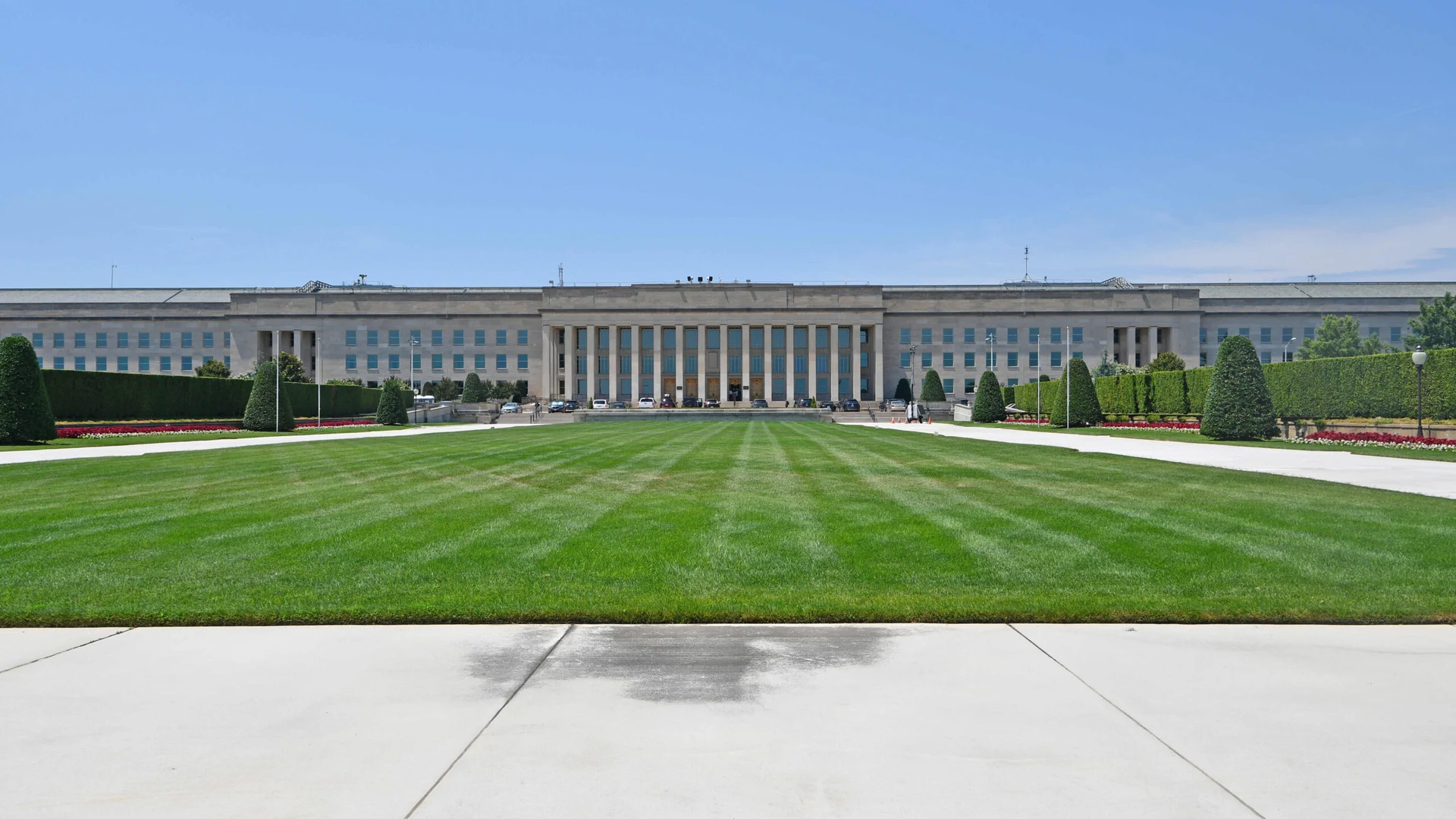
The most significant new material in the FOIA release concerns a day that preceded the workshop entirely. According to the records, AARO arranged for representatives of Uruguay’s Comisión Receptora e Investigadora de Denuncias de Objetos Voladores No Identificados — known by its acronym, CRIDOVNI — to visit the Pentagon on August 4, 2025, the day before the data workshop began.
The released schedule, according to the FOIA package, lists three agenda items for that meeting: a “CRIDOVNI Mission Briefing,” an “AARO Mission Briefing,” and a “Discussion of Briefings and Future Collaboration.” The correspondence also described a planned lunch with senior AARO personnel and a Pentagon tour.
CRIDOVNI is Uruguay’s official commission for receiving and investigating UAP reports. It operates within the Uruguayan Air Force (Fuerza Aérea Uruguaya). It is an official department of the Uruguayan Air Force, not a private or NGO-affiliated body.
According to the FOIA package, AARO sought specific information from the Uruguayan representatives: details about CRIDOVNI’s investigative process, the analytical tools it uses, how it handles cases with limited technical data, which cases it considers notable, and what institutional relationships it maintains. Correspondence in the release also shows that AARO asked the Uruguayan representatives to identify contacts with other South American UAP research organizations — suggesting AARO was interested in broadening its network beyond Uruguay.
An email referenced in the FOIA records discussed a proposed follow-on data workshop in early 2026. The records do not confirm whether that workshop took place.
What AARO Wanted from Narrative Data
Understanding the CRIDOVNI engagement requires understanding what problem the broader workshop was trying to solve. Most UAP reports are, in AARO’s own words, “fragmented, sparse, and unstructured.” They originate from military pilots, archival records, online reporting systems and civilian witnesses. They lack standardized metadata, consistent terminology and verifiable chains of custody. Integrating them at scale requires solving problems of classification, translation, stigma, incompatible formats and weak retention policies — all of which workshop participants explicitly identified.
The workshop’s proposed solutions were methodological. Participants called for standardized metadata templates, pilot integration projects and improved reporting interfaces. On artificial intelligence, the workshop was cautious: AI can assist with transcription, clustering and triage, but risks introducing hallucination and amplifying bias. Human oversight was described as essential at every stage.
The CRIDOVNI engagement fits naturally into this framework. Uruguay’s commission maintains its own archive of cases and institutional relationships across South America. AARO’s interest in CRIDOVNI’s methods was consistent with the workshop’s larger goal: building a research infrastructure capable of handling data from different countries, record formats and investigative traditions.
What Was Withheld
According to The Black Vault’s analysis, AARO identified 89 pages as responsive to the FOIA request. Of those, 19 were withheld entirely under Exemption (b)(5); portions of the remaining pages were redacted under Exemptions (b)(5) and (b)(6).
Exemption (b)(5) covers inter-agency or intra-agency deliberative communications — draft analyses, internal recommendations, pre-decisional discussions. Its application here does not, by itself, indicate that the withheld pages contain extraordinary information; it is a routine exemption applied to administrative planning materials. Exemption (b)(6) protects personal privacy information. Readers cannot evaluate the full record without knowing what the 19 withheld pages contain.
What Remains Unknown
The released records leave several questions unanswered. The identities of all 40 workshop attendees have not been publicly confirmed. The released working agenda names speakers and panelists, but the full participant list has not been made public. The contents of the 19 fully withheld pages are unknown.
More substantively, the records do not establish whether a formal information-sharing agreement between AARO and CRIDOVNI was ever concluded. They document a planned meeting and an agenda for discussing future collaboration. They do not include a signed agreement, a memorandum of understanding or any subsequent confirmation that the proposed collaboration moved forward. The proposed follow-on workshop mentioned in an email has not been confirmed as having taken place.
Scheduled meetings do not always occur as planned. The records show what was arranged and proposed; they are not evidence of what was ultimately discussed, agreed or implemented.
Why This Matters
The significance of these records is institutional and methodological. They document AARO doing something it had not publicly described: reaching out to a foreign government’s official UAP investigation body, comparing investigative methods and discussing possible future cooperation. That is meaningful for how the United States government was approaching UAP research in 2025 — not as a purely domestic matter, but as a domain where data from international partners could have value.
It is also worth being clear about what the records do not show. They do not establish that AARO and CRIDOVNI exchanged classified information or that either organization possesses evidence of technology beyond known human or natural causes. The planned engagement was framed as a professional exchange between two government bodies with overlapping mandates: collecting, analyzing and preserving records of anomalous aerial phenomena.
The fuller workshop agenda, with its named participants, may be the more significant long-term disclosure in this release — providing a more accurate record of who shaped AARO’s data strategy at the moment it was being built. These documents matter not because they answer what UAP are, but because they clarify, in more detail than was previously available, how the United States government was trying to build the tools to study them.
Sources and Further Reading
- Department of Defense, FOIA Response and Release Package, Case 26-F-1773, September 14, 2026 — primary source (official government FOIA response). States 89 responsive pages located; 19 withheld entirely under (b)(5); portions of remaining 70 redacted under (b)(5) and (b)(6). Released package obtained by The Black Vault. Full release (PDF) → documents3.theblackvault.com
- AARO, “2025 UAP Workshop: Narrative Data, Infrastructures, and Analysis” (Report 26-P-0344), February 13, 2026 — primary source (official AARO synthesis and recommendations). The public workshop paper on which portions of this article are based. Does not name all participants and does not reference the CRIDOVNI engagement. Full report (PDF) → aaro.mil
- AARO, UAP Records / Information Papers — primary source (official AARO document archive). Index page for all AARO-released papers and reports. aaro.mil/UAP-Records/ →
- The Black Vault, John Greenewald, “Behind AARO’s Private UAP Workshop: New Records Detail Participants, Foreign Outreach and Future Plans,” September 25, 2026 — document-based reporting (FOIA researcher and journalist). Primary source for the FOIA release analysis, participant identification and CRIDOVNI correspondence details. Includes the original release package. theblackvault.com →
- Associated Universities, Inc. (AUI), “AARO Releases Report on Unidentified Anomalous Phenomena (UAP),” February 19, 2026 — institutional disclosure (host organization). AUI’s confirmation of its role hosting the workshop and its collaboration with AARO and Florida State University. aui.edu →