

The Torah's Book of Exodus contains the most detailed description of the Ark of the Covenant ever written — a construction manual of extraordinary specificity, covering dimensions, materials, and the arrangement of the mercy seat with extraordinary precision. Engineers who have read it carefully have noticed something: it reads less like a religious text and more like a technical blueprint.
The second book of the Bible describes, in chapters 25 through 40, the construction of an object so specific in its dimensions, materials, and properties that scholars have been arguing about what it was — and what it could do — for three thousand years.
The object is the Ark of the Covenant. And if you read the accounts of what it actually did to the people around it, you quickly realize that "sacred relic" may be the least adequate description ever applied to any object in human history.
It killed men who touched it. It guided an army through a forty-year wilderness journey. It parted the Jordan River. It brought down the walls of Jericho — reportedly through sound alone. It emitted light. It communicated. And then, somewhere between the reign of King Solomon and the Babylonian conquest of Jerusalem in 586 BCE, it vanished — and has not been seen since.
The question of where it went is fascinating. The question of what it was may be more important.
What the Bible Actually Says
The construction specifications for the Ark are given in Exodus 25:10–22 with a precision unusual for religious literature. The Ark was to be built from acacia wood — a non-conducting material — and overlaid on both the inside and outside with pure gold. Its dimensions: 2.5 cubits long, 1.5 cubits wide, 1.5 cubits high (approximately 130 × 78 × 78 centimetres). It was to have a golden lid — the "mercy seat" — with two golden cherubim on top, their wings extending over the lid, facing each other.
Around the Ark, a golden crown or border was to be fitted. Four golden rings were to be attached to its four corners, through which two acacia-wood poles — also gold-plated — were to be inserted for carrying. Critically: the poles were never to be removed from the rings. The Ark was never to be set down directly on the ground. And it was never to be touched by human hands.
This last point was not merely ritual. It was a matter of life and death.
In 2 Samuel 6, a man named Uzzah reaches out to steady the Ark when the cart carrying it stumbles. He touches it. He dies instantly. The Hebrew text describes his death as the "anger of the Lord" — but the physical description is that of someone struck by an overwhelming force. The Ark also killed 50,070 men of Beth Shemesh who looked into it (1 Samuel 6:19). Priests who handled it were required to wear specific clothing, carry it in a specific way, and approach it under specific ritual conditions that, read carefully, look very much like safety protocols.
The Capacitor Theory
In the 1970s, electrical engineer Roger Sandell and subsequently others including physicist Nikola Tesla biographer W. Bernard Carlson and alternative researcher David Hatcher Childress independently examined the Ark's specifications and arrived at the same conclusion: its construction is consistent with that of a large electrical capacitor.
Consider the structure. An inner layer of acacia wood. A layer of gold on the inside. Another layer of acacia wood. A layer of gold on the outside. Two conducting layers separated by a non-conducting layer — the precise architecture of a capacitor. The golden crown around the edge, the mercy seat on top, the specific carrying instructions using non-conducting wooden poles: all of it is consistent with a device designed to accumulate and discharge electrical charge.
In the dry conditions of the Sinai desert, exposed to static electricity building through sand and wind, a device of this construction could theoretically accumulate a substantial electrical charge over time. Touching it without grounding protection could be lethal. The ritual protocols — specific clothing, non-conductive carrying poles, prohibition on touching — read less like religious ceremony and more like electrical safety procedure.
"The Ark was, in effect, a large electrical condenser or capacitor... The two cherubim on top served as the terminals of a condenser which by friction with sand particles could build up a tremendous charge." — Engineer Nikola Alexandrov, analysis of Exodus specifications
The "voice of God" that spoke from between the cherubim? Consistent with the crackling discharge of a large capacitor through the gap between the two golden figures. The light that reportedly emanated from the mercy seat — the Shekinah — consistent with the corona discharge effect visible around highly charged conductors. The death of Uzzah: consistent with a massive electrical shock.
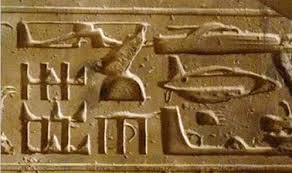
The Temple of Seti I at Abydos, Egypt. The Ark's origin story is set in Egypt — Moses received the instructions for its construction while the Israelites were leaving Egyptian captivity. Some researchers have noted parallels between Egyptian temple technology of the New Kingdom period and the Ark's described properties, particularly in the use of gold-coated wooden structures in rituals associated with divine contact.
The Battle of Jericho: A Sonic Weapon?
The Ark's role in the Battle of Jericho adds another dimension to the mystery. Joshua 6 describes the Israelites marching around the walled city of Jericho for seven days, carrying the Ark. On the seventh day, they marched around it seven times, the priests blew their trumpets, the people shouted — and the walls fell.
The conventional reading is miraculous: God brought the walls down. But several researchers, including acoustic engineers who have studied the account, have noted that the description — circular marching patterns around the walls, sustained trumpet sound, a coordinated resonant shout — is consistent with inducing resonant frequency vibration in a stone structure. Acoustic resonance can, at sufficient amplitude and frequency, cause structural failure in stone and mortar. Modern demolition engineers understand this.
Whether the Ark itself played a role in the acoustic assault — perhaps as an amplifying or generating device — is speculative. What is notable is that the account describes a highly specific ritual protocol whose physical description is consistent with a weapon based on sound physics rather than supernatural intervention.
The Ancient Astronaut Interpretation
The ancient astronaut reading of the Ark is that it was a piece of advanced technology — either of extraterrestrial origin or produced by a now-lost advanced human civilization — given to Moses as a communications device, a weapon, and a power source. In this interpretation, the "God" who communicated through the Ark was not a supernatural being but an extraterrestrial intelligence using advanced technology to guide the Israelite people.
Erich von Däniken, who examined the Ark in detail in Chariots of the Gods, argued that its specifications suggest a device beyond the technological capability of the ancient Israelites — that the knowledge came from outside. The Egyptian context is relevant: Moses was raised in the Egyptian court, educated in Egyptian knowledge, and may have had access to technological traditions — of the kind evidenced by the Great Pyramid and the Dendera carvings — that were not available to ordinary Israelites.
The Ark's relationship to other "divine weapons" in the ancient world adds texture to this argument. The Brahmastra of the Mahabharata, the thunderbolt of Zeus, the weapons of the Egyptian gods — all cultures in the ancient world seem to have possessed traditions of divine weapons of extraordinary destructive power, wielded by or through contact with beings from the sky. The Ark fits this pattern precisely.
Where Is It Now?
The Ark's disappearance is one of history's greatest cold cases. The last confirmed biblical reference to it being present in the Temple of Solomon is in 2 Chronicles 35:3, during the reign of Josiah (639–609 BCE). After the Babylonian destruction of the First Temple in 586 BCE, it is not mentioned among the items of treasure carried off to Babylon. It simply vanishes from the record.
The theories about its location are numerous and have launched careers, expeditions, and at least one Indiana Jones film. The most persistent claims include Ethiopia — where the Church of Our Lady Mary of Zion in Axum claims to possess the Ark, guarded by a single monk who is never allowed to leave and who is the only person permitted to see it. Ethiopian Orthodox tradition holds that the Ark was brought to Ethiopia by Menelik I, son of King Solomon and the Queen of Sheba, in the 10th century BCE.
Other theories place it beneath the Temple Mount in Jerusalem, in a cave near Qumran (where the Dead Sea Scrolls were found), in the Vatican archives, or — in the most dramatic version — in the possession of the Knights Templar, who allegedly excavated beneath the Temple Mount during the Crusades and found something that transformed their order almost overnight from a small band of knights into one of the most powerful organizations in medieval Europe.

The Ark of the Covenant has been missing for over 2,500 years. Dozens of expeditions have searched for it. The Ethiopian Orthodox Church claims to possess it — but allows no outside verification. The Vatican has never commented. Whatever the Ark was, its disappearance was either the greatest loss in religious history or a very deliberate act of concealment.
What Mainstream Scholars Say
Mainstream biblical scholarship treats the Ark as a sacred cult object — the physical throne of God's presence among the Israelite people, not a technological device. The deaths associated with it are understood as divine punishment for ritual violation, not electrical discharge. The walls of Jericho fell because God willed it, not because of acoustic physics.
Archaeologists note that the historical existence of the Ark as a physical object is not in serious dispute — it appears consistently across multiple ancient sources and is referenced in texts by non-Israelite authors. What is disputed is its nature and its fate. The Axum claim has never been verified by independent investigators. The Temple Mount excavations that might settle the question have been politically impossible for decades.
The Honest Assessment
The capacitor theory is genuinely compelling — not because it proves the Ark was a machine, but because the physical description in Exodus is so precise, and so consistent with electrical principles, that it demands explanation. Ancient religious texts do not typically provide construction specifications. They do not typically specify interior and exterior gold plating of a wooden core. They do not typically include handling protocols that, if followed precisely, would protect a human being from electrical shock.
Whether this reflects advanced knowledge lost to history, extraterrestrial technology, or an extraordinary coincidence is a question that cannot be answered without physical examination of the object — and the object has not been available for examination for two and a half millennia.
What can be said: the Ark of the Covenant remains one of the most anomalous objects in the ancient record. Its described properties do not fit comfortably into any conventional religious or historical framework. Its disappearance — and the tenacity with which various parties claim to know where it is while refusing to allow verification — suggests that whatever it was, someone has always known it was something extraordinary.
UFO Times Evidence Assessment
- ESTABLISHED The Ark of the Covenant was a real physical object referenced consistently in multiple ancient sources. Its last confirmed biblical location was the First Temple, destroyed 586 BCE. Its current whereabouts are unknown.
- CREDIBLE The Ark's construction specifications in Exodus are consistent with the architecture of an electrical capacitor. The handling protocols described are consistent with electrical safety procedures.
- SPECULATIVE That the Ark was a functional technological device — a capacitor, a communication device, or a weapon. Consistent with the evidence but not proven by it.
- UNSUPPORTED Any specific claim about the Ark's current location. The Ethiopian Axum claim has never been independently verified. No physical evidence has been produced.
Related Investigations
Recommended Reading
The Sign and the Seal: The Quest for the Lost Ark of the Covenant — Graham Hancock (1992)
Hancock’s decade-long investigation into the Ark’s true location — tracing it from Jerusalem through Ethiopia to its alleged resting place today. The most thorough journalistic and historical treatment of the Ark’s fate.
View on Amazon →Chariots of the Gods — Erich von Däniken (1968)
Von Däniken’s foundational treatment of ancient texts as evidence for extraterrestrial contact — including his reinterpretation of the Ark as a sophisticated capacitor or communications device from an advanced civilisation.
View on Amazon →The 12th Planet — Zecharia Sitchin (1976)
Sitchin’s Sumerian text analysis proposes that the Anunnaki brought advanced technology to Earth — reading the ancient texts on which the Ark’s description is based as literal accounts of extraterrestrial engineering.
View on Amazon →Go Deeper
Essential Reading on the Ark
Graham Hancock's The Sign and the Seal is the definitive investigation into the Ark's disappearance and the Ethiopian connection. Erich von Däniken's Chariots of the Gods covers the technological interpretation. Both are in our bookstore.
Browse the Bookstore →