
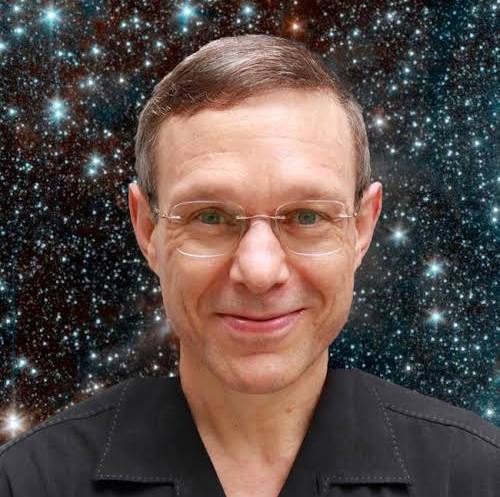
Avi Loeb arrived at the controversy over 'Oumuamua — the first confirmed interstellar object detected passing through our solar system — not as a fringe theorist but as one of the most credentialed astrophysicists in the world. As the former Chair of Harvard's Department of Astronomy, founding director of Harvard's Black Hole Initiative, and author of more than 800 peer-reviewed papers, Loeb was precisely the kind of scientist whose opinion could not be easily dismissed. In 2018, he chose to exercise that credibility in a direction that his colleagues found deeply uncomfortable.
The object in question, detected in October 2017 on a hyperbolic trajectory that confirmed it had arrived from interstellar space, displayed a set of anomalous properties that no natural explanation has satisfactorily accounted for. Its shape was wildly elongated — estimated at ten times longer than it was wide — unlike any natural object previously catalogued. More significantly, as it departed the solar system, it accelerated. Not coasted, not decelerated due to gravity, but accelerated — without any detectable outgassing, without any comet-like tail, without any mechanism that conventional physics could identify.
In a paper co-authored with Shmuel Bialy, Loeb proposed a hypothesis that set off shockwaves through the scientific establishment: 'Oumuamua might be an artificial light sail — a thin, flat structure propelled by solar radiation pressure — and it might not be of human origin. The non-gravitational acceleration, Loeb argued, was entirely consistent with an extremely low-density object being pushed by sunlight. The reaction was swift and largely hostile: colleagues accused him of sensationalism, and some questioned whether his hypothesis was falsifiable.
Loeb's response was characteristically direct. In his 2021 book Extraterrestrial: The First Sign of Intelligent Life Beyond Earth, he laid out his case and made a broader argument: that the scientific community's reflexive dismissal of the extraterrestrial hypothesis reflected not rigorous skepticism but institutional conformism — what he called the "culture of conformism" in academic science, in which researchers avoid controversial hypotheses to protect careers and funding rather than follow evidence wherever it leads.
The following year, Loeb founded the Galileo Project at Harvard — a systematic, instrument-based scientific effort to search for evidence of extraterrestrial technological objects. Unlike previous UAP research, which had largely relied on anecdotal accounts and military sensor data, the Galileo Project would deploy its own telescope arrays, high-resolution cameras, and data analysis systems to monitor the sky independently. In its first major expedition, the project retrieved microscopic spherules from the Pacific Ocean floor at the site of a 2014 meteor impact whose hyperbolic trajectory suggested an interstellar origin — and found anomalous material compositions inconsistent with known solar system objects.
Loeb's significance lies not only in his specific arguments but in what his willingness to make them represents. When one of the most credentialed figures in mainstream astrophysics publicly states that the scientific community has an obligation to take the extraterrestrial hypothesis seriously and investigate it with the same rigor applied to any other scientific question, the argument is harder to dismiss than when it comes from outside the establishment. Whether he is right about 'Oumuamua, the Galileo Project represents a genuine and methodologically serious attempt to shift the investigation of anomalous phenomena from the margins of science to its center.
Watch
Avi Loeb on 'Oumuamua, the Galileo Project, and Extraterrestrial Life