
On September 22, 2025, Dr. Steven Greer announced that a resin sample attributed to a metallic sphere associated with Guadalajara de Buga, Colombia had been submitted to the University of Georgia’s Center for Applied Isotope Studies and returned a radiocarbon age of approximately 12,560 years — predating the Egyptian pyramids by more than seven thousand years.
The result, if accurately reported, is genuinely interesting. It is not, on its own, evidence that the sphere is ancient technology, extraterrestrial hardware, or that it flew over Buga. What a carbon-14 test establishes is the radiocarbon age of the organic material that was submitted to the laboratory — in this case, a resin. The age of the resin and the age of the sphere’s manufacture are two separate questions.
This article examines what Greer said, what the University of Georgia’s laboratory can and cannot determine, and what evidence would be required to move the Buga Sphere from an interesting unresolved case to a verified anomaly.
■ What You Need to Know
- The object: A metallic sphere with engraved symbols, associated with Buga, Colombia, was publicly displayed beginning in 2025 by UAP researcher Jaime Maussan.
- The test: Greer reported that a resin sample attributed to the sphere was submitted to the University of Georgia’s Center for Applied Isotope Studies (CAIS), a legitimate accelerator mass spectrometry laboratory.
- The result: The laboratory reportedly returned a radiocarbon age of approximately 12,560 years for the submitted resin.
- The critical distinction: The test applies to the organic resin, not to the metallic shell. Dating a resin is not the same as dating the sphere’s construction, flight history or origin.
- What is not established: The sphere’s age, provenance, manufacturer and origin all remain unverified. No chain of custody from recovery to laboratory has been made public.
What Is the Buga Sphere?
The object is a metallic sphere reportedly associated with the municipality of Guadalajara de Buga in Colombia’s Valle del Cauca department. It was brought to wider international attention in 2025 by Jaime Maussan, the Mexican journalist and UAP researcher who has been centrally involved in publicising several contested cases, including the 2023 Mexico congressional hearing on alleged non-human remains.
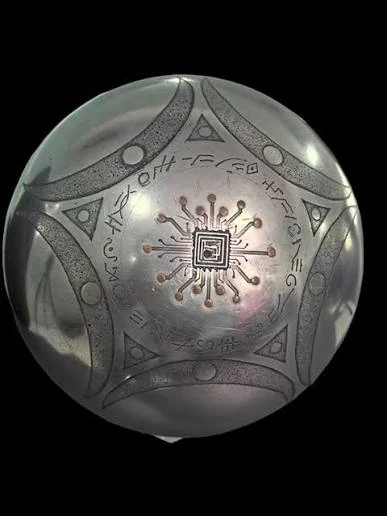
The sphere’s surface carries geometric engravings: triangular panels, circular motifs and a central design that investigators have compared to circuit schematics. Proponents have described it as seamlessly constructed, internally structured, electromagnetically active, and subject to unexplained weight variations. Those claims are based on investigators’ accounts; none has been independently replicated by a publicly named laboratory or institution whose methodology has been published.
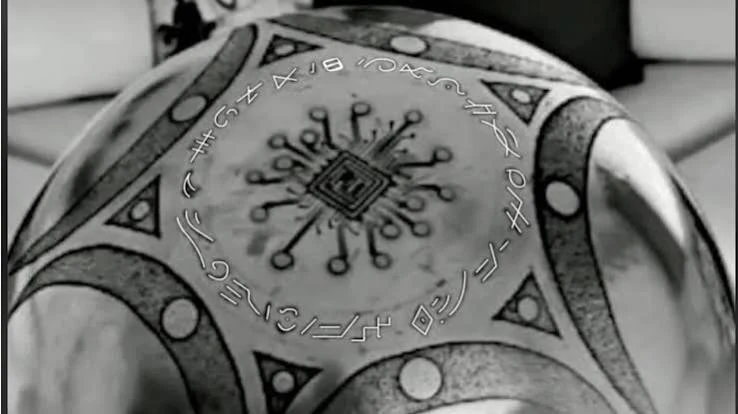
The recovery narrative — which holds that the sphere was observed airborne over Buga before being recovered — rests on witness testimony. A People magazine overview of the case documented both the investigators’ claims and the scientific skepticism they have attracted. The original flight, if it occurred, was not captured in verified video with recoverable metadata. The connection between any airborne object and the recovered sphere depends on chain-of-custody documentation that has not been made public.
What Steven Greer Announced
On September 22, 2025, Greer published a statement on his official website, drstevengreer.com, whose headline read: “The Buga Sphere resin is older than the pyramids.” He said a resin sample associated with the sphere had been submitted to the University of Georgia’s Center for Applied Isotope Studies and returned a radiocarbon age of approximately 12,560 years before present.
“The Buga Sphere resin is older than the pyramids.”
Greer did not claim to have personally recovered the sphere, extracted the resin or supervised the chain of custody. He reported the result as he received it. That is an important distinction: the question of whether Greer is accurately relaying a laboratory measurement and the question of what that measurement tells us about the sphere are separate issues. Both deserve attention.
What the University of Georgia Can and Cannot Establish
The Center for Applied Isotope Studies at the University of Georgia is a legitimate, accredited laboratory offering accelerator mass spectrometry (AMS) carbon-14 analysis. AMS dating is a well-established scientific technique capable of measuring the radiocarbon content of organic samples to a high degree of precision. The laboratory’s credibility is not in question.
What is important to understand is the scope of what such a laboratory does and does not do. A laboratory accurately measures the radiocarbon content of the material it receives. It does not authenticate the provenance, recovery history or identity of that material as supplied by the customer. A sample labelled “resin from the Buga Sphere” receives the same analytical procedure as any other submitted organic material; the laboratory’s result tells you the radiocarbon age of the carbon in the sample, not whether the sample came from where the customer says it did.
No direct confirmation from the University of Georgia verifying the sphere’s age or extraterrestrial origin has been independently documented. The appropriate description of the available result is: a laboratory result attributed to UGA reportedly dated the submitted resin sample to approximately 12,560 years before present.
What Carbon Dating Can and Cannot Prove
Carbon-14 dating works by measuring the decay of a radioactive carbon isotope present in organic material. It is reliable, well-understood and widely used in archaeology, geology and environmental science. It also has clear and well-documented limitations that are directly relevant to this case.
✓ What the Test May Show
The approximate radiocarbon age of the carbon-bearing organic material in the submitted resin sample, if the sample was correctly prepared and the result correctly reported.
✗ What It Does Not Yet Show
The age of the metallic sphere. When the sphere was assembled or by whom. Whether the sphere flew over Buga. Whether it originated outside Earth. Whether the resin came from the sphere at all.
▶ Independent explainer — Oxford Radiocarbon Accelerator Unit
The Radiocarbon Dating Process, explained by the Oxford Radiocarbon Accelerator Unit. This is an independent scientific explanation of how AMS carbon dating works — it does not address the Buga Sphere specifically. If the embed does not load, watch it directly on YouTube →
Carbon-14 cannot date metal directly — it only works on organic material containing carbon. An ancient resin could have been incorporated into a much more recently manufactured object. Contamination, sample preparation errors and reservoir or “old carbon” effects can all influence a radiocarbon result. Without the complete laboratory report — including the raw data, sample identification number, calibration curve applied and whether 12,560 represents a conventional or calibrated age, and any stated uncertainty range — independent assessment is impossible.
The Chain-of-Custody Problem
The central evidentiary gap in the Buga Sphere case is the absence of a documented chain of custody. For the radiocarbon result to support any claim about the sphere’s age, the following would need to be established and publicly available:
- A documented recovery event with time, location and witnesses
- A continuous custody record from recovery to the moment of sampling
- Independently witnessed extraction of the resin from the sphere, with sample identifiers
- Direct confirmation from the laboratory linking that sample number to the reported result
- Split samples tested by at least two additional accredited laboratories
- Publication of raw data and methodology
Without these elements, the connection between the resin that was dated and the sphere on display cannot be independently verified. The sphere may be exactly what proponents claim. The evidence trail needed to demonstrate that has not been made public.
Evidence Assessment
| Claim | Status | Basis |
|---|---|---|
| A physical metallic sphere has been publicly displayed | Documented | Video and photographs on record |
| Greer publicly announced the reported carbon result | Documented | His September 22, 2025 announcement exists on record |
| UGA CAIS is a legitimate isotope laboratory | Documented | Accredited, well-established AMS facility |
| The resin definitely originated inside the sphere | Reported, not verified | No public chain-of-custody documentation |
| The sphere changed weight or reacted anomalously | Reported, not verified | Investigators’ accounts; not replicated publicly |
| The sphere was manufactured 12,560 years ago | Not established | Dating resin ≠ dating manufacture; no replicated result |
| It uses nonhuman or extraterrestrial technology | Not established | No public metallurgical or isotopic analysis to support claim |
What Evidence Would Change Our Assessment
The Buga Sphere case is open. The following would shift the evidentiary picture significantly:
- The original UGA laboratory report, with sample identification number, released publicly
- Direct verification from the University of Georgia confirming the sample and result
- Documented extraction and chain of custody from recovery to lab submission
- Replication of the radiocarbon result at two independent accredited laboratories
- Independent metallurgical and isotopic analysis of the sphere’s metal shell
- Publication of raw X-ray or CT scan data showing internal structures
- Recovery video files with verifiable creation metadata
- Independent researcher access to the physical object for testing
■ The UFO Times Assessment
“The Buga Sphere deserves continued examination, but the available evidence does not justify calling it a 12,560-year-old artifact or extraterrestrial technology. Dr. Greer may be accurately reporting the age assigned to a resin sample; the unresolved question is what that sample can reliably tell us about the sphere itself.”
Case classification: Interesting and unresolved — not authenticated extraterrestrial technology.
Trusting someone’s sincerity is different from treating every interpretation as scientifically demonstrated. Greer has been a consistent and prominent voice for UAP disclosure for decades; his announcement may accurately reflect a measurement he received. What the measurement does not yet support — without a public chain of custody, a complete report and independent replication — is the conclusion that the sphere itself is ancient, manufactured by an unknown intelligence, or of extraterrestrial origin.
We will continue to follow this case and report what the evidence supports as it becomes available. If the UGA report is released publicly, if independent laboratories replicate the result, or if the chain of custody is documented and verified, this assessment will be updated accordingly.
■ Related Reading
Frequently Asked Questions
What is the Buga Sphere?
The Buga Sphere is a metallic, spherical object with engraved symbols reported to be associated with Guadalajara de Buga, Colombia, and publicised internationally from 2025 by UAP researcher Jaime Maussan. Its origin, provenance and means of manufacture have not been independently verified.
What did Steven Greer say about it?
On September 22, 2025, Greer announced that a resin sample attributed to the sphere had been submitted to the University of Georgia’s Center for Applied Isotope Studies and returned a radiocarbon age of approximately 12,560 years before present — older than the Egyptian pyramids.
Was the entire sphere carbon-dated?
No. Carbon-14 dating requires organic carbon-bearing material. The test reportedly applied to a resin sample — not to the metallic shell itself. Dating the resin is not the same as dating the sphere’s manufacture or assembly.
Did the University of Georgia declare the sphere extraterrestrial?
No. A laboratory measures the radiocarbon content of the material it receives; it does not authenticate the history supplied by the customer. No public statement from the University of Georgia declaring the sphere ancient or extraterrestrial has been independently verified.
Could ancient resin have been placed inside a modern object?
Yes. Old organic material can be incorporated into a newer construction. Without a documented chain of custody from recovery through sampling and an independently witnessed extraction, that possibility cannot be ruled out.
Editorial note
The UFO Times distinguishes between documented facts, credible claims and unverified allegations. Photographs of the sphere are supplied to The UFO Times. All claims attributed to Greer, Maussan or investigators are attributed to those sources. The University of Georgia CAIS is a legitimate laboratory; its involvement as reported does not constitute institutional endorsement of extraordinary claims. Our standards →