Dick Cheney and the Alleged Alien Detention Program: What David Grusch Actually Said
A former U.S. intelligence officer appeared to implicate a high-ranking official in an alleged extraterrestrial detention programme — without naming him directly. We examine Grusch's exact words, his verified background, and what remains impossible to confirm.
By Rachid Echahly · August 22, 2026 · News Analysis / Voices of Disclosure · 12 min read
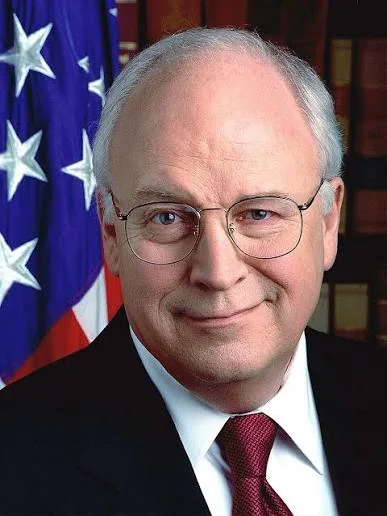
■ Evidence Status
| Overall status | Unverified allegation |
| Source | David Grusch speaking on The Dr. Phil Podcast, August 2026 |
| Connection to Cheney | Inferred from Grusch’s “Darth Vader” reference; Cheney not named directly |
| Public physical evidence | None |
| Named firsthand witnesses | None publicly identified |
| Grusch’s role | Former NRO representative to UAP Task Force; testified before Congress July 26, 2023 |
Who Is David Grusch?
Before evaluating any allegation David Grusch makes, it is necessary to understand what his background actually confirms — and what it does not.
Grusch is a decorated Air Force combat veteran with service in Afghanistan. His intelligence career brought him, by his own account and by documentation that has been confirmed, to the position of the National Reconnaissance Office’s representative to the DoD Unidentified Aerial Phenomena Task Force — a sensitive role that would, if accurate, give him plausible access to classified UAP-related briefings. He subsequently served as the DoD’s co-lead for UAP analysis at the National Geospatial-Intelligence Agency.
In 2021 and 2022, Grusch made protected disclosures and filed a complaint involving alleged retaliation and concerns that UAP-related information was being withheld from congressional oversight. His legal representatives stated that the Intelligence Community Inspector General considered the complaint credible and urgent for referral. That procedural determination did not publicly validate the underlying claims about recovered non-human vehicles or biological entities.
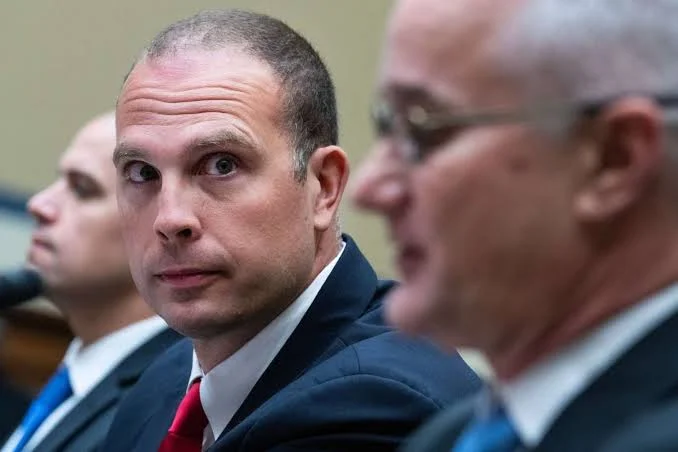
On July 26, 2023, Grusch testified under oath before the House Oversight Subcommittee on National Security, the Border, and Foreign Affairs, alongside David Fravor and Ryan Graves. That hearing — a matter of congressional record — is the most verifiable event in the Grusch narrative. His written statement, submitted to Congress, describes a claim that the U.S. government possesses non-human craft and biological material recovered from UAP incidents. It is an extraordinary claim. It remains unproven.
For a fuller account of Grusch’s background and the 2023 testimony, see our Voices of Disclosure profile and the full career dossier.
The August 2026 Allegation: What Grusch Said
In August 2026, Grusch appeared on The Dr. Phil Podcast. During the interview, he discussed what he characterises as a covert UAP retrieval and reverse-engineering programme — claims broadly consistent with his 2023 congressional testimony. But the interview went further in at least one material respect: Grusch appeared to connect a named senior official to an alleged programme of extraterrestrial detention — not merely crash retrieval.
The distinction matters. Crash retrieval and reverse-engineering of non-human technology is the core claim Grusch has made since 2023. The allegation of a detention programme — implying living or deceased non-human biological entities in U.S. custody under the direction of named officials — is a significantly more specific and more serious claim.
The allegation as reported involves a reference to a specific nickname that has long been associated with one senior official. Grusch did not name that official directly. The inference connecting the two is drawn from the nickname — not from any document, recording, or secondhand corroboration that has been made public.
The Grusch interview was reported on by the New York Post, among other outlets. The Post’s coverage interpreted the “Darth Vader” reference as pointing to former Vice President Dick Cheney. That interpretation is plausible — Cheney carried that nickname throughout his 2001–2009 tenure and well beyond — but it is an editorial interpretation of an indirect reference, not a direct attribution.
What Grusch did not say, so far as is publicly documented: He did not state that Dick Cheney personally detained extraterrestrial entities. He did not produce documentation of any detention programme. He did not name firsthand witnesses who can corroborate the specific allegation about the official in question.
The “Darth Vader” Nickname: Where It Comes From
Dick Cheney served as the 46th Vice President of the United States from January 2001 to January 2009, under President George W. Bush. The “Darth Vader” nickname emerged in press coverage during this period and became sufficiently established that Cheney himself acknowledged it in public. The nickname reflects his reputation for operating through classified channels, back-room influence, and an opacity that journalists and political commentators found difficult to penetrate.
Cheney was, in documented terms, one of the most powerful vice presidents in American history. He had direct access to the most sensitive intelligence programmes of the post-9/11 era, including programmes whose existence remained classified for years after his tenure. The intelligence infrastructure he helped shape — including expansions to domestic surveillance, enhanced interrogation, and black-site operations — demonstrates that he was comfortable authorising programmes kept entirely out of public view.
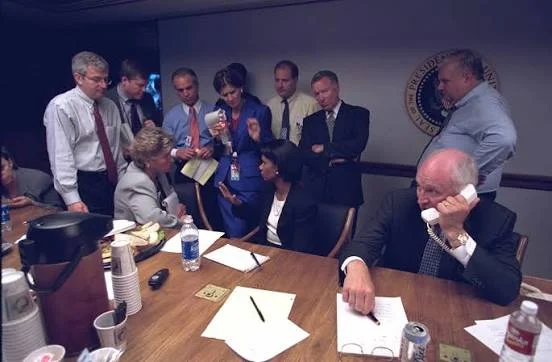
None of this establishes a connection to UAP programmes. The documented history of classified intelligence activity under Cheney is relevant context — it explains why the nickname resonates and why disclosure advocates find the inference plausible — but it is not evidence of UAP involvement specifically. A senior official who authorises secret surveillance programmes has not thereby been shown to have knowledge of or control over alleged extraterrestrial detention.
Cheney has not publicly responded to the allegation. His representatives have not issued a statement. That silence is not evidentiary.
What Grusch Witnessed and What He Was Told
One of the most important distinctions in evaluating Grusch’s claims — and one that is routinely collapsed in media coverage — is the difference between what he personally observed and what others allegedly told him.
Grusch has been explicit on this point: he has stated that he did not personally observe non-human craft or biological material. His claims rest on testimony provided to him by other intelligence and military personnel, whose accounts he says were given under legally binding frameworks. He has described reviewing what he characterises as classified photographs and documentation, but this material has not been independently released, examined by an outside body, or verified in any public form.
The August 2026 allegation about a “Darth Vader” figure and a detention programme falls into this same category: it is described as information passed to Grusch, not a direct personal observation. The chain of custody of this claim is: unnamed sources told Grusch something; Grusch reported it publicly using a codename rather than a direct identification; a news outlet interpreted the codename as referring to a specific individual. At each link in that chain, uncertainty compounds.
Secondhand testimony from credentialed sources is not worthless. Courts and intelligence assessments routinely rely on it. But it carries an evidentiary burden that is proportional to the claim being made. An allegation that a former U.S. Vice President oversaw a programme to detain extraterrestrial life is among the most extraordinary claims ever made about a named public official. The evidentiary bar must be correspondingly high.
Timeline
2001–2009
Dick Cheney serves as Vice President. The “Darth Vader” nickname enters wide circulation in press coverage. Cheney publicly acknowledges it.
2019–2021
Grusch serves as NRO representative to the DoD UAP Task Force and subsequently as DoD co-lead for UAP analysis at the National Geospatial-Intelligence Agency. His access to classified UAP briefings is, by his account and by reasonable inference from his role, plausible during this period.
2021–2022
Grusch makes protected disclosures and files a complaint concerning alleged retaliation and information he believed was being withheld from congressional oversight.
April 2023
The Defense Office of Prepublication and Security Review clears specified Grusch statements for public release. This clearance means the statements were permitted for publication; it does not certify them as true.
June 2023
Grusch’s claims are first reported publicly by Leslie Kean and Ralph Blumenthal in The Debrief. The reporting is cited in subsequent congressional proceedings.
July 26, 2023
Grusch testifies under oath before the House Oversight Subcommittee alongside David Fravor and Ryan Graves. The hearing is a matter of congressional record. It does not produce independently verifiable physical evidence.
2023–2026
Congress pursues legislative and investigative action including the UAP Disclosure Act and whistleblower immunity provisions. AARO publishes historical reports. No physical evidence of crash retrieval programmes has been publicly released. See our coverage of the congressional blackout around Grusch’s testimony and AARO’s 2026 activity.
August 2026 — This Allegation
Grusch appears on The Dr. Phil Podcast and makes statements that include a reference to a “Darth Vader” figure allegedly connected to an extraterrestrial detention programme. The New York Post reports the interview and interprets the reference as pointing to Dick Cheney. Cheney makes no public response.
How Researchers Assess Grusch’s Credibility
Grusch occupies an unusual position in the disclosure landscape: he has more verifiable institutional credibility than almost any previous UAP claimant, yet his core claims remain unproven. Different researchers and communities weight these facts differently.
The disclosure-advocate assessment: Disclosure advocates point to Grusch’s formal career, his use of protected reporting channels, his willingness to testify under oath, and his attorneys’ statement that his complaint was considered credible and urgent for referral. They regard these factors as a significant indication that his allegations deserve further investigation, while acknowledging that the procedural determination did not validate the alleged extraterrestrial programs. Advocates also note that previous UAP whistleblowers — dismissed as cranks — have subsequently been vindicated on at least some specific claims, and argue that the secrecy surrounding UAP programmes makes the absence of public corroboration an expected feature of the landscape, not evidence against the claims.
The cautious-researcher assessment distinguishes between Grusch’s career credibility and the verifiability of his specific claims. Researchers in this category note that no physical evidence has been produced in the years since his initial complaints; that the secondhand character of most of his testimony creates a long chain of undocumented inference; and that the August 2026 allegation — involving a named official, via a codename, in a podcast interview — represents a further step away from any independently confirmable basis. They take the claims seriously enough to monitor but are unwilling to treat them as established without corroboration.
The skeptical assessment notes that extraordinary claims require extraordinary evidence. Grusch has been making claims about crash retrieval programmes since at least 2023, and three years later no publicly accessible physical evidence exists — no recovered material, no laboratory analysis, no independently authenticated photograph, no document released through FOIA. Skeptics argue that the consistent pattern of escalating specificity without corroborating evidence should lower rather than raise confidence in the most recent allegation.
All three assessments are reasonable positions held by serious researchers. The UFO Times does not adjudicate between them. What we can say is that none of the three positions provides a basis for treating the Cheney allegation as established fact.
What Evidence Would Be Required to Verify the Allegation
We apply this question to every major disclosure claim we cover. It is not a sceptical framing — it is an analytical one. Knowing what would constitute evidence helps evaluate the actual state of the record.
To verify the Grusch allegation that a senior official identified as “Darth Vader” directed an extraterrestrial detention programme, any of the following would constitute meaningful evidence:
Firsthand witnesses publicly identified under oath. Grusch’s testimony rests on other unnamed witnesses. If those witnesses came forward and testified under oath before a body with oversight authority, that would constitute independent corroboration of the chain of custody — though not of the underlying events.
Declassified documentation specifically connecting named officials to a UAP detention programme. This is the category of evidence most resistant to forgery and most amenable to independent verification. It would need to show a clear chain of authority, not merely reference classified programmes in general terms.
Physical evidence. The claim of a detention programme necessarily implies physical existence of whatever was detained. Material evidence — recovered craft, biological specimens, associated documentation — examined by independent scientists would be definitive. It does not exist publicly.
A credible congressional or judicial investigation with subpoena authority. The July 2023 hearing was valuable but limited by the classification status of the underlying documents. A committee investigation with full subpoena authority and security clearances to examine the classified record would be a meaningful verification mechanism.
None of these conditions have been met as of August 2026. The Grusch allegation therefore remains what it has been since the Dr. Phil interview: a claim from a credentialed but uncorroborated source, filtered through a codename, interpreted by a news outlet, about one of the most serious charges ever made about a named former senior official of the United States government.
The Broader Pattern: Other Disclosure Claims at the Same Evidentiary Level
The Grusch-Cheney allegation does not exist in isolation. It is part of a pattern of disclosure claims in 2026 that are substantively significant, institutionally sourced, and evidentially thin. Eric Davis’s statements about classified records of alien bodies follow the same basic structure: credentialed source, classified documentation, no public release. The Pentagon’s investigation of the Colorado triangle UAP videos involves footage that has been assigned case numbers but not publicly released.
The accumulation of credentialed claims without public physical evidence creates a specific kind of epistemic problem: it is consistent with both a real and elaborate cover-up, and with the gradual amplification of a narrative that originated in genuine but misinterpreted or misattributed intelligence material. Distinguishing between these explanations is not possible without the evidence that all parties agree is being withheld.
Evidence Assessment
| Claim or Fact | Status | Evidence Basis |
|---|---|---|
| Grusch served as NRO representative to the UAP Task Force | Confirmed | Confirmed by official records and congressional testimony |
| Grusch filed IG whistleblower complaint; complaint accepted | Confirmed | Matter of congressional record; IC IG acceptance publicly acknowledged |
| Grusch testified under oath before Congress, July 26, 2023 | Confirmed | Congressional record; video of hearing publicly available |
| Dick Cheney is known as “Darth Vader” in press and political culture | Confirmed | Widely documented in press coverage; acknowledged by Cheney himself |
| The U.S. government operates a crash-retrieval programme | Alleged | Grusch testimony; no physical evidence released publicly |
| An official known as “Darth Vader” directed a UAP detention programme | Alleged | Grusch, Dr. Phil Podcast, August 2026; secondhand; no corroboration |
| The “Darth Vader” reference means Dick Cheney specifically | Inferred | NYPost interpretation of indirect reference; Cheney not named; no confirmation |
| Dick Cheney supervised extraterrestrial detention | Not Established | No firsthand witness, document, or physical evidence; Cheney has not responded |
| Non-human biological material is in U.S. custody | Not Established | Alleged by Grusch and others; no publicly released physical evidence |
■ Related Investigations
- David Grusch: The Intelligence Officer Who Changed Everything — full Voices of Disclosure profile
- David Grusch: Full Career Dossier
- The Congressional Blackout: What Grusch Could Not Say in Open Session
- Eric Davis: He Says He Saw Records of Alien Bodies — What Can Be Verified?
- Pentagon Investigates Alleged Colorado Triangle UAP Videos
- AARO 2026: What the Government’s UAP Office Has and Has Not Released
- Voices of Disclosure: The People Shaping the UAP Story
Frequently Asked Questions
Sources and Further Reading
Primary Sources
- The Dr. Phil Podcast — original interview (August 2026)
- New York Post — reporting on the Grusch “Darth Vader” reference (August 2026)
- House Oversight Committee — July 26, 2023 UAP Hearing (congressional record and video)
- The Debrief — original Kean & Blumenthal reporting on Grusch (June 2023)
- AARO.mil — official UAP reporting channel and historical reports
Background and Context
- Grusch written statement and biography: docs.house.gov — House Oversight event documents
- Kean, L. & Blumenthal, R. (June 2023). “Intelligence Officials Say U.S. Has Retrieved Craft of Non-Human Origin.” The Debrief.
Further Reading
Disclosure / Reporting
UFOs: Generals, Pilots and Government Officials Go on the Record — Leslie Kean
The defining book of credentialed UAP testimony before the congressional era — by one of the journalists who broke the Grusch story in 2023. Essential background for understanding the whistleblower landscape.
View on Amazon →Government Secrecy
Angler: The Cheney Vice Presidency — Barton Gellman
Pulitzer Prize–winning journalist Barton Gellman’s definitive account of how Cheney operated within and around the national security state. Essential context for understanding what classified authority a VP could, in principle, exercise.
View on Amazon →Disclosure History
The UFO Experience — J. Allen Hynek
The book that introduced scientific seriousness to UAP research. Hynek’s framework — Close Encounters of the First, Second and Third Kind — remains the foundation of classification systems still in use. Understanding the methodological baseline helps evaluate where the Grusch claims fit.
View on Amazon →ⓘ Affiliate disclosure: The UFO Times participates in the Amazon Associates programme and earns commissions on qualifying purchases. Our editorial positions are independent of affiliate relationships.
■ The UFO Times — Disclosure
Every new allegation, every week.
Evidence-led coverage of UAP disclosure, whistleblower claims, and the cases that matter — without the sensationalism.
Editorial Note — Our Standards
This article reports on an allegation. It does not state as fact that Dick Cheney supervised an extraterrestrial detention programme, that such a programme exists, or that David Grusch’s sources are accurate. The distinction between what Grusch personally witnessed and what he was told by others is maintained throughout. Images used are official government photographs in the public domain. The UFO Times applies the same evidentiary standard to all disclosure claims, regardless of the seniority of the source: Facts First. Mystery Second. Speculation Last.