Est. 2010 · theufotimes.comUFO · UAP · Disclosure · Ancient MysteriesIndependent Editorial
■ Voices of Disclosure — Profile #3
Intelligence Officer — Whistleblower — July 2026
David Grusch: The Intelligence Officer Who Changed Everything
The first U.S. government official to testify, under oath before Congress, that non-human craft had been retrieved. A profile of what he established, what he alleged, and why that distinction is the whole story.
By The UFO Times Editorial Team · July 16, 2026
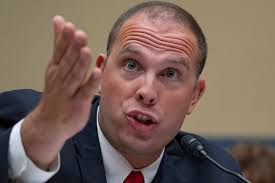
David Grusch, former National Reconnaissance Office representative to the Pentagon UAP Task Force, testifying before the U.S. House Oversight Committee in July 2023. His sworn testimony became the most consequential moment in the modern UAP disclosure era.
Every movement has people who change its trajectory. Some do it with documentation. Some do it with data. Some do it by putting their name on a statement that the most powerful institutions in the world would prefer stayed silent. David Grusch did all three — under oath, before Congress, and with his career and reputation on the line.
What he did in July 2023 was categorically different from anything that had come before in the UAP disclosure movement. Not because the claims were larger — they were — but because of the legal and institutional context in which he made them.
He was a decorated intelligence officer. His complaint had been vetted and found credible by the Inspector General of the Intelligence Community. His legal representation came from a former ICIG. And he testified before elected representatives of the United States, under oath, in a public congressional hearing — a setting where lying is a federal crime.
That combination has no precedent in the history of UAP disclosure.
The Career
David Grusch served as a decorated intelligence officer in the United States Air Force, including combat deployments in Afghanistan. He went on to serve as the National Reconnaissance Office’s representative to the Pentagon’s UAP Task Force (UAPTF) and, later, to the All-domain Anomaly Resolution Office (AARO) — the government bodies created specifically to investigate unidentified aerial phenomena.
These were not peripheral assignments. They placed him at the institutional center of the U.S. government’s official UAP investigation effort, with access to classified programs at the highest levels of the national security apparatus.
By his own account, that access led him to conclude that what he was seeing in classified documentation pointed to something those programs were never going to officially acknowledge: that the U.S. government had retrieved non-human craft, and that this fact was being systematically concealed from congressional oversight.
In 2023, he filed a formal whistleblower complaint with the Inspector General of the Intelligence Community. The ICIG found the complaint credible and urgent — a legal finding with specific statutory meaning that requires more than plausibility to reach. That same year, he testified publicly before the U.S. House Oversight Committee.
What He Claimed
Grusch’s allegations, as he made them publicly and under oath, are specific. The U.S. government has retrieved non-human craft from multiple locations. In some cases, biological materials had been recovered. These programs have been deliberately concealed from congressional oversight — including from members with the highest security clearances. Attempts by qualified officials to access them through proper channels have been blocked. He personally faced retaliation for his efforts to bring this information forward through the legally established processes for doing so.
He was careful throughout his public appearances to distinguish between what he had personally reviewed in documentation and what he had been told by other cleared individuals within the national security establishment. He acknowledged that he had not personally seen the craft he alleged exist. His account rests primarily on classified files he reviewed and on accounts from other cleared individuals who corroborated his conclusions.
“I was informed in the course of my official duties of a multi-decade UAP crash retrieval and reverse-engineering program.”
— David Grusch, testimony before the U.S. House Oversight Committee, July 2023
That statement, made under oath, in a public congressional hearing, by a man with his credentials, is the reason the July 2023 hearing became the most watched congressional UAP session in American history.
Why the Credentials Matter
His intelligence background distinguished him from many previous public figures involved in the UAP debate. Combat veteran. Decorated intelligence officer. Institutional representative to the specific task forces created to manage UAP investigation. These were verifiable facts about a career that had unfolded inside the institutions whose conduct was now under question.
His whistleblower complaint was vetted and found credible by the Inspector General of the Intelligence Community — an office designed to provide independent oversight of the intelligence community and which operates under legal obligations of its own. His legal counsel was Charles McCullough III, a former ICIG himself.
In a field where many accounts come from anonymous sources, cannot be cross-referenced against any public record, and rest on claims that cannot be independently assessed, Grusch’s documented professional history provided a foundation for engagement that was categorically different from most prior disclosures.
That does not make his specific claims true. But it changes what kind of inquiry those claims deserve.
The Evidence Problem
The most important thing to understand about David Grusch’s case is the structure of the claim — and specifically the reason the public evidence for it is limited.
The ICIG found his complaint credible and urgent, but the complaint itself and the evidence it contains remain classified. His congressional testimony is on the public record, but testimony is not, by itself, physical evidence of the underlying allegations. Multiple individuals with national security backgrounds have corroborated aspects of his account, but those corroborations are similarly based on classified or secondhand information. No physical evidence related to his specific allegations has been made public.
This is not an ordinary evidential limitation. Grusch’s claim is, structurally, that the evidence exists — but that it is being kept from the people who would need to examine it to confirm or refute the claim. That creates an unusual epistemological situation: the mechanism for resolving the disagreement is precisely what the alleged cover-up prevents.
This does not mean his claims are false. It means they remain unverified — and that the appropriate response is continued institutional pressure, not premature certainty in either direction.
Supporters and Critics
Among the strongest things one can say about David Grusch is that the people who publicly support him are not peripheral figures. They include experienced journalists such as Leslie Kean and Ross Coulthart, former intelligence and defense officials, members of Congress from both parties, and researchers with serious scientific credentials. The ICIG’s legal finding of credibility matters: that threshold requires more than plausibility to reach, and the office that made it operates under statutory obligations of its own.
Critics raise concerns that are equally legitimate. His specific claims — recovered craft, biological materials, programs operating without congressional knowledge — are extraordinary, and the available public evidence remains limited by design. Skeptics note that “credible whistleblower” is a legal status, not a factual certification. They also point to the acknowledged limits of his own first-hand knowledge: much of what he reported was based on documentation he reviewed and accounts from others, not direct personal observation of the phenomena he describes.
The Pentagon has denied his claims. AARO’s published historical review found no verified evidence of retrieved non-human craft. Grusch and his supporters have responded that AARO was itself denied access to the most classified programs it was supposed to investigate — which, if true, limits the evidentiary weight of AARO’s conclusions.
Both positions are defensible from the available public record. That is precisely what makes this case significant.
As of July 2026, no publicly released physical evidence has independently confirmed Grusch’s central allegations regarding recovered non-human craft. At the same time, several congressional investigations and oversight efforts continue to examine claims related to UAP programs and government transparency. The absence of public confirmation is not the same as disproof — but it is a fact the record requires.
Why David Grusch Matters
The question surrounding David Grusch has never simply been whether every allegation he made is true.
It is whether the United States Congress and the American public are being denied access to programs that operate with public funds and without elected oversight — and whether the legal and institutional mechanisms designed to prevent exactly that situation are functioning as intended. That question does not require belief in extraterrestrial intelligence to find alarming.
What Grusch did — in a way that no one before him had done at his level, with his credentials, in his legal context — was force that question into the official record, under oath, with statutory protections, and in front of elected representatives of the United States.
His actions have contributed directly to legislative efforts to compel the release of UAP-related records, to the expansion of congressional oversight over classified programs, and to a broader institutional reckoning with what the government has — or has not — been willing to share with the people it represents.
Whatever future investigations ultimately conclude about the specific claims, that contribution is already part of the historical record. The modern UAP disclosure movement has a before-Grusch and an after-Grusch. The line between them runs through the morning of July 26, 2023.
Where Things Stand Today
David Grusch retains his status as a legally protected whistleblower. Several members of Congress from both parties continue requesting greater transparency regarding UAP programs, citing his testimony as a catalyst for ongoing oversight efforts. Legislation aimed at improving declassification and congressional access to UAP-related records has been introduced in multiple sessions, though the most significant provisions have faced resistance at key legislative stages.
Many of Grusch’s specific allegations — the existence of recovered craft, biological materials, multi-decade concealment programs — remain unverified in the public domain. The classified evidence he described has not been released. No government agency has confirmed the core claims. The Pentagon and AARO continue to dispute the characterization of what their classified programs contain.
What has changed is the institutional landscape. UAP oversight now has dedicated congressional staff, formal reporting mechanisms, and a track record of public hearings that did not exist before his testimony. The debate has shifted from whether the government has any programs at all to what those programs contain — a different question, with different implications for where this story goes next.
The UFO Times Assessment
Category
Rating
Notes
Influence
★★★★★
The July 2023 hearing is the most consequential moment in the modern UAP disclosure era. His testimony directly shaped legislation, congressional oversight efforts, and the terms of the entire public debate.
Credibility
★★★★☆
Exceptional professional credentials, ICIG credibility finding, sworn congressional testimony. Rating stops at four stars because the specific claims rest substantially on classified evidence and secondhand accounts that cannot be independently verified.
Public Evidence
★★☆☆☆
ICIG credibility finding and congressional testimony are matters of record. The specific allegations — retrieved craft, biological materials, concealed programs — rest on classified evidence not available for public examination. The structure of the claim is that the evidence exists but is being withheld.
Scientific Value
★★☆☆☆
If Grusch’s core claims are accurate, the scientific implications would be without parallel in human history. But science requires evidence that can be examined. The current public record does not yet provide that. The rating reflects what can be evaluated, not what may eventually be demonstrated.
Historical Significance
★★★★★
Regardless of how his specific claims are ultimately adjudicated, Grusch’s testimony placed the question of government transparency over UAP programs permanently into the institutional record. The disclosure movement has a before and an after.
Editorial Perspective
At The UFO Times, David Grusch occupies a unique position in the series because the central question his case raises is not merely about UAP — it is about oversight, accountability, and whether democratic institutions are functioning as designed. His credentials are verifiable. His legal context is without precedent in this subject area. His specific claims remain unconfirmed by publicly available evidence. Holding those three things simultaneously, without collapsing into either dismissal or uncritical acceptance, is what evidence-first journalism requires. We believe it is also what the gravity of his testimony demands.
Recommended Reading
UFOs: Generals, Pilots and Government Officials Go on the Record — Leslie Kean (2010)
The book that established military and government credentialed testimony as serious evidentiary ground — the same framework within which Grusch’s account derives its weight. Kean later became one of the first journalists to report on his whistleblower disclosures.
UFOs and the National Security State — Richard Dolan (2002)
The definitive history of government involvement with the UAP phenomenon, from the post-war era through the classified program structure that Grusch alleges was concealed. The institutional architecture he describes did not appear from nowhere — Dolan traces its foundations across eight decades.
Area 51: An Uncensored History of America’s Top Secret Military Base — Annie Jacobsen (2011)
A rigorous examination of what classified programs look like from the inside — how they are structured, how secrecy is maintained across decades, and how the gap between the official record and operational reality can persist across entire careers. Indispensable context for evaluating Grusch’s account of what he says he found.
Voices of Disclosure profiles the individuals who have significantly shaped the modern UAP conversation. Our goal is to help readers understand who is driving the discussion, what their contributions are, and how much of the evidence supporting their claims is publicly verifiable. Inclusion in this series does not imply endorsement of every claim made by the individual profiled.