Est. 2010 · theufotimes.comUFO · UAP · Disclosure · Ancient MysteriesIndependent Editorial
■ Voices of Disclosure — Profile #2
Military Aviator — July 2026
Ryan Graves: The Fighter Pilot Who Turned Unexplained Encounters into a Flight Safety Issue
He didn’t ask the public to believe in aliens. He asked them to take aviation safety seriously. That distinction changed everything.
By The UFO Times Editorial Team · July 14, 2026
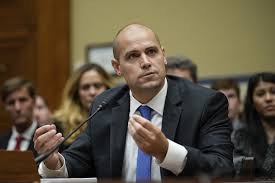
Ryan Graves, former U.S. Navy F/A-18 Super Hornet pilot and founder of Americans for Safe Aerospace. His congressional testimony in 2023 became one of the most widely cited moments in the modern UAP disclosure era.
For many years, reports of unidentified flying objects were often dismissed as stories from isolated witnesses or sensational headlines. Few expected that one of the strongest voices calling for greater attention to Unidentified Anomalous Phenomena would come from within the ranks of the United States Navy.
Former F/A-18 Super Hornet pilot Ryan Graves has become one of the most respected figures in the modern UAP conversation — not because he claims to know what these objects are, but because he argues that they deserve serious investigation.
His message is remarkably consistent: unknown objects operating in military airspace represent a flight safety issue, regardless of their origin.
That position has earned him credibility among pilots, policymakers, and researchers alike.
A Naval Aviator
Ryan Graves served as an F/A-18 Super Hornet pilot in the U.S. Navy. During his military career he flew operational missions and became familiar with some of the world’s most advanced aviation technology.
Beginning around 2014, Graves and fellow aviators flying off the U.S. East Coast began reporting repeated encounters with unidentified objects during training exercises. Unlike isolated sightings, these reports occurred over extended periods and involved multiple pilots and aircraft.
According to Graves, these objects often appeared consistently in the same restricted training areas used by military aircraft — an observation that ruled out casual misidentification and raised serious questions about what, exactly, was operating there.
The Radar Upgrade
One of the most significant aspects of Graves’ account concerns technology. After the Navy upgraded the radar systems aboard its F/A-18 aircraft, pilots began detecting objects that had not appeared on older systems.
Initially, many assumed the new equipment was malfunctioning. However, as visual observations and infrared sensor data began to correspond with radar contacts, pilots grew increasingly confident that they were observing genuine objects rather than technical errors.
Graves has consistently emphasized the importance of this point: multiple independent sensor systems — radar, infrared, visual observation — were detecting the same thing simultaneously. That convergence of data is what makes dismissal difficult.
What the objects were remains unidentified. That these objects were detected by multiple independent systems is not in dispute.
The “Cube Inside a Sphere”
Among the most widely discussed incidents associated with Graves is an encounter described by fellow Navy aviators involving an object that appeared as a dark cube enclosed within a transparent sphere.
According to pilot reports, one such object passed dangerously close to two military aircraft during a training mission. No collision occurred, but the incident raised serious concerns regarding flight safety.
Graves has frequently cited this event as an example of why military pilots require a reliable, stigma-free reporting system for unidentified aerial encounters — not because the answer is known, but precisely because it is not.
From Pilot to Advocate
Following his military career, Ryan Graves founded Americans for Safe Aerospace, a nonprofit organization dedicated to encouraging military, commercial, and civilian pilots to report unusual aerial encounters without fear of ridicule or professional consequences.
The organization’s primary objective is not to prove extraterrestrial life. Instead, it seeks to improve aviation safety by collecting credible reports from trained observers and encouraging systematic investigation by qualified institutions.
This emphasis on safety rather than speculation distinguishes Graves from many other public figures in the UAP field. He does not ask pilots to speculate about what they saw. He asks them to report it — accurately, completely, and without fear.
Testifying Before Congress
In July 2023, Graves testified before the U.S. House Oversight Committee alongside former intelligence officer David Grusch and former Navy Commander David Fravor. The hearing was the most watched congressional UAP session in modern history.
During his testimony, Graves delivered what has become one of the defining statements of the modern disclosure era:
“If UAP are foreign drones, they are an urgent national security problem. If they are something else, they are an issue for science.”
— Ryan Graves, testimony before the U.S. House Oversight Committee, July 2023
That statement has become one of the defining summaries of his position. Rather than arguing for a predetermined explanation, Graves emphasizes that unidentified phenomena deserve careful investigation regardless of where the evidence ultimately leads.
A Different Kind of Voice
Unlike some prominent figures in the disclosure movement, Ryan Graves rarely speculates publicly about extraterrestrial intelligence. Instead, he consistently returns to three themes: aviation safety, national security, and scientific investigation.
This disciplined approach has helped establish him as one of the more measured voices in the public discussion. His credibility rests not on extraordinary claims, but on his insistence that trained pilots should be able to report unusual encounters without stigma — and that those reports should be investigated systematically by people qualified to investigate them.
In a field where sensationalism consistently outpaces evidence, that restraint is itself significant.
Supporters and Critics
Supporters view Graves as a credible witness whose military experience and measured public statements have elevated the quality of the UAP conversation. His emphasis on safety and data collection has broadened interest beyond traditional UFO research communities, attracting scientists, aviation professionals, and national security analysts who might otherwise have kept their distance.
Critics note that while Graves has documented repeated encounters, the available public evidence has not yet identified the nature of the objects involved. As with many UAP cases, “unexplained” does not necessarily mean “extraordinary.” The available data continue to be studied, and many questions remain unresolved.
Both assessments are reasonable. Graves does not claim certainty. He claims documentation — and asks that documentation be taken seriously.
Why Ryan Graves Matters
Ryan Graves represents a significant shift in how the UAP issue is discussed publicly. Rather than framing the subject primarily as a mystery about origins, he frames it as a matter of operational safety and responsible reporting.
That approach has encouraged military personnel, commercial pilots, scientists, and lawmakers to engage with the subject in a more structured and less stigmatized manner.
The institutional changes that have followed — formal reporting channels, congressional oversight, academic engagement with UAP data — owe a meaningful debt to voices like Graves, who made the subject professionally approachable by stripping away the speculation and focusing on the data.
Regardless of what future investigations ultimately conclude, Graves has already helped transform UAP reporting from an often-dismissed topic into one increasingly recognized as a legitimate issue for aviation and national security.
The UFO Times Assessment
Category
Rating
Notes
Influence
★★★★★
Impact on the modern UAP conversation
Credibility
★★★★★
Professional military background, consistent public record, congressional testimony under oath
Public Evidence
★★★★☆
Multi-sensor detections, corroborated pilot accounts, congressional testimony on record. Nature of objects remains unidentified.
Scientific Value
★★★★★
Americans for Safe Aerospace actively improves data collection and removes reporting stigma — directly advancing systematic investigation
Historical Significance
★★★★★
Helped reframe UAP from fringe topic to legitimate aviation safety and national security issue — a structural shift that will outlast any individual sighting report
Editorial Perspective
At The UFO Times, Ryan Graves stands apart because he does not ask the public to accept extraordinary conclusions. Instead, he argues that unexplained observations made by trained pilots deserve systematic investigation. Whether those investigations ultimately reveal advanced technology, natural phenomena, foreign systems, or something entirely unexpected remains unknown. What Graves has unquestionably contributed is a more disciplined, evidence-oriented framework for discussing UAPs — one grounded in aviation safety, professional reporting, and scientific inquiry.
Recommended Reading
UFOs: Generals, Pilots and Government Officials Go on the Record — Leslie Kean (2010)
The book that established military pilot testimony as serious evidentiary ground — the framework within which Graves’ accounts carry the weight they do, and the baseline from which the 2023 congressional hearing built its credibility.
Skinwalkers at the Pentagon — James T. Lacatski, Colm Kelleher & George Knapp (2021)
The DoD’s internal investigation of UAP phenomena — the institutional backdrop against which Graves’ encounters were occurring while the Pentagon ran parallel classified programs the public knew nothing about.
A former U.S. Army colonel examines UAP from within the national security establishment — an insider perspective that gives Graves’ flight safety framing historical and institutional context.
Voices of Disclosure profiles the individuals who have significantly shaped the modern UAP conversation. Our goal is to help readers understand who is driving the discussion, what their contributions are, and how much of the evidence supporting their claims is publicly verifiable. Inclusion in this series does not imply endorsement of every claim made by the individual profiled.