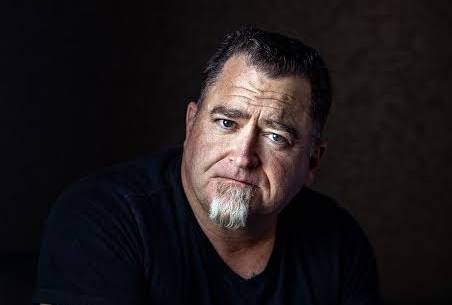
Lue Elizondo: The Man Who Changed Everything — And What He Cannot Prove
He ran the programme. He resigned in protest. He handed the story to the press. Without him, this conversation does not happen.
By The UFO Times Editorial Team · July 29, 2026
The Pentagon, Arlington, Virginia. From roughly 2007 to 2017, a small team operating within the Office of the Under Secretary of Defense for Intelligence ran a classified programme to investigate unidentified aerial phenomena. Its director was Luis "Lue" Elizondo. U.S. DoD / Public Domain.
In December 2017, the New York Times published a story that changed the UAP conversation permanently. It revealed a secret Pentagon programme, released authenticated military footage of unidentified objects, and named the man who had run the programme until weeks earlier — and who had just resigned in protest over what he described as institutional obstruction.
That man was Luis "Lue" Elizondo.
Without Elizondo, the 2017 disclosure does not happen. Without the 2017 disclosure, the Senate does not pass UAP transparency legislation. AARO does not exist. Congress does not hold public UAP hearings. David Grusch does not testify. The entire institutional architecture of modern UAP oversight — imperfect as it remains — traces its origin to one man's decision to walk out of the Pentagon and talk.
That influence is not in dispute. What is in dispute is the far larger claim Elizondo has been building toward ever since: that the U.S. government has in its possession craft and materials of non-human origin, and that he has personal knowledge of this. That claim is extraordinary. It is not publicly verifiable. And it is the central tension of every honest assessment of his profile.
The Man Who Ran AATIP
Luis Elizondo grew up in Miami, the son of Cuban exile parents. He joined the U.S. Army and built a career in counterintelligence, eventually reaching the senior levels of the Pentagon's intelligence apparatus. His security clearances placed him among a small number of individuals with access to some of the most sensitive programmes in the American national security system.
At some point in the mid-2000s — the exact timeline is classified — Elizondo took charge of a programme then known as the Advanced Aerospace Threat Identification Program, or AATIP. The programme had been established with $22 million in funding secured through a classified budget line by Senator Harry Reid of Nevada, working with Senators Ted Stevens and Daniel Inouye. A significant portion of that funding went to Bigelow Aerospace Advanced Space Studies (BAASS), a company run by Nevada billionaire Robert Bigelow and contracted to conduct field investigations and research.
AATIP's stated purpose, according to the Department of Defense, was to assess far-term foreign advanced aerospace threats to the United States. What Elizondo describes is something significantly broader: a programme that was genuinely investigating unidentified aerial phenomena, analysing sensor data from military encounters, and attempting to understand objects that appeared to display performance characteristics beyond known aerospace technology.
Both descriptions are probably true, and the tension between them is important. A programme investigating UAPs that displayed threat-like behaviour near military installations is, simultaneously, a foreign aerospace threat programme. Whether the emphasis was on "foreign aerospace threats" or "unexplained phenomena" depends on who is describing it and why — and that question has never been cleanly resolved in the public record.
Luis "Lue" Elizondo, former Director of the Advanced Aerospace Threat Identification Program (AATIP) and principal source for the December 2017 New York Times disclosure.
The Resignation and the 2017 Disclosure
In October 2017, Elizondo resigned from the Pentagon. His resignation letter, addressed to Secretary of Defense James Mattis, described a culture of excessive secrecy, inter-agency resistance, and a failure to take the UAP question seriously despite evidence that warranted serious investigation. He was not fired. He chose to leave.
Within weeks, he had joined Tom DeLonge's To The Stars Academy of Arts & Science — a company DeLonge had founded to pursue UAP research and public disclosure — alongside former CIA officer Jim Semivan, former Deputy Assistant Secretary of Defense for Intelligence Christopher Mellon, and others with senior national security backgrounds.
In December 2017, the New York Times published the story. Reporters Helene Cooper, Ralph Blumenthal, and Leslie Kean revealed the existence of AATIP, the $22 million black budget programme, and two authenticated military videos of unidentified objects — one of which, the FLIR1 footage from the 2004 Nimitz incident, had been described by Commander David Fravor. A third video, GOFAST, was released shortly after.
The Pentagon, initially caught off guard, confirmed the videos were authentic. Over the following months and years, it confirmed the existence of AATIP. The conversation that had lived on the margins of credible public discourse for decades moved to the floor of the United States Senate.
All of that traces to Elizondo's decision to resign and speak.
What Elizondo Has Claimed
Elizondo's public statements since 2017 fall into two distinct categories, and keeping them separate is essential to any fair assessment.
The first category is what he claims to have done and observed in his official capacity. He directed AATIP. He reviewed sensor data from military UAP encounters. He saw evidence of objects displaying what he describes as "transmedium" capability — the ability to operate in air, water, and possibly space without apparent transition. He concluded that some of these objects represented something outside the known aerospace inventory of any nation on Earth.
The second category is what he claims to know beyond his AATIP role. In interviews, his 2024 book Imminent, and congressional interactions, Elizondo has asserted that the U.S. government has in its possession recovered craft and biological materials of non-human origin, and that compartmentalised programmes exist to study and potentially reverse-engineer these materials. He has said he was briefed on aspects of these programmes and has personally observed information that he cannot discuss publicly due to classification obligations and non-disclosure agreements.
The distinction matters enormously. The first category is partially corroborated by the public record — AATIP existed, it investigated UAPs, its findings were taken seriously enough to brief members of Congress. The second category rests almost entirely on Elizondo's personal testimony about classified information he cannot produce. That does not make it false. It makes it, by definition, unverifiable through public sources.
Elizondo has consistently described the UAP phenomenon as representing a potential threat to national security — not because the objects are necessarily hostile, but because the U.S. does not understand what they are, where they come from, or what capabilities they possess. In this framing, the danger is the unknown itself.
Paraphrase of a position Elizondo has expressed consistently since 2017, including in congressional interactions, media appearances, and his 2024 book Imminent.
The Disputes: What the Pentagon Says and Does Not Say
The Department of Defense's response to Elizondo has evolved, in ways that are themselves revealing.
In 2017, when the New York Times story broke, Pentagon spokesperson Laura Ochsner stated that Elizondo "had no assigned responsibilities" for AATIP while employed at the DoD and that his "claim is not consistent" with DoD records. This was a significant public contradiction of his account.
Within months, however, the same Pentagon confirmed that the FLIR1, GIMBAL, and GOFAST videos were authentic and had been captured by U.S. Navy pilots. It subsequently confirmed that AATIP existed. In 2020, it officially released all three videos. In 2022, it established AARO specifically to investigate UAPs — the direct institutional successor to the work Elizondo says AATIP was doing.
The initial denial of Elizondo's role was never formally retracted, but the trajectory of subsequent institutional acknowledgments is difficult to reconcile with the claim that he had no relevant responsibilities. The gap between the 2017 denial and the 2020 video release and 2022 AARO establishment represents a significant shift in the government's public posture — one that moved in the direction Elizondo had been pointing.
The DoD Inspector General reviewed AATIP and noted in a 2019 report that the programme's research projects were "not consistent with the Department of Defense's reporting requirement and were not a good use of resources." This is a meaningful institutional critique. It does not, however, address the evidentiary question of what AATIP actually found.
Elizondo has filed complaints through whistleblower protection channels, alleging that the Pentagon has interfered with his ability to speak about matters of public concern. Those proceedings remain ongoing and their outcomes are not publicly resolved as of the publication of this profile.
The Evidence: What Is and Is Not Verifiable
Evidence at a Glance
Claim or Evidence
Status
AATIP existed and investigated UAPs
ESTABLISHED Confirmed by the Pentagon; $22M programme documented in Senate appropriations
Elizondo directed AATIP
CREDIBLE Initially denied by DoD; subsequent institutional confirmations are broadly consistent with his account
AATIP analysed objects with anomalous performance
CREDIBLE Consistent with authenticated military footage and crew testimony from documented incidents
U.S. government possesses recovered non-human craft
SPECULATIVE Elizondo's most significant claim; no publicly verifiable evidence; he cannot produce evidence due to classification
Reverse-engineering programmes for non-human materials
UNSUPPORTED No publicly verifiable evidence; rests entirely on claimed access to classified information
DoD interference with Elizondo's public statements
SPECULATIVE Subject of ongoing whistleblower complaint; not resolved in the public record
This table does not prove Elizondo's strongest claims are false. Classified programmes, by design, leave no public evidentiary trail. The absence of public evidence is not the same as absence of evidence. What the table establishes is the difference between what can be verified and what cannot — a distinction that any serious reader is entitled to understand before forming a view.
Where Things Stand Today
Elizondo published his memoir, Imminent: Inside the Pentagon's Hunt for UFOs, in October 2024. The book represents his most detailed public account of both his time at AATIP and his broader claims about what the U.S. government knows. Its publication was itself significant — it passed through a pre-publication security review process, indicating that the government had the opportunity to object to its contents and chose not to block it.
He continues to advocate publicly for UAP transparency, appearing before congressional staff briefings, participating in public events, and speaking with researchers and journalists. He has maintained relationships with current and former members of the national security community who share his assessment that the UAP question represents a serious unresolved issue.
The institutional landscape has shifted considerably in the direction Elizondo pointed. AARO exists. The National Defense Authorization Act has included UAP transparency provisions. Congress has held public hearings. The Pentagon publishes annual UAP reports. None of this proves his specific claims about retrieved craft are true. All of it represents the institutionalisation of the concern he was the first to bring publicly into the open.
His whistleblower complaint against the DoD remains active. Its resolution, if it becomes public, may provide the most significant evidence yet about the gap between what the government acknowledges and what it knows.
What Has Not Happened
In the interests of accuracy, this profile records not only what has been established but what has not.
No government body has publicly confirmed that the United States possesses recovered non-human craft or biological materials. No document establishing the existence of such a programme has been declassified or leaked in verifiable form. No independent scientific body has examined materials alleged to be of non-human origin and confirmed that origin.
Elizondo himself acknowledges that he cannot produce public evidence for his most significant claims without violating classification obligations. He argues that the appropriate mechanism for verifying these claims is a classified congressional investigation with subpoena power — not public disclosure through the press. That is a defensible position. It is also one that, by design, cannot be evaluated through public sources.
The 2024 Congressional hearing featuring David Grusch, Ryan Graves, and David Fravor — the most significant public UAP proceeding in American history — produced congressional interest and further legislative efforts, but no verified evidence of non-human craft. Elizondo was not among the formal witnesses at that hearing, though his earlier work and advocacy were central to the conditions that made it possible.
The gap between Elizondo's influence and his publicly verifiable evidence is the defining feature of his profile. It does not make him a fraud. It makes him someone who is making serious claims from a classified position that prevents independent verification. Both possibilities — that he is right, and that he is mistaken or overstating — remain open.
The UFO Times Assessment
Category
Rating
Notes
Influence
★★★★★
The 2017 disclosure, AARO's creation, congressional UAP hearings, and the entire modern oversight architecture trace directly to his decision to resign and speak
Credibility
★★★☆☆
AATIP role and resignation are credible; core claims about recovered craft rest on unverifiable classified knowledge; DoD initially denied his role, and that denial was never formally retracted
Public Evidence
★★☆☆☆
AATIP's existence and the authenticated videos are established; his claims about retrieved materials and reverse-engineering programmes have no publicly verifiable evidentiary basis
Scientific Value
★★☆☆☆
His contribution is administrative and political, not scientific; AATIP's methodology was criticised by the DoD Inspector General; the evidence gap limits scientific utility
Historical Significance
★★★★★
Whatever the ultimate truth of his claims, his role in the 2017 disclosure is the pivotal event in modern UAP history; that assessment does not depend on his strongest assertions being correct
Editorial Perspective
Lue Elizondo presents a genuinely difficult editorial challenge. His influence on the modern UAP conversation is unambiguous and historically significant. His documented role at AATIP, his resignation, and his contribution to the 2017 disclosure are supported by the public record. His most consequential claims — recovered non-human craft, reverse-engineering programmes, personal access to classified evidence — are not. The difficulty is that the structure of classification makes it impossible to disprove these claims through public sources. Readers should hold both realities simultaneously: this is the man who changed the conversation, and the conversation has not yet produced public proof that his most extraordinary assertions are true. Treating those two facts as contradictory is a mistake. They are both simply true.
Recommended Reading
Imminent: Inside the Pentagon's Hunt for UFOs — Luis Elizondo (2024)
Elizondo's own account — the most complete public record of his time at AATIP, his resignation, and his broader claims about what the U.S. government knows. Read it as primary source material, with the understanding that its most significant assertions rest on classified knowledge the author cannot substantiate in this format.
Skinwalkers at the Pentagon — James Lacatski, Colm Kelleher & George Knapp (2021)
The inside account of AATIP written by individuals directly involved in its operation. Provides essential context for understanding the programme Elizondo directed, the research it funded, and why its findings were considered significant enough to brief senior members of Congress.
UFOs: Generals, Pilots and Government Officials Go on the Record — Leslie Kean (2010)
Kean was one of the three New York Times reporters who broke the AATIP story in 2017. Her 2010 book established the evidentiary standard that her own reporting later exemplified — credible military and government observers, assessed against available evidence. Indispensable for understanding what serious UAP journalism looks like.
Voices of Disclosure profiles the individuals who have significantly shaped the modern UAP conversation. Our goal is to help readers understand who is driving the discussion, what their contributions are, and how much of the evidence supporting their claims is publicly verifiable. Inclusion in this series does not imply endorsement of every claim made by the individual profiled.