Est. 2010 · theufotimes.comUFO · UAP · Disclosure · Ancient MysteriesIndependent Editorial
■ Voices of Disclosure — Profile #1
Congress — July 2026
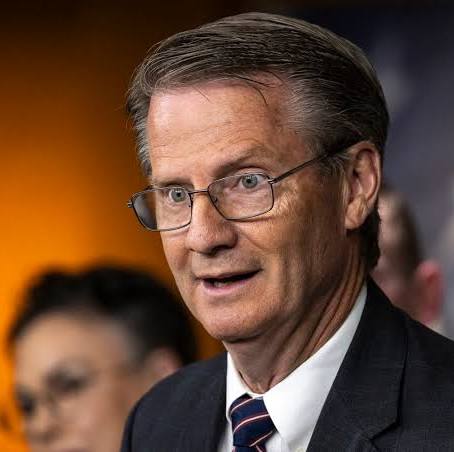
Tim Burchett: The Congressman Who Refuses to Let the UAP Question Disappear
Not because of what he believes — but because of what he has consistently done.
By The UFO Times Editorial Team · July 13, 2026
Representative Tim Burchett (R-TN) has been one of the most persistent congressional voices pushing for UAP transparency, whistleblower protection, and oversight of government secrecy surrounding unidentified anomalous phenomena.
For decades, discussions about unidentified flying objects were largely confined to researchers, military witnesses, and a small number of government insiders. Today, the conversation has reached the halls of Congress, where a handful of elected officials continue to push for greater transparency about Unidentified Anomalous Phenomena.
Among the most recognizable voices is Representative Tim Burchett, a Republican congressman from Tennessee.
Whether one agrees with his conclusions or not, Burchett has become one of the most influential political figures in the modern UAP disclosure movement.
The reason is not simply what he believes.
It is what he has consistently done.
Bringing UAPs Back to Congress
Since taking an active interest in the subject, Burchett has repeatedly argued that Congress has both the authority and the responsibility to investigate decades of government secrecy surrounding UAP reports.
He has supported congressional hearings, called for greater transparency from the Department of Defense and intelligence agencies, and advocated for stronger protections for whistleblowers who claim to possess knowledge of classified UAP programs.
His position has remained remarkably consistent: if the government possesses information about unexplained aerial phenomena, the American public has a right to know — unless disclosure would clearly compromise national security.
Regardless of one’s views on the phenomenon itself, this argument centers on government accountability rather than extraterrestrial life. That framing has given it unusual durability in Washington, where the subject might otherwise be dismissed.
The Claims That Attract Headlines
Tim Burchett has made several statements that have generated widespread media attention. Among them, he has suggested that:
the United States may possess recovered craft of unknown origin;
some whistleblowers have shared information with Congress that deserves serious investigation;
Americans would be “up at night” if they knew everything he has been told in classified briefings;
governments may know considerably more about UAPs than they have publicly acknowledged.
These comments have often been summarized in headlines suggesting that Burchett has “confirmed” the existence of alien technology.
That is not an accurate description of his public statements.
Burchett has repeatedly expressed personal belief that extraordinary evidence exists — but he has not publicly presented independently verifiable proof confirming those conclusions. Many of his most dramatic statements rely on information he says he has received privately, in classified briefings, rather than evidence available for independent verification.
That distinction is important. Assertions deserve reporting. Evidence determines conclusions.
Transparency Before Conclusions
One of Burchett’s defining characteristics is that he consistently frames the UAP issue as one of transparency and oversight — not as a question requiring a verdict on extraterrestrial life.
He frequently criticizes excessive classification of government information and argues that Congress cannot perform effective oversight if relevant information remains inaccessible to elected representatives.
From this perspective, the central question is not whether UAPs are alien spacecraft. It is whether Congress is receiving complete and accurate information from the agencies it oversees.
That shift has helped move the UAP debate from popular culture into discussions about accountability, national security policy, and the limits of executive classification authority — territory where Burchett has found bipartisan allies who might otherwise have little interest in the subject.
Supporters and Critics
Supporters view Burchett as one of the few elected officials willing to challenge entrenched secrecy surrounding UAP investigations. They argue that his persistence has helped keep congressional attention focused on an issue that might otherwise have faded from public discussion once initial media interest subsided.
Critics, however, contend that some of his public statements move beyond the available evidence — and that by suggesting extraordinary revelations are imminent without providing verifiable details, he risks raising expectations that the public record may not support.
Both assessments contain truth.
Burchett’s transparency efforts are well documented and historically significant. His strongest personal claims — that recovered craft exist, that classified briefings contain extraordinary information — remain unconfirmed by independently verifiable public evidence.
For journalists and readers alike, holding both of those facts simultaneously is more honest than choosing only one.
Why Tim Burchett Matters
The significance of Tim Burchett does not rest solely on what he believes.
His importance lies in his role as a catalyst. By repeatedly raising UAP issues within Congress, supporting hearings, and encouraging greater transparency, he has contributed to a broader institutional shift in how governments address reports of unexplained aerial phenomena.
Consider what has changed since Burchett and a small group of congressional colleagues began pressing the issue in earnest:
Formal UAP hearings have been held in both chambers of Congress.
AARO was established as a permanent oversight office within the DoD.
Legislation has been proposed — and in several cases passed — strengthening whistleblower protections for those with UAP-related knowledge.
Multiple agencies have begun releasing declassified records in structured public tranches.
The subject has moved from the margins of public debate to the agenda of intelligence committees.
Burchett did not produce these changes alone. But he was consistently present, consistently vocal, and consistently on the record at every stage of that shift.
Whether future investigations ultimately confirm extraordinary explanations, identify conventional causes, or produce entirely new scientific understanding, Burchett has already played a meaningful role in ensuring that the subject remains part of the national conversation.
That influence is likely to remain part of the historical record regardless of where the evidence ultimately leads.
The UFO Times Assessment
Category
Rating
Notes
Influence
★★★★★
Impact on the modern UAP conversation
Credibility
★★★☆☆
Elected official with documented legislative record; strongest personal claims rely on private briefings not publicly verifiable
Public Evidence
★★☆☆☆
Transparency and legislative efforts are documented; extraordinary claims about recovered craft and classified revelations are not publicly supported
Scientific Value
★★☆☆☆
Legislative rather than scientific contribution; value lies in enabling oversight and disclosure, not direct investigation
Historical Significance
★★★★☆
Helped sustain congressional attention on UAP oversight across multiple sessions — a structural contribution that outlasts any individual claim
Editorial Perspective
At The UFO Times, we distinguish between a person’s influence and the evidence supporting their conclusions. Representative Tim Burchett’s impact on the public discussion surrounding UAPs is undeniable. Whether history ultimately validates his strongest assertions remains an open question — one that can only be answered through continued investigation, responsible journalism, and the release of verifiable evidence.
Recommended Reading
UFOs: Generals, Pilots and Government Officials Go on the Record — Leslie Kean (2010)
The book that helped make congressional engagement with the UAP issue politically viable — a rigorous account of credible military and government witnesses that established the evidentiary baseline Burchett and others have since built upon.
A.D. After Disclosure — Richard Dolan & Bryce Zabel (2012)
A serious examination of what government transparency on UAPs would actually mean for institutions, politics, and public life — the framework within which Burchett’s transparency push takes on its full significance.
UFOs and the National Security State — Richard Dolan (2002)
The historical record of government UAP secrecy that makes Burchett’s calls for transparency historically legible — documenting the decades of classification and public dismissal that congressional oversight is now, slowly, beginning to reverse.
Voices of Disclosure profiles the individuals who have significantly shaped the modern UAP conversation. Our goal is to help readers understand who is driving the discussion, what their contributions are, and how much of the evidence supporting their claims is publicly verifiable. Inclusion in this series does not imply endorsement of every claim made by the individual profiled.
In this series:
■ Profile #1 — Tim Burchett: The Congressman (current)