

■ Evidence Status
Confirmed
NC2 is a real rock-cut structure on Giza’s northern cliff
Confirmed
The Harvard–MFA Expedition documented NC2 and produced a plan in 1939
Historically Documented
Nineteenth-century survey maps identify bird-mummy tombs or pits in this northern area
Reported
Lower chambers and connected passages were entered or cleared during modern investigations
Disputed
Whether the connected passages constitute an extensive natural cave system
Not Established
That the passages continue beneath Khafre’s pyramid, the Sphinx or the main pyramid field
On the northern edge of Egypt’s Giza Plateau, away from the familiar tourist approaches to the pyramids and Sphinx, lies a rock-cut structure known archaeologically as North Cliff Tomb 2, or NC2.
Alternative-history writer Andrew Collins gave it a more evocative name: the Tomb of the Birds.
The site is real. It was known to earlier explorers, documented by the Harvard–MFA Expedition and associated in nineteenth-century survey material with the burial of bird mummies. It also contains shafts, lower chambers and passages whose full extent has generated more than a decade of controversy.
What has not been established is equally important. No published archaeological survey has demonstrated that a continuous cave network runs from NC2 beneath the major pyramids. No excavation has uncovered a lost city, Hall of Records or prehistoric sanctuary there. Satellite radar interpretations have not proved that the passages reach the Pyramid of Khafre. The mystery is therefore not whether NC2 exists—it does. The mystery is how far its underground passages continue, which portions are natural or human-made, when they were first used—and why the available public documentation remains incomplete.
■ NC2 Location — Schematic Diagram
Where Is NC2?
NC2 is not a chamber directly beneath one of the Great Pyramids. It is situated along a north-facing limestone cliff beyond the principal monumental zone. The designation means North Cliff 2. The Harvard–MFA Expedition assigned the nearby structures the numbers NC1, NC2 and NC3 in its records. NC2 is the largest and most architecturally complex of the three.
The location matters because popular descriptions frequently collapse the entire Giza Plateau into a single underground landscape. A passage situated somewhere at Giza is easily transformed online into a passage “beneath the pyramids,” even when no physical connection has been demonstrated. NC2’s position makes an eventual geological connection conceivable, but geographical possibility is not archaeological proof.
A Tomb Known Before Its “Rediscovery”
Andrew Collins and his collaborators did not discover an entirely unknown tomb. The northern-cliff structures had appeared in earlier documentation. The Harvard–MFA Expedition, directed by archaeologist George Reisner, knew of them during its decades of work at Giza. A surviving 1939 plan shows NC2’s façade, pillared interior and a long corridor extending into the bedrock.
An associated note by Egyptologist William Stevenson Smith recalled seeing traces of painting on columns in the central tomb around 1930. Smith considered the possibility that it dated to the New Kingdom, perhaps the Eighteenth Dynasty, although this was an observation rather than a conclusive dating study.
The structure was reportedly adapted as an air-raid shelter during the Second World War. Such reuse may explain alterations, whitewashing and the incomplete recording of certain features. Harvard Egyptologist Peter Der Manuelian later emphasized that the north-cliff tombs had not been lost to archaeology. Surviving expedition records demonstrate institutional knowledge of NC2 decades before the modern controversy.
What Collins and his collaborators did was different: they located and entered an opening that they argued led beyond the portion represented in the known 1939 plan. That is a legitimate distinction. It neither erases their exploration nor turns the entire site into a new discovery.
The Nineteenth-Century Record
The modern story reaches further back than the Harvard–MFA Expedition. British diplomat and antiquities collector Henry Salt and Italian explorer Giovanni Battista Caviglia reportedly investigated underground passages at Giza in 1817. Later accounts attributed to Salt describe extensive subterranean exploration, although connecting his specific route securely to NC2 is difficult given the incomplete nineteenth-century records.
In 1837, British soldier and antiquarian Richard William Howard Vyse conducted major operations at Giza. Engineer John Shae Perring surveyed the monuments and produced detailed plans published in works issued between 1839 and 1842. One of Perring’s plans labels a northern area with wording referring to excavated tombs and pits of bird mummies. Later investigators have connected that notation with NC2 and its neighboring structures.
This is important historical evidence, but it has limits. Perring’s map supports the existence of bird-mummy burials or pits in the area. It does not establish that every chamber associated with NC2 was created for birds, nor does it prove that Perring followed a natural cave network beneath the central pyramid field. Historic maps often combine direct measurement, incomplete exploration and interpretive reconstruction. They must be read as records of what nineteenth-century investigators believed they encountered—not as modern subsurface scans.
Why “Tomb of the Birds”?
“Tomb of the Birds” is not the known ancient Egyptian name of NC2. It is a modern descriptive title adopted by Collins and his associates, drawing on Perring’s bird-mummy notation and reported niches and deposits within the complex. The archaeological designation NC2—North Cliff Tomb 2—is the standard reference used in Egyptological literature.
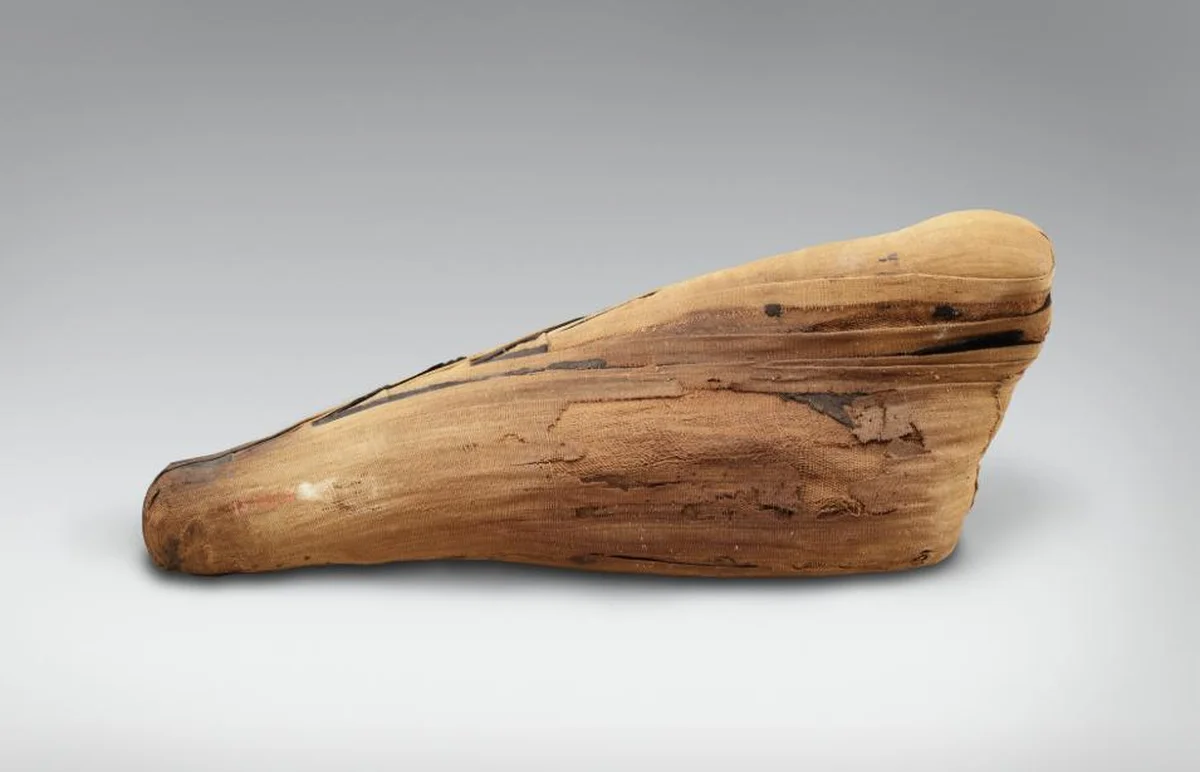
Animal mummification became an enormous religious industry in later ancient Egypt. Ibises, falcons, cats, crocodiles, dogs, snakes and other creatures were preserved as sacred animals or votive offerings connected to particular deities. Ibises were especially associated with Thoth, god of writing, wisdom and the moon. Falcons and other raptors could be linked with Horus, Sokar, Ra and related divine forms.
Millions of animal mummies were deposited in catacombs at sites including Saqqara, Tuna el-Gebel and Abydos. The existence of Egyptian bird catacombs is therefore not mysterious by itself. What remains uncertain at NC2 is the chronology: when the rock-cut complex was created, whether it had an earlier human funerary function, and when portions were adapted for animal burials. An Old Kingdom or New Kingdom structure could have been reused during the Late, Ptolemaic or Roman periods—reuse across many centuries is common in Egyptian archaeology.
■ Evidence Ladder — From Documented to Unproven
Confirmed
Documented Tomb
NC2 is a real, mapped, rock-cut structure on the Giza northern cliff.
Historically Documented
Historical Bird-Mummy Association
Perring’s nineteenth-century plans label bird-mummy pits in this area.
Reported
Lower Chambers and Passages
Collins and collaborators entered passages they argue go beyond the 1939 plan.
Disputed
Natural Cave System
Whether irregular passages are natural limestone caves or carved catacombs remains contested.
Not Established
Extension Beneath the Pyramid Field
That passages reach beneath Khafre’s pyramid, the Sphinx or the central field has not been verified by any published physical survey.
The 2008 Exploration
Andrew Collins began investigating historical descriptions of cave passages at Giza after studying early travelers’ accounts and the orientation of the Cygnus constellation, which he believed might relate symbolically to the layout of the plateau. Working with Sue Collins, historical researcher Nigel Skinner-Simpson and others, he examined the northern-cliff tombs. In March 2008, the group entered NC2 and identified an opening in or near the tomb’s interior that they believed provided access to previously neglected passages.
Collins and his collaborators located or reopened a passage that they argue had been overlooked in modern documentation. He described chambers, narrow fissures, bats, insects and extensive stretches of rough limestone passage. Photographs and video reportedly showed sections that appeared irregular and natural rather than uniformly cut. He concluded that the rock-cut tomb intersected a natural cave system.
This is plausible. Giza limestone contains fractures, joints, cavities and solution features. Ancient builders frequently incorporated, widened or adapted natural weaknesses in the bedrock. But determining whether a passage is natural is a geological question requiring more than appearance. Tool marks, sedimentation, mineral surfaces, fracture patterns and later modifications must all be examined. A natural fissure can contain carved sections; a human-cut chamber can break into natural voids. The categories are not mutually exclusive.
The Hawass–Collins Dispute
When the story attracted international attention in 2009, Zahi Hawass—then head of Egypt’s Supreme Council of Antiquities—rejected the claim that Collins had discovered a vast unknown cave system beneath Giza. Hawass characterized the subterranean features as known catacombs and human-made passages rather than a newly discovered natural underworld.
Collins responded that the irregular surfaces, geological appearance and extent of passages documented by his team could not be explained solely as carved catacombs. He argued that official statements minimized the natural component and the importance of the opening they had entered.
Both positions contain questions requiring direct testing. The institutional position correctly warns against converting incomplete exploration into claims about an unknown world beneath the pyramids. Collins’s photographs and descriptions nevertheless raise a reasonable geological question: did the builders of NC2 intersect or modify natural cavities that extend beyond the mapped tomb? Unfortunately, the public debate became polarized. One side was often portrayed as suppressing evidence; the other as sensationalizing ordinary tomb architecture. A comprehensive survey could have replaced much of that argument with measurements.
Caves, Catacombs—or Both?
The simplest explanation may be a mixed system. NC2’s formal chambers, pillars, shafts and niches demonstrate human modification. These are architectural features, not products of random erosion. At the same time, Giza’s limestone bedrock contains natural fractures and cavities. Human excavators could have expanded existing fissures, joined natural spaces or used geological weaknesses to reduce the work required to create galleries. Therefore, “natural cave” and “artificial catacomb” need not be competing descriptions of the entire complex. Different sections may have different origins.
To resolve the question, investigators would need:
- A complete three-dimensional survey
- Geological mapping of bedding, joints and fracture surfaces
- Analysis of tool marks
- Sediment and mineral studies
- Archaeological recording of pottery, bones and other deposits
- Radiocarbon dating where suitable organic material survives
- Publication of plans, photographs and excavation contexts
- Independent review by archaeologists, geologists and speleologists
Do the Passages Extend Beneath the Pyramids?
This is the most dramatic and least established claim. Collins and researcher Rodney Hale examined satellite radar imagery that they interpreted as showing subsurface geological features extending from the northern-cliff area toward the Pyramid of Khafre.
Radar and remote-sensing data can identify differences in moisture, surface roughness, soil composition and geological structure. Under suitable conditions, they may help locate buried features. However, a line on processed satellite imagery is not automatically a tunnel. It can represent a fault, joint, drainage feature, surface disturbance, processing artifact or change in material.
Even if radar identifies a geological fracture extending toward Khafre’s pyramid, that would not demonstrate that the fracture is open, traversable or connected continuously to NC2. The responsible conclusion is therefore narrow: the local geology may allow fissures or cavities to continue beyond the explored portion of NC2. Their direction, accessibility and relationship to the pyramids have not been established by a published physical survey.
Historical Chronology
1817
Henry Salt and Giovanni Caviglia reportedly investigate underground passages at Giza. Later accounts attribute extensive subterranean exploration to this period, but connecting the specific route to NC2 is difficult given the fragmentary record.
1837–1842
Vyse and Perring survey the plateau. Perring’s published plans label the northern area with references to excavated tombs and pits of bird mummies—the earliest documentary link to the site now called NC2.
1939
The Harvard–MFA Expedition records NC2 and produces an archaeological plan. Egyptologist William Stevenson Smith notes traces of paint on columns, tentatively suggesting a New Kingdom date.
World War II era
The north-cliff structures are reportedly reused as air-raid shelters. Whitewashing and other alterations may have obscured earlier features.
2006–2008
Andrew Collins, Sue Collins, Nigel Skinner-Simpson and collaborators investigate the northern cliff. In March 2008, they enter NC2 and locate passages they argue are not fully represented in the available modern documentation.
2009
The dispute becomes public. Zahi Hawass rejects the cave-system characterization. Egyptian authorities investigate or clear portions of the complex. The competing accounts attract widespread media attention.
Present
No readily accessible comprehensive archaeological and geological report has established the complete extent or geological character of the passages. The site remains incompletely published.
The Hall of Records and Other Legends
Giza has accumulated underground traditions for more than two thousand years. Ancient and medieval writers described subterranean chambers, sacred records, treasures and the legendary wisdom of Hermes. Modern occult traditions placed a Hall of Records beneath or near the Sphinx. Edgar Cayce’s twentieth-century readings gave that idea a new audience.
None of these traditions identifies NC2 through verifiable archaeological evidence. The temptation to connect every underground discovery at Giza with the Hall of Records is understandable but methodologically dangerous. A real tomb can become evidence for a legendary archive simply because both involve underground spaces. NC2 deserves investigation without forcing it into a predetermined legend. No inscriptions identifying a Hall of Records have been reported. No archive of advanced knowledge has been recovered. No artifacts establish a connection with Atlantis, extraterrestrial visitors or a prehistoric technological civilization.
Ancient-Astronaut Interpretations
Within Ancient Astronaut Theory, underground chambers at Giza are sometimes interpreted as repositories of nonhuman knowledge, technological installations or shelters created by a civilization predating dynastic Egypt. NC2 provides no direct evidence for those claims. No anomalous machinery, unknown material, extraterrestrial remains or technologically inexplicable artifact has been documented there. Its known architectural characteristics fit within Egypt’s long tradition of rock-cut tombs, catacombs and later animal necropoleis.
The possibility that natural caves had symbolic importance to ancient Egyptians is more defensible. Egyptian cosmology included ideas of the Duat, primeval darkness, subterranean waters and passages through which divine and deceased beings traveled. A natural cavity incorporated into a tomb could have possessed religious meaning. Demonstrating that meaning, however, would require inscriptions, ritual deposits or architectural context—not merely resemblance to a mythological underworld.
■ Related Investigations
Giza · Geology
John Anthony West & the Sphinx Water-Erosion Mystery
Great Pyramid · Analysis
The Great Pyramid Re-examined: When AI Reads Two Centuries of Science
Theory · Explained
Ancient Astronaut Theory: The Evidence, the Claims and the Problems
Egypt · Claims
The Dendera Light: Ancient Egyptian Electricity or Modern Misreading?
What Is Actually Mysterious?
The strongest mystery is not a lost alien facility. It is the incomplete archaeological story of a genuine site. Important questions remain unanswered in publicly accessible literature:
- When was NC2 originally constructed?
- Was it first a human tomb and later reused for animal burials?
- What bird or animal remains were recovered during modern clearance operations?
- Which lower chambers were known to nineteenth-century explorers?
- Why did the 1939 plan omit or simplify some reported lower features?
- Which passages are carved, natural or mixed in character?
- How far do they physically continue?
- Has a complete modern survey been conducted but not publicly released?
- What is the site’s present conservation condition?
These are answerable questions. They require archaeology rather than mythology.
■ The UFO Times Assessment
NC2 is neither an imaginary site nor proof of a secret world beneath Giza. The tomb is historically documented. Its association with bird-mummy deposits has nineteenth-century support. Modern explorers entered passages that deserve careful geological and archaeological assessment. It is reasonable to ask whether the formal tomb intersects natural cavities.
Andrew Collins deserves credit for reviving attention around an overlooked part of the plateau and documenting features he believed were absent from the publicly available record. Credit does not require accepting every inference. The claim that the passages extend beneath the Pyramid of Khafre remains unproven. Radar interpretations cannot substitute for physical mapping. The suggestion of a Hall of Records, extraterrestrial installation or prehistoric underground city has no supporting archaeological evidence from NC2.
The appropriate position lies between dismissal and sensationalism: NC2 is a genuine and insufficiently published archaeological problem. Its known features justify further investigation. Its most dramatic proposed connections remain speculation.
Facts first. Mystery second. Speculation last.
■ Further Reading
Divine Creatures: Animal Mummies in Ancient Egypt
Salima Ikram (ed.) — American University in Cairo Press
View on Amazon →Between Heaven and Earth: Birds in Ancient Egypt
Rozenn Bailleul-LeSuer (ed.) — Oriental Institute Museum Publications
View on Amazon →Frequently Asked Questions
Sources and Further Reading
Peter Der Manuelian. “More on the So-called ‘Caves’ at Giza.” Harvard Giza Project Blog, September 16, 2009.
https://pmanuelian.wordpress.com/2009/09/16/more-on-the-so-called-“caves”-at-giza/
Digital Giza, Harvard University. Giza Project archaeological records and documentation.
https://giza.fas.harvard.edu/
Richard William Howard Vyse and John Shae Perring. Operations Carried On at the Pyramids of Gizeh in 1837. London, 1840–1842. Available via Internet Archive.
https://archive.org/details/operationscarrie01howa
Andrew Collins. “Giza Caves Debate—Plan of Tomb of the Birds Online.” Claimant’s account; not independent archaeological confirmation.
https://www.andrewcollins.com/page/news/plan.htm
Andrew Collins. “Experts Called in to Examine Giza Cave Tomb.” Claimant’s chronology and interpretation.
https://www.andrewcollins.com/page/news/experts.htm
Metropolitan Museum of Art. “Sacred Animal Mummy of an Ibis.” Open Access, Public Domain.
https://www.metmuseum.org/art/collection/search/552096
Salima Ikram (ed.). Divine Creatures: Animal Mummies in Ancient Egypt. American University in Cairo Press.
Rozenn Bailleul-LeSuer (ed.). Between Heaven and Earth: Birds in Ancient Egypt. Oriental Institute Museum Publications.
Editorial note. The UFO Times distinguishes the documented archaeological record from interpretations offered by explorers, officials and alternative-history researchers. NC2 is a real site with real unanswered questions. Where no complete excavation report is publicly accessible, conclusions are presented as provisional rather than established fact. The name “Tomb of the Birds” is a modern descriptive nickname; NC2 is the archaeological designation.