
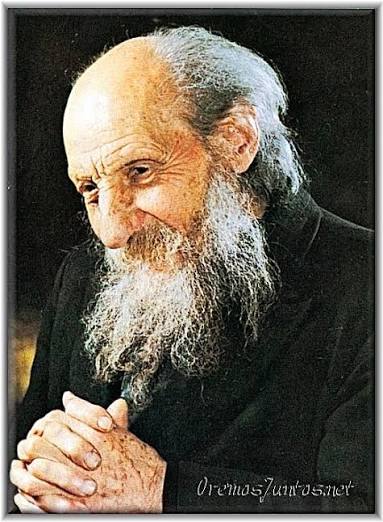
In old photographs from Cuenca, Ecuador, Father Carlo Crespi stands surrounded by objects that appear to belong to different worlds.
There are ceramic vessels, carved stone figures, religious paintings and Indigenous artefacts. Alongside them sit large metallic sheets covered with unfamiliar figures, geometric patterns and apparent writing. Some resemble objects from the ancient Andes. Others have been compared — sometimes recklessly — to Egyptian, Assyrian, Sumerian or even extraterrestrial imagery.
What exactly had Crespi collected?
Supporters of the mystery maintain that certain objects came from an undocumented civilisation — and possibly from a hidden metallic library inside Ecuador’s Cueva de los Tayos. Sceptics argue that the collection mixed genuine archaeological material with recent Indigenous crafts, colonial religious art, tourist pieces and objects manufactured specifically for Crespi.
The disagreement has continued for decades because the most controversial pieces were never excavated under controlled archaeological conditions. Many disappeared, while others reportedly remain in storage.
The central question is therefore not whether the collection existed. It unquestionably did.
The real question is whether its metallic plaques were evidence of a lost chapter of human history — or whether an extraordinary missionary’s generosity unintentionally helped create one of South America’s most persistent archaeological legends.
Who Was Father Carlo Crespi?
Carlo Crespi Croci was born on May 29, 1891, in Legnano, Italy. He entered the Salesian religious order, was ordained in 1917 and studied natural sciences at the University of Padua. He was also trained in music and became an educator, filmmaker and missionary.
Crespi arrived in Ecuador in the early 1920s and spent most of the remainder of his life in Cuenca. His work was not confined to a church. He established educational programmes, workshops and services for economically disadvantaged children and families.
He also developed a close relationship with Indigenous communities, including people from Ecuador’s Amazonian region. His 1926 documentary about the Shuar is recognised as an early contribution to Ecuadorian cinema.
Crespi died in Cuenca on April 30, 1982. His reputation there is based primarily upon his humanitarian and educational work — not upon ancient astronauts. In March 2023, the Catholic Church recognised his “heroic virtues,” granting him the title Venerable — an official step within the Church’s canonisation process.
ⓘ An Important Distinction
The mystery surrounding Crespi’s objects should not be allowed to erase the documented life of the man who preserved them. He was a scientist, filmmaker, educator and humanitarian whose recognition by the Catholic Church rests on decades of verifiable service. The artefact debate is a separate question from his character or credibility as a person.
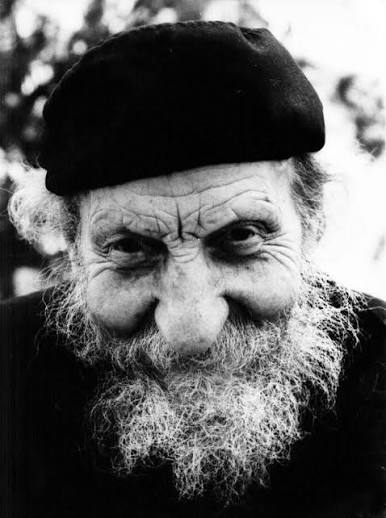
How the Collection Developed
Crespi’s collection did not originate from a formal archaeological excavation.
Over several decades, local and Indigenous visitors brought objects to him. Some were presented as gifts. Crespi also paid people for objects — not necessarily because he believed every item was ancient, but because purchasing them provided money to families in need.
This compassionate practice created an archaeological problem.
When an artefact is recovered scientifically, researchers document its exact location, depth, surrounding soil, relationship to other objects and geological layer. This is called provenance or archaeological context. Without that information, even a genuine ancient object becomes much harder to date and interpret.
Crespi’s collection largely lacked that documentation. Objects arrived individually from different people and potentially from different regions. Their histories were transmitted orally, if they were recorded at all.
The collection consequently became extremely heterogeneous. It apparently included authentic archaeological ceramics and stone objects, Indigenous ethnographic material, colonial religious paintings and sculptures, recent handicrafts, objects of uncertain date and origin, and engraved metallic sheets that became the centre of the controversy.
The existence of genuine archaeology within the collection does not authenticate every object in it. Likewise, the presence of modern pieces does not mean that everything was fraudulent. The collection must be assessed object by object — a process made difficult by inadequate records, dispersal, fire, reported thefts and the passage of time.
Authentic Archaeology Mixed With Objects of Uncertain Origin
Researchers from the University of Cuenca have examined how Crespi’s heterogeneous collection contributed to stories about unknown civilisations, Sumerian contact, extraterrestrials and the Tayos metallic library. Their conclusion is not that Crespi invented the mystery, but that objects of dubious context became foundations for increasingly elaborate pseudoarchaeological narratives.
It is also necessary to understand why people brought him objects.
Crespi helped disadvantaged families and sometimes paid for pieces. Once local producers recognised that the priest would purchase unusual artefacts, an incentive existed to manufacture more of them. This does not imply an organised conspiracy. It reflects a predictable relationship between economic need, patronage and collecting.
Crespi was trained in natural sciences and possessed broad intellectual interests, but he was not conducting controlled excavations when these pieces entered his collection. His trust in the people he served may have been one of his greatest humanitarian virtues while simultaneously limiting the archaeological reliability of the collection.
The mystery does not require Crespi to have deceived anyone. He may instead have become the sincere custodian of a collection whose contents ranged from genuinely ancient to relatively modern — and whose most sensational objects were later assigned histories that could no longer be verified.
The Metallic Plaques
The most famous objects associated with Crespi are thin metallic sheets bearing embossed or engraved figures.
Photographs show stylised animals, humanlike beings, geometric arrangements and symbols that enthusiasts have compared with Old World writing systems. Some objects have been described as golden plates, although photographs alone cannot establish their composition. Surviving accounts indicate that at least some were made from relatively ordinary metals or alloys rather than gold.
The workmanship also varies considerably. Some pieces appear carefully constructed. Others look comparatively crude, as if patterns had been hammered into thin metal using simple tools. This variation supports several possibilities: some objects could be authentic pre-Columbian artefacts; others could be Indigenous ceremonial or decorative works of more recent date; some may have been made specifically for sale to Crespi; and a smaller number could remain genuinely unidentified because their histories were never documented.
The extraordinary interpretation proposes a further possibility: that some plates came from an unknown civilisation preserving knowledge unrelated to recognised pre-Columbian cultures. That proposition is interesting — but it has not been demonstrated.
No publicly available scientific study has established an anomalous age for the controversial plaques. There are no securely documented excavation records, metallurgical analyses tying them to a previously unknown technological tradition, or inscriptions accepted by specialists as a coherent ancient writing system.
Visual resemblance is not enough. A shape resembling an Egyptian figure does not prove Egyptian contact with Ecuador. A collection of lines resembling writing does not establish that the symbols form a language. Comparable forms can emerge independently, be misidentified by modern observers or be intentionally copied from books and popular illustrations.
The Missing Ingredient: Archaeological Context
The weakness of the metallic-plate claim is not that the objects look uninteresting. Some are visually remarkable.
The weakness is that archaeology cannot determine their meaning from appearance alone. A scientifically persuasive case would require a documented recovery location, a clear chain of custody, professional excavation records, metallurgical composition testing, tool-mark analysis, reliable dating, comparison with authenticated regional artefacts, independent examination by multiple specialists, and publication of the results.
For the controversial plaques, this evidence is either absent, incomplete or unavailable publicly. That does not prove every plate is modern. It means claims about their antiquity cannot presently be verified.
There is also a danger in describing unfamiliar Indigenous art as extraterrestrial merely because modern observers do not immediately understand it. Ancient Astronaut Theory has sometimes underestimated the creativity, symbolism and technical ability of Indigenous cultures by suggesting that unusual achievements require intervention from somewhere else. An honest investigation must leave room for mystery without taking historical credit away from human societies.
Juan Móricz and the Alleged Metallic Library
The alleged underground library entered public consciousness primarily through János “Juan” Móricz, a Hungarian-born researcher living in South America.
Móricz claimed that he had entered an artificial subterranean system in Ecuador containing extraordinary objects, including books made from metal. In his account, engraved metallic pages preserved the history and knowledge of an unknown civilisation. The proposed location became associated with Cueva de los Tayos, a genuine and extensive cave system in Ecuador’s Morona-Santiago Province.
The cave’s name comes from the oilbirds — or tayos — that inhabit it. Indigenous Shuar communities knew and used the cave long before foreign explorers arrived. Its principal passages formed naturally within limestone and shale.
Móricz never provided the archaeological world with a verifiable location for his alleged library. No authenticated metal book was recovered under scientific conditions. His descriptions also changed or accumulated additional details as the story circulated.
Most importantly, Crespi’s collection and Móricz’s library were not originally a single documented discovery. They became connected through interpretation and repetition. Because Crespi possessed metallic sheets and Móricz described metallic books, later writers treated one story as confirmation of the other. But similarity between two claims is not proof that they share an origin. No secure chain of custody connects the controversial Crespi plaques to Cueva de los Tayos.
Erich von Däniken and The Gold of the Gods
The mystery reached an international audience through Erich von Däniken, whose bestselling books transformed Ancient Astronaut Theory into a global cultural phenomenon.
In The Gold of the Gods, von Däniken described artificial tunnels, strange artefacts and a subterranean metallic library in Ecuador. His narrative gave many readers the impression that he had personally entered and inspected the legendary chamber.
That account soon encountered serious difficulties. Móricz disputed von Däniken’s description of their interaction. During a 1974 Playboy interview, von Däniken acknowledged employing dramatic embellishment and gave an uncertain account of precisely where he had gone and what he had personally witnessed.
This history does not automatically disprove every claim about Tayos. But it seriously weakens von Däniken’s narrative as independent confirmation of the metallic library. The story had become self-reinforcing: Móricz claimed a hidden metallic archive; Crespi possessed undocumented metallic plates; von Däniken connected the two; later writers cited von Däniken as evidence that the connection was real. The result was a circle of claims rather than a chain of independent evidence.
The 1976 Tayos Expedition
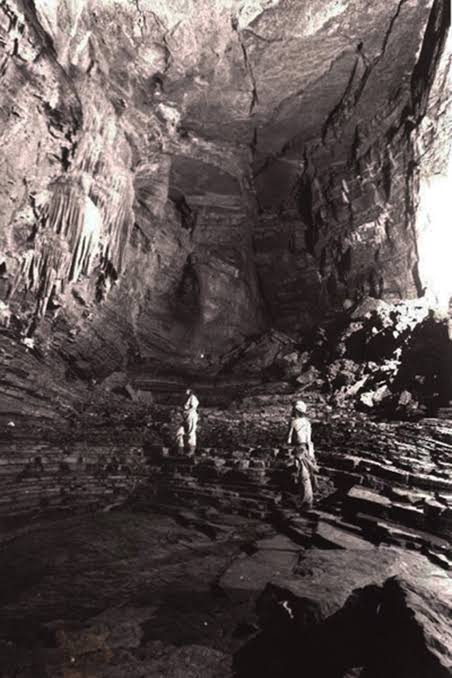
In 1976, Scottish engineer Stan Hall organised a major British-Ecuadorian expedition to Cueva de los Tayos. The undertaking involved professional cavers, scientists, military personnel and other specialists. Its most famous participant was Neil Armstrong, the first person to walk on the Moon, who served as the expedition’s honorary president and visited the cave site.
Armstrong’s participation is established history. What it means is frequently exaggerated.
His presence demonstrates that the cave and its claims attracted serious attention. It does not demonstrate that Armstrong discovered a metallic library, witnessed extraterrestrial artefacts or endorsed an Ancient Astronaut interpretation.
ⓘ The Armstrong Myth
Neil Armstrong’s papers at Purdue University include records associated with the Los Tayos expedition, confirming his involvement. They do not provide evidence of a hidden extraterrestrial archive. Supporters sometimes respond that the expedition entered the wrong cave or that the true library lies in an undisclosed branch of the system. An explanation that moves the evidence every time investigators fail to find it becomes unfalsifiable — it may preserve a legend, but it cannot establish a discovery.
The expedition surveyed and mapped significant portions of the cave. It documented geological, biological and archaeological features. It did not find the metallic library described by Móricz and von Däniken. A contemporary British caving account described von Däniken’s more extraordinary assertions as “fantastic claims” and reported that the expedition’s purpose was to investigate the cave factually.
What Happened to Crespi’s Collection?
The history of Crespi’s collection after its accumulation is complicated. The museum suffered from inadequate storage, reported thefts and a destructive fire. Objects were separated, relocated or lost. During the late 1970s and early 1980s, a substantial portion was inventoried and transferred to Ecuador’s Central Bank.
Reports indicate that more than five thousand objects were catalogued, including archaeological, ethnographic, artistic and religious material. Portions of the collection later came under the care of institutions associated with Cuenca’s Museo Pumapungo.
This institutional preservation is important because it confirms that the collection was not entirely imaginary or composed exclusively of curiosities. It contained cultural objects deserving conservation and study.
But the fate of the most sensational metallic plaques remains less clear. Some may have been considered recent or lacking archaeological value and therefore excluded from institutional acquisition. Some were reportedly retained elsewhere, lost, dispersed or stolen. Their disappearance has encouraged claims of deliberate suppression. That explanation is possible in the abstract, but it is not the only — or most strongly evidenced — explanation. Poor documentation, fire, theft, deterioration, informal storage and failure to classify modern objects could all produce the same result. Absence is not evidence of a cover-up.
Greater transparency from the custodial institutions would help distinguish preserved archaeological material from the unidentified objects that dominate online discussion.
Evidence Assessment
Established
- Carlo Crespi Croci was a real Italian Salesian missionary, educator, naturalist and filmmaker who lived from 1891 to 1982.
- He spent decades in Ecuador and became closely associated with Cuenca and Indigenous communities.
- He accumulated a large and extremely varied collection.
- The collection included authentic archaeological and ethnographic material.
- Photographs and film document engraved metallic plaques among the objects associated with him.
- A substantial portion of the collection was inventoried and transferred into Ecuadorian institutional custody.
- Cueva de los Tayos is a real natural cave system known to the Shuar.
- A major British-Ecuadorian expedition investigated the cave in 1976.
- Neil Armstrong participated in that expedition as its honorary president.
- The expedition did not document a metallic library.
Credible but Unverified
- Some controversial plaques may have been older than the modern tourist objects with which they were grouped.
- Certain objects may have originated in Ecuador’s Amazonian region.
- Additional pieces connected to the collection may survive in institutional, religious or private storage.
- Sections of the broader cave system may remain insufficiently explored.
Speculative
- The metallic plaques preserve symbols from an unknown pre-Columbian civilisation.
- Some pieces demonstrate ancient transoceanic contact.
- Crespi’s plaques and Móricz’s alleged metallic library shared a common origin.
- An undiscovered chamber containing metal records exists somewhere within or near the Tayos cave system.
Unsupported
- The Crespi plaques have been scientifically proved to be thousands of years old.
- They are confirmed Sumerian, Egyptian, Phoenician or extraterrestrial records.
- Crespi personally recovered the plaques from Cueva de los Tayos.
- Neil Armstrong found or authenticated a metallic library.
- Any institution has been proved to conceal extraterrestrial artefacts from the collection.
Our Interpretation
The Crespi collection represents a genuine historical mystery — but probably not the mystery most frequently presented online.
Its importance does not depend upon proving that extraterrestrials left golden books beneath Ecuador. The real story concerns how authentic archaeology, Indigenous creativity, missionary collecting, undocumented provenance, economic hardship, sensational publishing and missing objects converged into a modern legend.
Some objects in Crespi’s care were unquestionably culturally important. Others were almost certainly modern. The controversial metallic plaques occupy an uncertain space between those categories because the information needed to authenticate them was never properly recorded.
At present, there is no reliable evidence that the plaques came from a metallic library, an unknown technologically advanced civilisation or extraterrestrial visitors.
Yet unanswered questions remain: Where are all the surviving plaques? Were any subjected to professional metallurgical and tool-mark analysis? Are complete inventory records publicly available? Can photographs be matched definitively to objects now held in storage? Did any plaque enter the collection with a documented origin?
Those are investigable questions. The correct response is neither unquestioning belief nor automatic ridicule. It is preservation, cataloguing, transparent access and scientific examination.
If the objects are modern, proper analysis can demonstrate it. If any are genuinely anomalous, the same process can reveal that as well. Until such evidence emerges, Father Carlo Crespi’s metallic library remains a fascinating story built around a real man and a real collection — but not a verified discovery of an unknown civilisation. The mystery survives. The proof does not — at least not yet.
Frequently Asked Questions
Who was Father Carlo Crespi?
Carlo Crespi Croci (1891–1982) was an Italian Salesian priest, educator, naturalist, musician and filmmaker who spent most of his missionary life in Cuenca, Ecuador. He became widely respected for his humanitarian and educational work, and in 2023 the Catholic Church recognised his heroic virtues, granting him the title Venerable.
Was the Crespi collection real?
Yes. Photographs, historical film and institutional records confirm that Crespi accumulated thousands of archaeological, ethnographic, religious and artistic objects. However, the collection was extremely heterogeneous, and not every object has been authenticated as ancient.
Were Crespi’s metallic plates made of gold?
Some popular accounts call them golden plates, but photographs cannot establish metal composition. Many pieces appear to have been made from copper-coloured or brass-like alloys. No comprehensive, publicly available metallurgical analysis has authenticated the controversial plates as ancient gold artefacts.
Did the metallic plaques come from Cueva de los Tayos?
No documented chain of custody proves that connection. The association developed largely because Juan Móricz claimed a metallic library existed beneath Ecuador while Crespi possessed metallic plaques of uncertain provenance. Similarity between two claims is not proof they share an origin.
Did Neil Armstrong find the metallic library?
No. Armstrong participated in the 1976 British-Ecuadorian expedition to Cueva de los Tayos as its honorary president. The expedition did not locate or authenticate a metallic library. His involvement should not be presented as an endorsement of extraterrestrial claims.
Where is the Crespi collection today?
A substantial portion was inventoried and transferred to Ecuadorian institutional custody, including material associated with Museo Pumapungo in Cuenca. Other objects were reportedly lost, dispersed, destroyed, stolen or remain of uncertain location.
Were the artefacts extraterrestrial?
No archaeological or scientific evidence establishes an extraterrestrial origin for any object in the Crespi collection. That interpretation remains unsupported by verifiable evidence.
Sources and Further Reading
Sources and Research
- Salesians of Don Bosco — Carlo Crespi Croci (official biography and beatification records)
- University of Cuenca — De arqueologías y fantasías (archaeology and pseudoarchaeology analysis)
- Yorkshire Ramblers’ Club — The Los Tayos Expedition (1976 expedition account)
- Purdue University Archives — Neil Armstrong Los Tayos expedition records
- El Comercio — La colección Crespi (Ecuadorian press investigation, 2018)
Key Works
- Erich von Däniken, The Gold of the Gods (English edition, 1973; originally published in German in 1972) — the book that popularised the Tayos library story
- Pedro Porras Garcés, Arqueología de la Cueva de los Tayos — professional archaeological study of the cave
- David Judson, “Los Tayos Expedition, Ecuador: July–August 1976,” British Cave Research Association
Recommended Reading
For readers exploring these themes further, The UFO Times Bookstore includes a selection of titles on Ancient Astronaut Theory, South American archaeology and related subjects. We recommend approaching any book on this topic with the same critical standard we apply here: distinguish what authors personally witnessed from what they were told, and consider whether the claimed evidence has been independently verified.
■ Primary Works — Understanding How the Legend Developed
These books are important for understanding how the Tayos legend took shape. They are presented as primary works for historical context, not as established history. The UFO Times earns a small commission on qualifying Amazon purchases at no extra cost to you.
■ Erich von Däniken
The Gold of the Gods
The 1973 English edition that introduced the Tayos metallic library story to a global audience — the primary source for understanding how the narrative was constructed and where it diverged from the archaeological record.
View on Amazon →■ Stan Hall
Tayos Gold: The Archives of Atlantis
Written by the organiser of the 1976 expedition — the definitive account of what the British–Ecuadorian team actually found, and Hall’s continuing belief that an undiscovered section of the cave system holds the library.
View on Amazon →ⓘ Affiliate disclosure: The UFO Times participates in the Amazon Associates programme and earns commissions on qualifying purchases. Our editorial positions are independent of affiliate relationships.
■ The UFO Times — Ancient Mysteries
Stay ahead of the evidence
New investigations, lost artefact coverage, UAP developments and our weekly briefing — direct to your inbox. Free.
Editorial Note — Our Standards
Images in this article show the historical figure of Father Carlo Crespi and the documented 1976 Tayos expedition. Historical photographs connected to the Crespi collection are frequently mixed online with modern objects and falsely attributed imagery. The UFO Times excludes objects whose connection to Crespi cannot be independently traced. No caption claims any object is ancient, extraterrestrial or recovered from Cueva de los Tayos unless specific provenance can be documented. The UFO Times applies the same standard to all archaeological claims: Facts First. Mystery Second. Speculation Last.