Airline Pilots and UFOs: What the Evidence Shows
Published August 25, 2026 · The UFO Times Editorial Desk · 15 min read

"All the Skies That Are Fit to Print"
Published August 25, 2026 · The UFO Times Editorial Desk · 15 min read
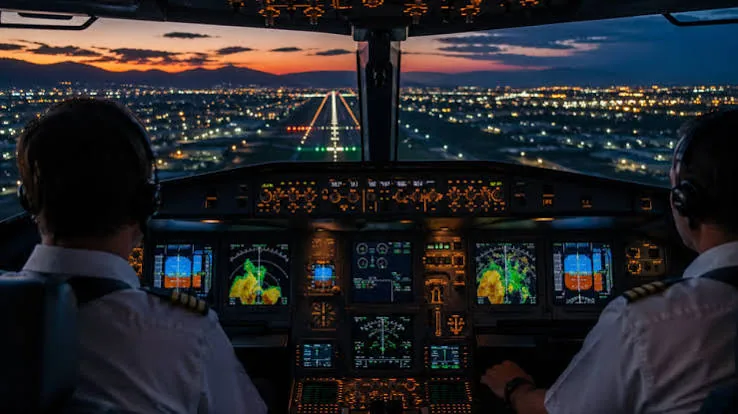
Commercial pilots occupy an unusual position in UAP research. They spend more time in controlled, instrument-rich environments at altitude than almost any other category of witness. They are licensed, regularly examined, required to maintain situational awareness, and operating equipment with multiple redundant systems. When a commercial pilot files a report, there is at least a baseline of professional credibility that distinguishes the account from a casual ground-level sighting.
That credibility matters — but it does not resolve the underlying question of what a pilot observed. The distinction between "a credible person saw something unusual" and "a credible person saw a craft of non-human origin" is a substantial one. This article examines how pilot reports are generated, what the strongest available case shows, and what is required for such a report to move from striking to evidentiary.
The core editorial position of The UFO Times applies here as it does throughout this site: pilot testimony is observational evidence. It is meaningful. It is worth taking seriously. It is not, by itself, proof of extraordinary technology — and treating it as such does not serve the cause of genuine investigation.
Pilots are trained to identify other aircraft, read instrument displays, maintain positional awareness, and communicate precisely under pressure. These are valuable skills for any witness. But they are not the same as training to identify unknown aerial objects at range, at altitude, in variable lighting conditions.
Several perceptual challenges arise specifically at altitude that affect all observers, however experienced. Without fixed reference points — buildings, trees, roads — it is extremely difficult to judge the distance, size or speed of an isolated light source in a dark or twilight sky. An object that appears close and fast may be distant and slow, or vice versa. An illuminated distant aircraft, a bright planet near the horizon, or an ice-crystal haze refracting sunlight can all produce striking visual effects that resist immediate identification.
None of this means pilots are unreliable witnesses in a general sense. It means that their training equips them to evaluate certain categories of information very well and other categories less well. The most important implication is that a pilot report becomes substantially stronger when it is corroborated by independent data — radar returns, ATC recordings, reports from other aircraft — rather than depending on crew observation alone.
Reports become materially stronger when supported by: multiple independent witnesses from different vantage points; ATC recordings corroborating the crew's account; primary radar data showing an independent track; weather and astronomical records ruling out natural explanations; precise time and geographic position; and instrument or sensor data from the aircraft. Even with all of these, an unusual observation remains an unusual observation until an explanation — conventional or otherwise — can be established.
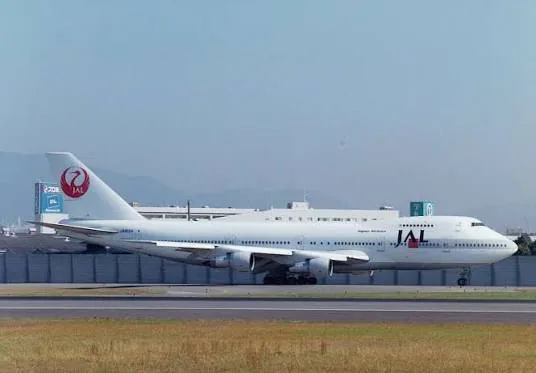
The most extensively documented commercial-pilot UAP report in the public record is Japan Air Lines Cargo Flight 1628, which occurred on November 17, 1986, over Alaska during a cargo flight from Paris to Tokyo via Reykjavík and Anchorage.
The aircraft was a Boeing 747-200F cargo plane. The flight crew consisted of three people: Captain Kenju Terauchi, co-pilot Takanori Tamefuji, and flight engineer Yoshio Tsukuba. The encounter reportedly began when Captain Terauchi noticed unusual lights — described initially as two small craft flying in formation — approximately 2,000 feet below the aircraft over northeastern Alaska. These lights reportedly maneuvered and maintained position relative to the 747 for an extended period.
The account then escalates significantly: Terauchi subsequently reported a much larger object — described in his written statement as enormous and roughly the size of two aircraft carriers — behind and below the 747. He requested permission to change course from Anchorage air-traffic control. Anchorage controllers asked the crews of United Airlines Flight 69 and a U.S. Air Force C-130 to look for the reported object. Both crews observed the JAL 747, but neither reported seeing another object nearby. The 747 arrived safely in Anchorage, where the crew was interviewed and Terauchi submitted a detailed written report that included hand-drawn sketches of what he had observed.
The Federal Aviation Administration conducted an investigation. The FAA preserved a substantial documentary record, including ATC communications, radar data, crew statements and correspondence, which is now held in the National Archives series relating to UAPs. This documentation is what places JAL 1628 in a different category from most commercial-pilot reports: it is not simply an account from a credible source. It is an account from a credible source that generated an official investigation with preserved records.
The FAA investigation produced a public record that is more substantial than most UAP cases. Air-traffic-control audio recordings captured communication between the flight crew and Anchorage controllers, establishing that the crew reported the encounter in real time. The crew submitted written statements. The FAA issued an incident report.
What the records document: a genuine report by a three-person flight crew; real-time communication with ATC; an official response that included querying nearby aircraft and reviewing available radar data; and a subsequent investigation that generated correspondence and analysis. The National Archives identifies the FAA documentary series relating to this encounter as part of its UAP-related textual and microfilm holdings.
What the records do not document: an independent, unambiguous radar track of a large anomalous craft. The radar data reviewed during the investigation was treated as inconclusive. No nearby aircraft reported seeing the objects described by Terauchi. The FAA investigation did not produce a finding of confirmed extraordinary technology.
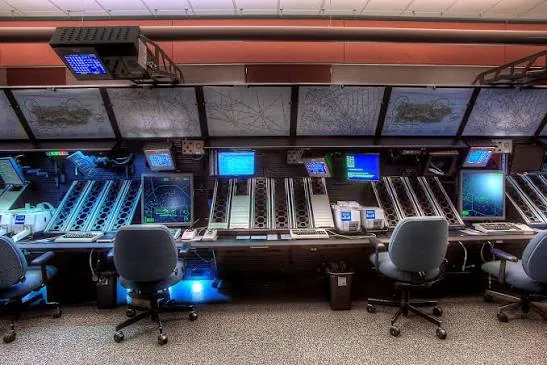
Radar evidence from JAL 1628 has been a focal point of disagreement between those who view the case as strongly evidenced and those who regard it as compelling but unresolved. The available accounts indicate that a military radar facility detected a primary return in the general vicinity of JAL 1628 at one point during the encounter. Anchorage ARTCC was in contact with the flight. Anchorage controllers asked the crews of United Airlines Flight 69 and a U.S. Air Force C-130 to look for the reported object. Both crews observed the JAL 747, but neither reported seeing another object nearby.
The complicating factors are significant. Primary radar returns can be produced by weather formations, airborne ice crystals, anomalous propagation and equipment artefacts. A primary return in the vicinity of an aircraft is not the same as an independent track of an anomalous object with different flight characteristics. The FAA's own assessment of the radar data in the years following the encounter acknowledged ambiguity rather than confirmation.
Dr. Philip Klass, a longtime aviation journalist and skeptical investigator, published a detailed analysis of the JAL 1628 evidence that proposed Jupiter and Mars — which were both bright and low on the horizon in the direction the crew was looking — as candidate explanations for the initial lights. He also examined the radar data and argued that the available returns did not establish an anomalous track. His analysis does not prove the crew observed nothing unusual; it demonstrates that the evidence does not establish that they observed an extraordinary craft.
JAL 1628 — Evidence Status by Category
| Category | What Exists | Status | Assessment |
|---|---|---|---|
| Crew observation | Written statements, hand-drawn sketches, crew interviews | Documented | Genuine report from three-person flight crew; contemporaneous |
| ATC audio | Recorded communications, Anchorage ARTCC | Documented | Crew reported encounter in real time; consistent with written account |
| Airborne radar | 747 weather radar; no confirmed anomalous return reported | Ambiguous | No confirmed independent radar track from aircraft sensors |
| Ground radar | Military radar return cited; disputed and inconclusive | Ambiguous | FAA investigation did not confirm anomalous track; returns inconclusive |
| Nearby aircraft observations | United Airlines Flight 69 and a U.S. Air Force C-130 asked to look; both observed the JAL 747 but neither reported seeing another object | No corroboration | Only aircraft within range asked; no visual confirmation |
| Physical evidence | None recovered | None | No material evidence collected or analysed |
Investigators who have examined JAL 1628 in detail have proposed several conventional explanations: atmospheric optical effects; bright planets — Jupiter and Mars were both prominent in the sky in the relevant direction; airborne ice crystals producing visual halos; and radar artefacts. None of these explanations has been definitively proven in relation to this specific encounter.
What can be said fairly about JAL 1628 is the following: the crew reported something genuinely unusual and did so credibly and contemporaneously. The report generated a real official investigation that preserved a substantial documentary record. The radar evidence did not conclusively corroborate the crew's account. No other witnesses from nearby aircraft confirmed the larger object described by Terauchi. Several conventional explanations exist that have not been ruled out. The case remains unexplained in the public record — which is not the same as established as extraordinary.
It should also be noted that Terauchi had previously reported other UFO sightings, a fact that investigators on both sides of the debate have weighed differently: some view it as supporting his attentiveness to unusual aerial phenomena, others as a reason for caution about his interpretive framework. None of these considerations proves fabrication; none establishes extraordinary technology.
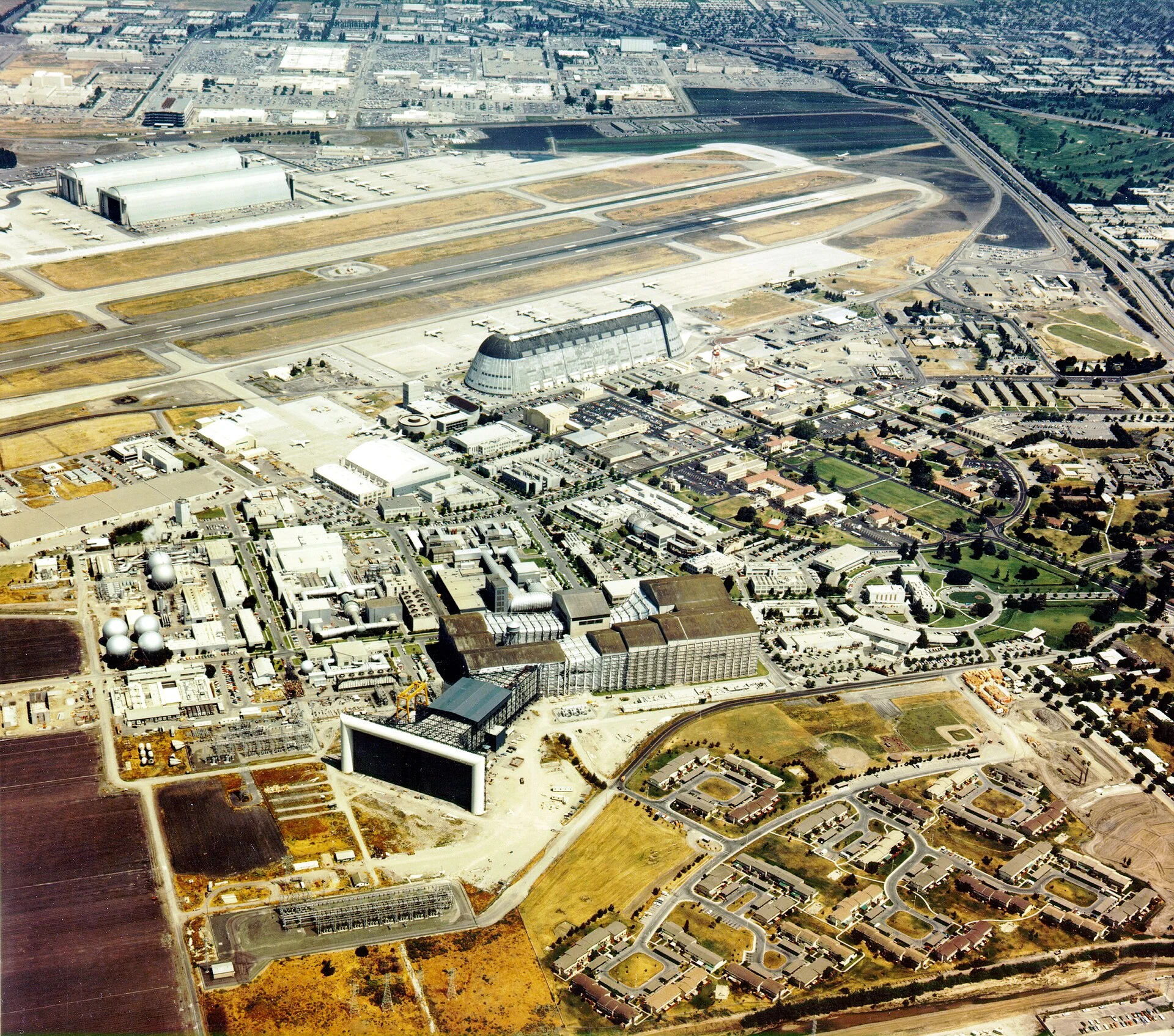
Dr. Richard F. Haines worked as a research scientist at NASA Ames Research Center for many years, focusing on human factors in aviation. After retiring from NASA, he turned his attention to anomalous aerial phenomena reported by pilots and founded the National Aviation Reporting Center on Anomalous Phenomena — NARCAP — as an independent research organization.
In 2000, NARCAP published a report titled "Aviation Safety in America: A Previously Neglected Factor," which catalogued and analysed more than a hundred reported pilot encounters with anomalous aerial phenomena from the preceding decades. The report's central argument was that whether or not these reports describe extraordinary phenomena, they represent a potential aviation-safety concern that deserved systematic attention. A pilot distracted by, or maneuvering to avoid, an unidentified aerial object — regardless of what that object actually is — represents a real safety issue.
NARCAP's work has several limitations that should be stated clearly. It is an independent research organisation, not a government agency, a regulatory body or a part of NASA. Its case collections reflect its own selection criteria and analytic framework. Its numerical findings — whether the total of cases reported or the count of near-miss events — are internal research data, not official government statistics. NARCAP's value lies in its systematic approach to a category of reports that the aviation establishment has historically treated inconsistently, not in any official authoritative standing that it does not possess.
Haines's argument — that anomalous pilot reports deserve treatment as an aviation-safety issue regardless of their ultimate explanation — is a reasonable one that has since found some institutional traction. The FAA now references UAP in its procedures explicitly, and AARO receives pilot-related UAP reports through the FAA. The safety-first framing that NARCAP advocated in 2000 has become part of the mainstream conversation, even if the underlying explanatory question remains open.
A recurring theme in the research is that pilots who observe unusual aerial phenomena may decline to report them, or underreport what they actually observed. The reasons cited in various studies and in documented pilot testimony include concern about professional consequences — specifically, the fear that a report of an unexplained sighting could raise questions about a pilot's fitness or judgment. In earlier decades, the lack of a formal, non-punitive reporting channel for such events reinforced this reluctance.
The reputational risk is real, though it has historically been better documented in qualitative terms — through pilot accounts and researcher surveys — than through systematic quantitative study. The establishment of non-punitive reporting channels has not eliminated the concern entirely, but it has reduced one structural barrier to disclosure. ASRS reports are confidential and de-identified. Under federal regulations, the FAA generally may not use an ASRS report itself in an enforcement action, except for information involving accidents or criminal offenses. Filing a timely report may also qualify an individual for a waiver of sanction when the applicable conditions are satisfied. These protections are significant, but they do not constitute blanket immunity from FAA investigation or enforcement.
It would be inaccurate to characterise the aviation establishment as systematically suppressing pilot UAP reports. The more accurate picture is that a combination of occupational culture, absence of formal channels in earlier periods, and understandable uncertainty about how a report would be received contributed to significant under-reporting. The current system is designed to correct this.
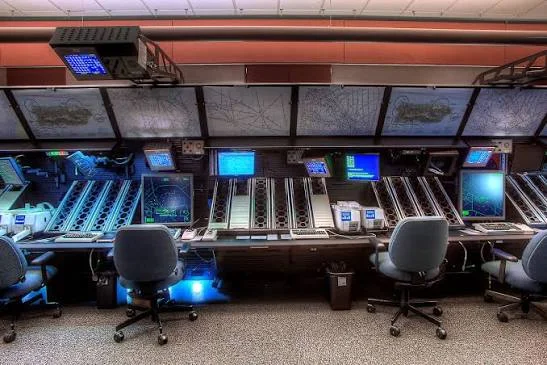
The FAA's Air Traffic Control procedures now explicitly reference unidentified anomalous phenomena. Under current FAA guidance, air-traffic-control personnel who receive a report of UAP activity from a pilot, or who observe it themselves, are instructed to notify their supervisor. The supervisor determines whether to issue a Notice to Airmen, contact appropriate defense organizations, or take other steps. Civilian pilots are encouraged to report sightings promptly to ATC.
AARO — the All-domain Anomaly Resolution Office — receives UAP-related Pilot Reports (PIREPs) through the FAA. This is a significant institutional development: a defence-adjacent government office now has a formal channel for receiving commercial-aviation UAP reports. Whether the volume and quality of those reports is sufficient for systematic analysis is a separate question.
NASA's Aviation Safety Reporting System provides a parallel, separate channel. The ASRS is a confidential, voluntary and non-punitive reporting system operated by NASA under agreement with the FAA. ASRS allows pilots to submit confidential safety reports while limiting the FAA's use of the submission itself. Reports submitted to ASRS are de-identified and used for safety research. In qualifying cases, filing a timely report may support a waiver of sanction under the Aviation Safety Reporting Program. This channel is important precisely because it addresses the reputational-risk concern, though it does not constitute blanket protection from FAA investigation or enforcement.
It is worth repeating: a reporting system collects accounts. It does not validate their explanation. An account logged with AARO or ASRS is documented, not confirmed as extraordinary.
The question of what would make a commercial-pilot UAP encounter approach definitive is both practically and philosophically important. Definitiveness in this context means: an account that could not be explained by any ordinary phenomenon with current knowledge, and that was supported by multiple independent streams of documented evidence.
The following combination would represent a materially strong case: two or more flight crews from different aircraft, with no radio communication between them prior to reporting, describe the same specific object at the same location and time; radar data from at least two independent facilities shows an anomalous primary return that cannot be attributed to weather, artefact or known traffic; the encounter occurs in conditions — altitude, visibility, time of day — where visual misidentification is least likely; all conventional explanations including astronomical objects, atmospheric optics, military activity and sensor artefacts are systematically reviewed and excluded; and no communication, briefing or shared expectation between witnesses can account for the similarity of independent reports.
No commercial-pilot UAP case in the public record currently meets this full standard. JAL 1628 comes closer than most, which is why it remains the principal reference case. What it achieves is a well-documented account of a genuine report — which is not nothing. What it does not achieve is independent corroboration of the extraordinary object described.
| Claim | Documentary Support | Limitations | Assessment |
|---|---|---|---|
| JAL 1628 crew reported unusual lights over Alaska, November 1986 | Written crew statements, ATC recordings, FAA investigation file | Observational; no independent physical confirmation | Documented |
| Anchorage ATC communicated with crew during encounter | Preserved ATC audio recordings | None — this is established | Documented |
| FAA conducted an official investigation | National Archives FAA UAP series; published reports | Investigation found evidence inconclusive | Documented |
| Radar independently confirmed an anomalous large craft | Military primary return cited; disputed | FAA assessment found radar returns ambiguous; not an independent confirmation | Disputed / Ambiguous |
| Other aircraft crew saw the objects described by Terauchi | United Airlines Flight 69 and U.S. Air Force C-130 asked; both observed JAL 747, neither reported seeing another object | No third-party visual corroboration | Not corroborated |
| Pilots systematically suppressed by aviation authorities | No documentary support | Under-reporting driven by cultural factors and absence of formal channels; not established as deliberate institutional suppression | Not established |
Commercial pilots are valuable UAP witnesses because of their training, professional environment and accountability to reporting systems. JAL Flight 1628 remains the strongest public case: a genuine, contemporaneous, officially investigated report from a three-person crew with preserved documentary evidence.
What that case establishes is a credible, documented report. What it does not establish is the nature of what was observed. The radar evidence is ambiguous. No independent witnesses confirmed the larger object described by Terauchi. Conventional explanations exist and have not been excluded.
The current civilian UAP reporting system — FAA procedures, AARO intake, NASA ASRS — represents a meaningful improvement over earlier decades. Systematic documentation of pilot reports is a necessary first step toward eventual systematic analysis. It is not yet, by itself, analysis.
The right conclusion from the body of commercial-pilot UAP reports is not that extraordinary technology is being covered up. It is that an important category of anomalous observations is being documented more systematically than at any previous point in aviation history — and that the resulting record deserves serious, rigorous investigation rather than either dismissal or premature conclusion.
What happened on JAL Flight 1628?
On November 17, 1986, a Japan Airlines cargo Boeing 747 en route from Paris to Tokyo reported unusual lights and a large unidentified object over Alaska. Captain Kenju Terauchi filed a detailed report and communicated with Anchorage air-traffic control. The FAA preserved an extensive documentary record and conducted an official investigation. The encounter remains unexplained in the public record, though skeptical investigators have proposed bright planets, ice crystals and radar artifacts as possible explanations.
Did radar confirm an object near JAL 1628?
Radar data from the JAL 1628 encounter was ambiguous. Anchorage air-traffic controllers communicated with the crew, and a military radar primary return in the vicinity was cited. The FAA's own assessment of the radar evidence did not confirm an independent anomalous track. The radar data is treated as inconclusive, not as corroboration of the crew's description.
Are commercial pilots reliable UAP witnesses?
Commercial pilots are well-trained observers, but they face the same perceptual challenges as any observer at altitude. Without fixed reference points, it is difficult to judge the distance, speed or size of an unfamiliar light source. Pilot reports become materially stronger when supported by independent radar data, ATC recordings, multiple witnesses and contemporaneous documentation.
How do civilian pilots report UAPs today?
FAA procedures now reference unidentified anomalous phenomena explicitly. Controllers are instructed to notify supervisors of reported or observed UAP. AARO receives UAP-related Pilot Reports from the FAA. The NASA Aviation Safety Reporting System provides a separate confidential, voluntary and non-punitive channel. A reporting system documents claims; it does not validate their ultimate explanation.
What is NARCAP?
NARCAP — the National Aviation Reporting Center on Anomalous Phenomena — is an independent research organization founded by Dr. Richard F. Haines, a former NASA Ames research scientist. NARCAP collects and analyses anomalous pilot reports and has argued that these reports deserve treatment as an aviation-safety issue. It is not a government body and does not have official investigative authority.
What evidence would make an airline UAP encounter definitive?
A definitive case would require: independent reports from multiple crews with no prior communication; radar corroboration from at least two independent facilities showing an anomalous return; conditions minimising misidentification; and systematic exclusion of all conventional explanations including astronomical objects, atmospheric optics, military activity and sensor artefacts. No commercial-pilot case in the public record currently meets this full standard.