
What the Witnesses Saw—and What the Evidence Can Prove
From an unresolved report involving approximately 100 objects off Virginia to the testimony of Navy aviators David Fravor and Ryan Graves, this week’s briefing examines the widening gap between credible observation and publicly available proof.
The most important word in the study of unidentified anomalous phenomena is not extraordinary.
It is unidentified.
That word does not confirm extraterrestrial technology. It does not establish that every reported object possesses unusual capabilities. It tells us that, with the information available, investigators have not determined what was observed.
That uncertainty can be uncomfortable. It is also where responsible investigation must begin.
This week, The UFO Times examines four stories that approach the unknown from different directions: an official report containing remarkably little public detail, two Navy aviators whose accounts helped transform the modern UAP debate, and the filmmaker who shaped how millions imagine the moment of disclosure.
Together, they raise one central question: How should we evaluate extraordinary reports when the witnesses may be credible, but the complete evidence remains outside public view?
The Virginia Report: An Extraordinary Number, an Incomplete Record
The most arresting passage in AARO’s latest annual report describes an incident off the coast of Virginia.
According to the official document, U.S. Navy assets reported approximately 100 airborne UAP and two likely uncrewed surface systems. AARO says it is investigating the event in coordination with the reporting unit.
The number immediately attracts attention.
The lack of accompanying information should attract just as much.
The public report does not provide the date, precise location, duration, altitude, speed or appearance of the objects. It does not explain whether the count was simultaneous or accumulated over time. It does not reveal which sensors detected them or whether the airborne and surface systems appeared to operate together.
No public radar data, infrared imagery or video accompanies the account.
That leaves us with an official report of a potentially important event—but without enough information to determine whether it involved foreign surveillance systems, military drones, sensor interpretation problems, multiple unrelated objects or something genuinely anomalous.
■ Our conclusion
The number is extraordinary. The publicly available evidence is not. An unresolved military report deserves investigation. It does not, by itself, establish an extraordinary origin.
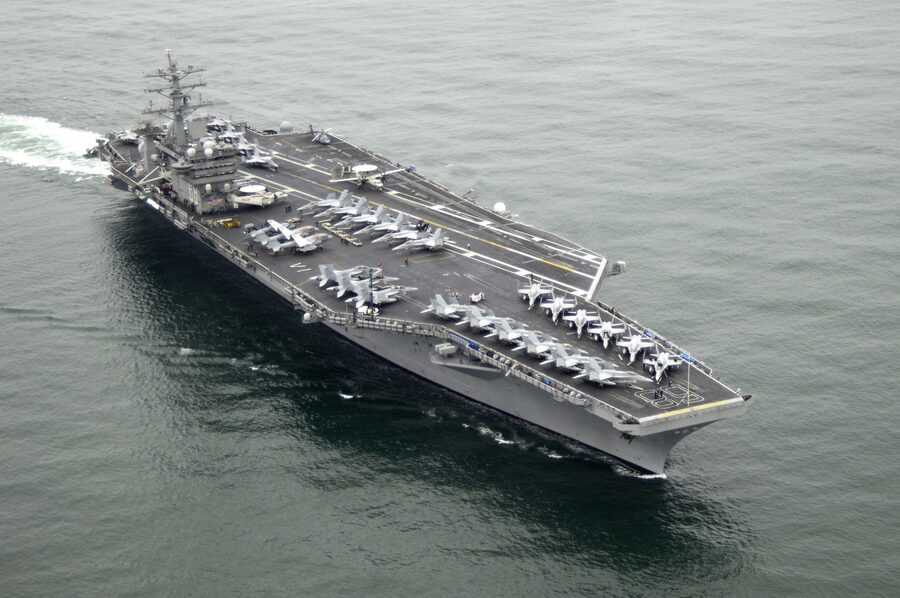
USS Nimitz. In November 2004, Commander Fravor launched from this vessel and encountered an object that could not be identified. Department of Defense footage associated with the incident has since been officially authenticated. This image is contextual and does not depict the encounter.
David Fravor: When Testimony Becomes Difficult to Dismiss
Commander David Fravor’s November 2004 encounter with the object now known as the Tic-Tac remains one of the most consequential military UAP cases of the modern era.
Fravor was not alone. Other members of his flight were present, and radar operators aboard the USS Princeton had reportedly been monitoring unusual contacts before his aircraft was redirected to investigate.
Fravor described a smooth, white, wingless object maneuvering above disturbed water. When he descended to examine it, the object appeared to react to his presence before accelerating away. Approximately five minutes of observation became the foundation of an account that Fravor has repeated with striking consistency for more than two decades.
His professional qualifications are verifiable. His account is corroborated in important respects by other personnel. Infrared footage associated with the broader incident was recorded during a later flight and eventually authenticated and released by the Department of Defense.
Those facts make Fravor an exceptionally significant witness.
They still do not identify the object.
Credible testimony can establish that an unusual observation occurred. It cannot always establish what caused it. Fravor’s importance lies partly in his refusal to pretend otherwise.
Read the profile: David Fravor — The Commander Who Saw the Tic-Tac →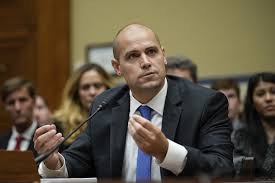
Ryan Graves, former U.S. Navy F/A-18 pilot. He has testified publicly about recurring unidentified contacts in military training airspace and founded Americans for Safe Aerospace to improve UAP reporting standards.
Ryan Graves: From UFO Mystery to Aviation Safety
Ryan Graves helped change the public UAP discussion by asking a practical question: What happens when unidentified objects repeatedly enter military training airspace?
Beginning around 2014, Graves and other Navy aviators operating off the eastern United States reported unusual radar contacts and, in some cases, visual observations. The reports became especially significant after upgraded radar systems began detecting objects that older systems had not shown.
Some pilots initially suspected equipment problems. The issue became more difficult to dismiss when radar contacts reportedly corresponded with infrared or visual observations.
Graves has consistently avoided presenting these encounters as proof of extraterrestrial visitation. He frames them as an aviation-safety, national-security and scientific problem. That distinction matters. If the objects were foreign surveillance systems, they represented a security concern. If they were domestic systems operating without adequate coordination, they represented a safety concern. If some demonstrated capabilities that conventional explanations could not account for, the scientific implications would be substantial.
Graves does not ask pilots to decide what they saw. He asks that they be able to report it accurately and without professional stigma. That may ultimately prove more valuable than any dramatic declaration.
Read the profile: Ryan Graves — The Fighter Pilot Who Made UAP an Aviation-Safety Issue →Steven Spielberg. His films drew partly from documented UFO history, including consultation with astronomer J. Allen Hynek, who worked with the U.S. Air Force’s Project Blue Book programme. Contextual portrait.
Spielberg: The Story We Carry Into Every Investigation
Long before congressional hearings and official UAP offices entered public discussion, Steven Spielberg helped define how millions imagined contact with an unknown intelligence.
Close Encounters of the Third Kind did not emerge entirely from fantasy. Spielberg consulted J. Allen Hynek, the astronomer who had worked with the U.S. Air Force’s Project Blue Book. The film drew from documented UFO history, contemporary reports and the institutional tensions surrounding official investigations.
But cinema does something that evidence cannot: it completes the story. It gives unexplained lights an origin. It gives secrecy a purpose. It gives humanity an encounter, an answer and, eventually, a resolution. Real investigations rarely provide that satisfaction.
The Virginia report contains no revealed visitors and no final explanation. Fravor’s testimony ends with an object departing at extraordinary speed. Graves’s reporting leaves us with recurring airspace encounters whose causes remain uncertain.
Spielberg helps us imagine disclosure. Journalism must determine whether disclosure has actually occurred.
Popular culture can inspire curiosity. It cannot substitute for proof.
Read the analysis: What Spielberg Gets Right About UFO Disclosure →■ What Connects These Stories?
The Virginia report, Fravor’s encounter, Graves’s advocacy and Spielberg’s films occupy different evidentiary categories. They should not be treated as though they prove the same thing.
- The Virginia incident is an official unresolved report with insufficient public detail.
- Fravor offers credible, corroborated military testimony associated with authenticated government footage—but the object’s origin remains unidentified.
- Graves documents a broader reporting and flight-safety problem involving multiple pilots, sensors and recurring encounters.
- Spielberg represents the cultural framework through which much of the public interprets all three.
Taken together, these stories do not prove extraterrestrial visitation. They establish something more limited, but still important: trained military personnel have reported unidentified objects in operational airspace; the government has investigated such incidents; some cases remain unresolved; and the public still lacks sufficient data to determine what occurred in many of the most consequential reports.
That is not a final answer. It is a legitimate investigative problem.
The Evidence Ledger
What the available record confirms — and where the public record falls short.
| Subject | What is established | What remains unresolved |
|---|---|---|
| Virginia Incident |
A U.S. Navy unit reported approximately 100 airborne objects and two likely uncrewed surface systems; AARO says the case remains under investigation. | Date, sensor data, object behavior, proximity, coordination and origin. |
| David Fravor |
A qualified Navy aviator reported a close encounter; other personnel provided supporting testimony; related footage was authenticated by the Department of Defense. | The identity, origin and precise capabilities of the observed object. |
| Ryan Graves |
Navy aviators reported recurring unidentified objects in training airspace; Graves has testified publicly and advocated improved reporting standards. | The nature and origin of the objects and how many reports share a common cause. |
| Spielberg’s Influence |
His films drew partly from real UFO history and consultation with J. Allen Hynek. | Whether any cinematic disclosure scenario resembles events occurring outside fiction. |
The Standard That Must Hold
The UAP subject presents two equal and opposite risks.
The first is reflexive dismissal: assuming that every witness is mistaken and every unresolved report must have an ordinary explanation before the evidence has been examined.
The second is premature certainty: treating every unexplained observation as confirmation of extraterrestrial technology.
Neither approach is investigative.
Credible witnesses deserve to be heard. Official reports deserve scrutiny. Government agencies should release enough information for meaningful public and scientific evaluation. Conventional explanations should be tested rather than assumed—and extraordinary conclusions should require evidence strong enough to support them.
The unknown should neither be ridiculed nor romanticized.
It should be investigated.
Facts First. Mystery Second. Speculation Last.
— The UFO Times Editorial Desk
■ Continue Your Investigation
Explore our ongoing coverage of the stories that connect this briefing:
- Government UAP files and official investigations →
- Voices of Disclosure — every major witness profile →
- Project Blue Book and the history of official UFO research →
- Military encounters and unforgettable cases →
- Film, culture and the public imagination of disclosure →
The search for truth continues. Follow the investigation with The UFO Times.
Free Newsletter
Continue With Edition No. 2
Every week: the strongest journalism, the most credible witnesses, the evidence that matters. No noise. Only what holds up.
No spam. Unsubscribe at any time.