WHAT IF?
The questions that keep us looking.
Published: November 27, 2026 · Updated: November 28, 2026
I. Why I Keep Asking
I kept encountering questions that the explanations available to me did not fully answer. I wanted to understand whether the problem lay in those explanations, in the available evidence, or in my own assumptions.
That’s what this site has always been about. Not shock value, not collecting the weirdest possible stories and presenting them as fact. It’s about the gaps. The questions that don’t go away when you close the book. The cases that don’t resolve the way you expect them to. The witnesses who describe things they had no reason to invent and no vocabulary to fully explain.
WHAT IF? is a question I’ve been asking my whole life. What if our picture of history is less complete than we were taught? What if some of the oldest texts in human memory contain something real buried under centuries of translation and reinterpretation?
I’m not here to give you the answer. I genuinely don’t know the answer. But I’ve spent a long time with the question, and I think it deserves to stay open.
II. The Gap in the Record
Archaeology documents a long, complex human past. The record includes stone tools, art, evidence of burial practices and symbolic thought going back hundreds of thousands of years. The written and architectural record that survives in useful detail is narrower—not because that earlier period was uneventful, but because of what materials preserve, what has been excavated, and what remains physically accessible. Organic material decays. Mudbrick dissolves. Wooden structures disappear. What endures is a selective sample.
Coastlines inhabited at the last glacial maximum—when sea levels were significantly lower—are now submerged. Underwater archaeology is an active field, and submerged prehistoric sites have been found in various parts of the world. The challenge is depth, scale, and the cost of systematic survey. That those sites exist is documented; what specifically lies in them, and what that might tell us, is a genuine open question. I’m not suggesting their existence proves a lost advanced civilisation. I’m saying the record of human activity has real gaps with real causes, and those gaps deserve honest acknowledgement rather than confident assumptions in either direction.
The human past before writing is not a blank. Archaeology documents migrations, trade networks, the spread of technologies and beliefs, complex social organisation—all well before any written record. What it cannot always tell us is the full texture of what people knew, understood and did with that knowledge. That gap between evidence and experience is where I find the most interesting questions.
Languages are one place that gap becomes visible. Linguists have traced Proto-Indo-European—the ancestor of hundreds of modern languages—back approximately six thousand years. Before that, the trail becomes uncertain. The world’s languages fall into families whose deeper connections, if any, remain undemonstrated. That observation on its own establishes nothing definitive. But it marks the edge of what the record currently shows—and edges are where honest inquiry tends to begin.
III. What Ancient People Actually Built
One lesson I took from years of investigation: never underestimate what people can do. I’ve seen it with witnesses too—the instinct to dismiss someone because their account doesn’t fit the expected frame. That instinct is almost always wrong. The same applies to ancient builders.
Göbekli Tepe genuinely shook the field when Klaus Schmidt’s excavations started revealing its full scale in the 1990s. Monumental limestone pillars, some weighing many tonnes, intricately carved with animals and symbols, erected 11,500 years ago—before agriculture, before the kind of large-scale settled society archaeologists had always assumed was a prerequisite for this kind of project. The site didn’t just push back the timeline of monumental construction. It said: our assumptions about what kind of society was needed to do this were too narrow. Some of the enclosures were subsequently filled with sediment and debris; whether that infilling was deliberate, gradual, or some combination—and what motivated it—is still under active investigation. The common popular description of a site-wide deliberate burial overstates what current excavation has established.
I want to be clear, because I know how these conversations can go. Göbekli Tepe was built by people. Not extraterrestrials. The evidence is human, the tools are human, the hands that shaped those pillars were human. The interesting question isn’t “who else could have done it.” The interesting question is what it tells us about human capability at a moment we’d written off as simple. The answer is genuinely astonishing, and it doesn’t need any help from outside to stay that way.
Puma Punku in Bolivia shows up in every ancient mysteries discussion, usually with claims about alien precision cutting that go beyond what the evidence supports. Alexei Vranich’s actual excavation work at Tiwanaku documents sophisticated human quarrying logistics that account for the results. The stones are impressive. The craftsmanship is real. But the question I find worth asking is a different one: how much technical knowledge has humanity developed, lost, and rediscovered multiple times over? Because if the answer is “more than we acknowledge,” then the gap in the record looks different.
The Great Pyramid was built by people—the construction graffiti, administrative records and tool marks establish that. What interests me is the broader question of how technical knowledge is transmitted, preserved or lost across time. Pyramid construction varied considerably after Giza, in scale, materials and design. Changes in royal resources, administrative priorities and architectural purpose all contributed to that variation; size alone is not a reliable indicator of technological capability. But the question of how much hard-won knowledge different generations successfully carried forward—and how much did not survive—seems to me genuinely worth asking.
IV. What the Old Texts Say
The more time I spent on modern UFO cases, the more I kept going back to old books. Not because I’d decided what they meant—I hadn’t—but because the patterns kept appearing in places I didn’t expect.
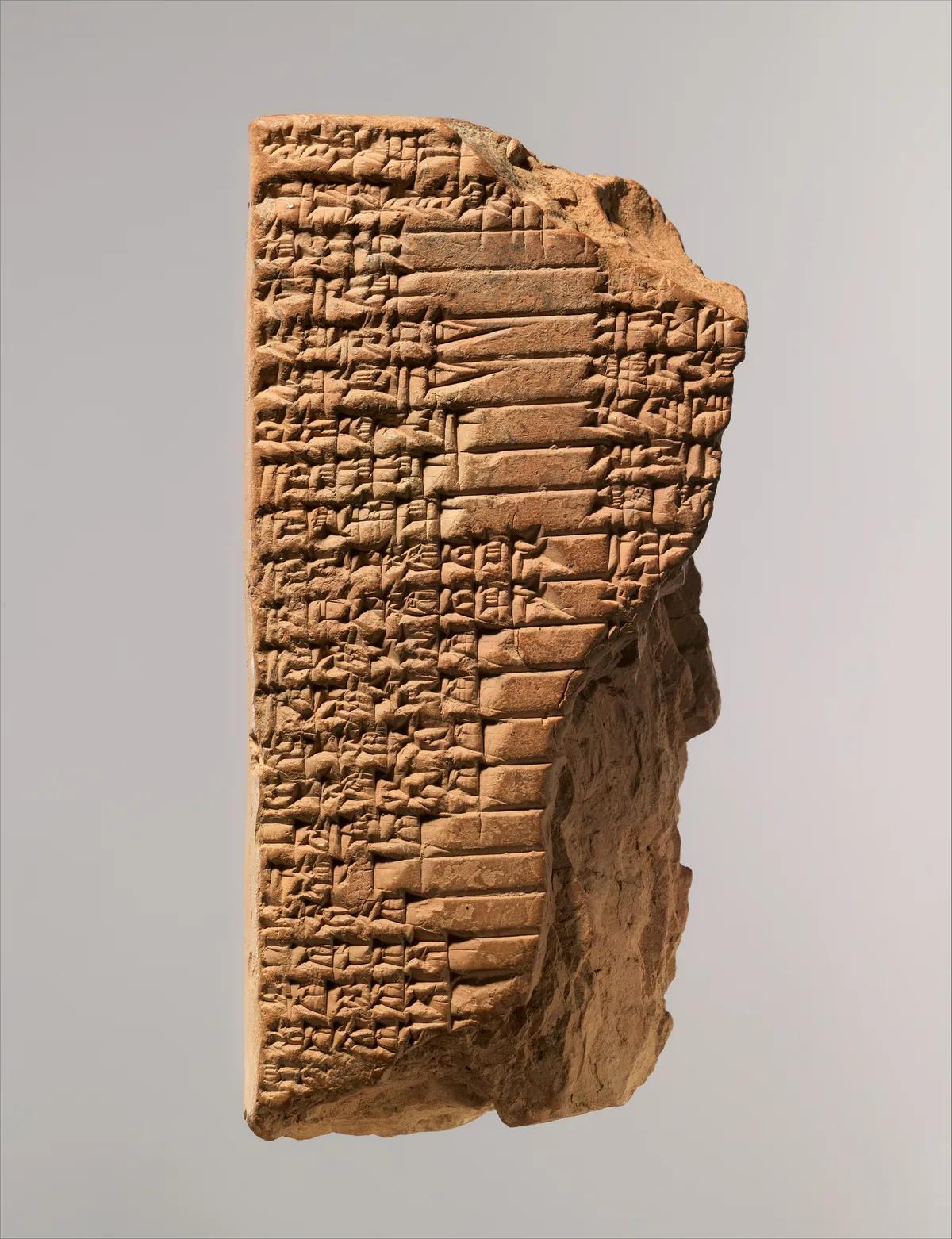
The Epic of Atrahasis—Old Babylonian, written in Akkadian around 1700 BCE—describes humans being created to relieve the labour of lesser divine beings. It contains a flood story that appears in the written record earlier than the biblical version. Zecharia Sitchin read these Sumerian and Akkadian traditions as actual historical accounts of extraterrestrial visitors who engineered humanity from existing hominids. Professional Assyriologists, with far deeper command of these languages and their contexts, read the same texts as Mesopotamian religious cosmology. Sitchin’s readings and the translations of professional Assyriologists do not occupy the same evidential position. Specialist translations rest on more than a century of linguistic, philological and historical analysis, sign-by-sign textual analysis, and cross-referencing across hundreds of tablets in multiple ancient languages. That body of work is not infallible, and scholarly interpretation of ancient texts involves ongoing debate. But I can question mainstream readings without implying they carry no more weight than a single author’s alternative framework. What I can honestly ask is: what does careful reading of these texts actually establish? That question is worth pressing across all interpretive traditions, without treating them as equally supported.
The Book of Enoch found me at a certain point, and it stayed with me. I want to say something accurate about its history, because the popular version gets this wrong. 1 Enoch—the Ethiopic Book of Enoch—remains canonical in the Ethiopian Orthodox Tewahedo Church. It wasn’t “removed from the Bible” in the sense people usually mean; it was never in most Christian or Jewish canons to begin with. Its exclusion from those canons reflects centuries of decisions about authority and transmission, not a single act of suppression. It was always there for anyone who went looking. The copies among the Dead Sea Scrolls at Qumran confirm it had wide circulation in Second Temple Judaism. What it describes—the Watchers descending from heaven, transmitting forbidden knowledge, interacting with humans—is ancient religious and literary composition. Its manuscript history establishes antiquity and wide circulation in Second Temple Judaism; it does not establish the literal historicity of the events described. The interpretive questions about what those texts represent, and why they took the form they did, are ones that scholars and theologians continue to work through. That is a legitimate intellectual question. I am not treating ancient narrative as independently verified record.
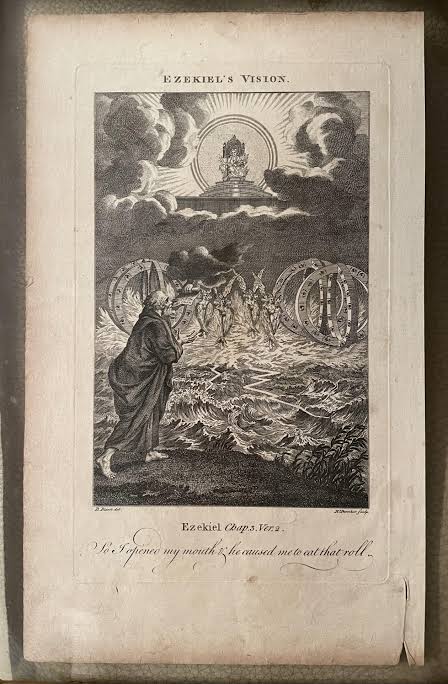
Ezekiel’s vision—the wheel within a wheel, the living creatures, the overwhelming aerial display—is one I keep returning to. When I first encountered it seriously, my instinct was technological. I had to slow myself down and ask how ancient readers understood it, because the rabbinical literature that grew up around it—merkavah mysticism—represents centuries of serious minds wrestling with the same passage. Those scholars weren’t naive. They were very careful about speculative readings. That doesn’t make a modern technological reading wrong, but knowing what the text meant to people close to the source is a step you should take before you reach for your own interpretation.
I read Erich von Däniken’s Chariots of the Gods? young. His specific claims vary considerably: some engage genuine puzzles about the ancient record; others depend on selective reading or errors of fact that specialist scholars have documented at length. What stayed with me was the question underneath the arguments—what if our picture of ancient history is less complete than we assume? That question was worth carrying forward, even as the supporting framework required scrutiny.
The Quran’s phrase al-ʿālamīn—often translated as “the worlds” or “all beings”—was interpreted by classical commentators including al-Ṭabarī (d. 923) and al-Rāzī (d. 1210) as encompassing all created beings and realms, not only the human world. Contemporary Muslim scholars have engaged with whether the existence of extraterrestrial life is compatible with Quranic teaching; that discussion is ongoing and does not represent a settled position within Islamic scholarship. Medieval Jewish sources—including passages in the Talmud and later kabbalistic literature—contain material about multiple worlds and other orders of being; their precise import within those traditions is itself a matter of internal interpretive debate. These are longstanding questions present in serious religious literature, not confined to modern popular speculation. I note them because they matter to how I think about whether we are alone—not to claim that religious texts resolve it.
Curated Reading Trail on The UFO Times
- The Anunnaki: Sitchin, the Sumerian Texts, and What the Tablets Actually Say
- The Book of Enoch: Fallen Angels and Forbidden Knowledge
- The Epic of Atrahasis: The Flood Story Before Noah
- Ezekiel’s Vision: What the Text Says and What It Does Not
- The Dead Sea Scrolls and the Texts That Were Left Out
- Göbekli Tepe: What We Know and What We Are Still Learning
- Puma Punku: Precision, Tiwanaku, and the Limits of Popular Claims
V. Field Investigation — and the Williamsburg Recording
When I joined MUFON as a field investigator in New York, I had already spent years following this subject seriously. MUFON is a volunteer civilian organisation. Field investigators are trained interviewers and observers. We document what witnesses report, we look for mundane explanations, we flag cases that don’t resolve easily. We don’t certify sightings as extraterrestrial—responsible investigators never did. I want to be honest about what this work is and what it isn’t, because the popular image doesn’t always match the reality.
What field investigation gives you that no amount of reading can provide is direct contact with witnesses. Sitting across from someone who has experienced something they can’t explain changes the way you hear these accounts. The witnesses I interviewed came from all walks of life. The accounts were important to document.
Across cases, certain kinds of description recurred from people who didn’t know each other and had no reason to coordinate their accounts. Recurring descriptions gave me questions to investigate, but consistency alone could not establish their accuracy or a common cause. Sincerity and detail matter, but neither can establish the cause of an experience on its own. After enough of those conversations, I came away convinced that the subject deserved serious investigation. Dismissing the witnesses out of hand was not a defensible response to what I heard.
New York has a real documented history here. The Hudson Valley wave of the 1980s—hundreds of witnesses over several years reporting low, slow-moving, boomerang-shaped or triangular objects across Westchester, Dutchess and Putnam counties, some at treetop height—remains one of the most extensively documented case clusters anywhere. J. Allen Hynek and Philip Imbrogno compiled those accounts. I didn’t personally investigate the Hudson Valley wave; it predates my involvement. But it was part of the landscape I entered, and it shaped the questions I brought to the work.
Williamsburg, Brooklyn, September 29, 2013. On September 29, 2013, witnesses in the Williamsburg neighbourhood of Brooklyn filmed an unusual light above the rooftops. Friends who knew my investigative interests passed the footage to me, and it has been in my personal archive since. No MUFON case number or formal disposition is provided in this retrospective.
Williamsburg, Brooklyn, New York — reported sighting date: September 29, 2013.
Recording from Rachid Echahly’s personal archive. Camera operator credit to be confirmed.
Archive reference: YouTube archive (uploaded October 1, 2013)—the upload date reflects when the video was posted online, not the reported sighting date.
The footage shows a bright point of light above a Brooklyn roofline. It runs about 54 seconds. It doesn’t establish the object’s altitude, size, speed or distance. It doesn’t show manoeuvres that couldn’t, in principle, be produced by a conventional aircraft, lantern, balloon or drone. I’m not presenting this as authenticated or as a certified unknown. I keep it because it’s part of the documented record I gathered as an investigator, and because the witnesses who reported it deserved to have their account preserved.
There’s a brief Hebrew exchange audible between witnesses in the recording. Previous attempts to transcribe it produced uncertain results. Following editorial policy at The UFO Times—we don’t publish guessed transcriptions or treat uncertain speech as verified quotation—that passage has been left out. If the camera operator or other witnesses are willing to verify the transcription, it can be added in a future revision.
VI. What the Government Record Now Shows

Something genuinely shifted in the past decade. The release of declassified Department of Defense sensor footage—the Nimitz encounter, the Gimbal recording, the Go Fast video—confirmed that the United States military had been tracking unidentified aerial phenomena and that official acknowledgement of this had been incomplete for a long time. What the footage establishes is more limited than is often claimed. AARO’s February 2025 assessment placed the Go Fast object at approximately 13,000 feet and attributed its apparent high speed to motion parallax; AARO assessed that it showed no anomalous performance, while its precise identity remained undetermined. The Gimbal recording shows a rotating shape, but whether that rotation is a property of the object or a sensor artefact remains unresolved. Pilot accounts from the Nimitz encounter describe manoeuvres that the sensor footage does not fully capture. These distinctions matter: the released recordings document that experienced military personnel encountered something they could not identify, that it was taken seriously, and that official disclosure of that fact was delayed. They do not, on their own, establish the nature or capabilities of what was recorded.
The establishment of AARO, the congressional hearings in 2023 and 2024, the testimony of figures like David Grusch: none of this proves extraterrestrial origins. I want to be careful about that, because the leap from “officially unexplained” to “therefore extraterrestrial” is exactly the kind of jump that makes this subject easy to dismiss. What it does establish is that the conversation was always worth having. Dismissing the subject was never the intellectually defensible position it was presented as.
Unresolved is not the same as extraterrestrial. The discipline that led me to take witness testimony seriously also requires resisting the step from “we can’t explain this” to “therefore it’s what I think it is.” What the available data can establish is this: trained military personnel encountered objects they could not identify, some of that was captured on sensor recordings, and official acknowledgement was delayed. What those objects were remains open. That question deserves the most careful and methodical attention available to us.
VII. Consciousness, Reality and the Question Behind the Question
At some point in this journey I picked up Michael Talbot’s The Holographic Universe. I want to be honest about what that book is and what it isn’t. Talbot drew on physicist David Bohm’s concept of the implicate order—the idea that the visible universe might be a kind of projection from a deeper non-local field—and on neuroscientist Karl Pribram’s work, to suggest that reality might function holographically. His synthesis goes well beyond what the underlying physics actually demonstrates, and physicists would be cautious about many of his applications.
The underlying physics is worth taking seriously on its own terms. Bohm’s implicate order is a genuine philosophical interpretation of quantum mechanics, not a fringe position. The holographic principle has real mathematical support in Maldacena’s AdS/CFT correspondence. The simulation hypothesis is an active philosophical and physics-adjacent debate. None of these frameworks validates paranormal experiences or ancient-astronaut interpretations. They operate in different registers entirely.
What Talbot’s book gave me was simpler than a theory. It asked whether the nature of reality might be less settled than we assume—whether the picture of a solid, comprehensible, fully mapped cosmos that our culture projects is itself a kind of inherited assumption. For someone already questioning inherited explanations about history and the human past, that was an honest provocation. Not a proof. Just a question asked sincerely. And questions asked sincerely are what I’m most willing to defend.
When witnesses describe encounters that don’t fit conventional physical explanations—objects that appear and disappear, that seem to respond to observation, that are seen by multiple people but leave no physical trace—I don’t know what’s happening. I know what the witnesses report. The gap between the report and my ability to explain it is where the most interesting questions live. I’m not closing that gap by assumption.
VIII. What If We Are Not Alone?
This question covers several very different possibilities that people routinely conflate, and I think the conflation does real damage to the conversation.
Discovering microbial life elsewhere in the solar system—under the ice of Enceladus, in ancient Martian sediments, in the Venusian atmosphere—would be one of the most significant scientific findings in human history. It wouldn’t resolve the question of unidentified aerial phenomena. It wouldn’t explain the Book of Enoch. What it would tell us is that life, once it starts, isn’t limited to a single world. That’s a large thing. It’s not everything.
Identifying technology of non-human origin—a craft, a signal, a material with properties inconsistent with any known manufacturing process—would be a different category of discovery entirely. It would require a standard of evidence that hasn’t yet been publicly met. I note that some credible people, in contexts where they’d face serious professional consequences for false statements, have claimed to have seen or handled such materials. I take those claims seriously enough to want them examined. I don’t take them as established fact in the absence of verifiable evidence.
The possibility that intelligent beings have visited this planet is one more category, and the possibility that they interacted with ancient human civilisations is yet another. Each step requires its own evidence. The evidence appropriate to one step doesn’t carry automatically to the next. I’ve tried to keep this in mind. I haven’t always managed it.
What I am confident of: the universe is incomprehensibly large, and the conditions that produced life on Earth are worth taking seriously as a subject of scientific investigation. The existence and frequency of other technological civilisations remain unknown. The scale of the universe motivates the search; it does not settle the answer. What follows from that—whether other intelligences exist, whether they’ve crossed the distances between stars, whether they’ve been here—is genuinely unknown. The honest answer is we don’t know. The honest question is what kind of evidence we’d need to find out.
IX. What Would Change My Mind?
This is the question every serious investigator should be willing to ask and answer. I’ll try to answer it honestly.
I would revise a particular interpretation of a UAP encounter when better evidence supported another explanation—a misidentified aircraft, a sensor anomaly, an atmospheric phenomenon with documented characteristics. The absence of a known explanation doesn’t favour any specific alternative; it means the case remains unresolved. An unresolved case is an honest stopping point, not an opening for preferred conclusions.
The same applies to ancient texts. When a scholarly account of a passage’s composition, context and transmission fully explains what the text says and why it took the form it did, I try to follow it. Where that account is incomplete or contested within the relevant scholarly tradition, the question stays open. What I won’t do is treat a gap in current scholarship as evidence for a specific hypothesis that scholarship hasn’t proposed.
What would genuinely move me on the ancient-astronaut question is not an argument from difficulty—not “how else could this have been done?”—but positive evidence with the character of an independent identification: material, biological, textual or physical evidence that cannot be accounted for within known human history and that points specifically to an extraterrestrial source, verifiable by researchers with no stake in the conclusion. I haven’t seen that. If it existed and were made available for examination, I would look.
Intellectual honesty isn’t selective. The same standards I apply to official explanations I need to apply to the alternative frameworks I find more interesting. I’ve tried to do this. I haven’t always managed it as well as I should have.
X. The Conversation Remains Open
The UFO Times exists because I believed, and still believe, that these questions deserve serious treatment. Not breathless credulity, not reflexive dismissal—serious treatment. Following evidence where it leads. Being clear about what’s established and what’s not. Being honest about uncertainty. And keeping the conversation open, because the evidence isn’t complete.
What we were taught isn’t necessarily the complete truth. That’s not a radical claim—it’s what every generation of serious scholars and investigators has discovered about its predecessors. The history of science, of archaeology, of biblical scholarship, of our understanding of the cosmos, is a history of successive revisions. Our current understanding, in every domain, contains evidence, interpretation and unanswered questions in proportions we don’t always acknowledge.
The congressional hearings, AARO, the declassified military sensor footage confirm that the conversation was worth having. They don’t tell us where it ends. That work continues—in laboratories, in archives, in congressional offices, and in the kind of honest field investigation that refuses to decide in advance what it will find.
My investigation began with witnesses. The discipline they taught me was simple: listen before dismissing. Examine before accepting. Stay willing to ask the uncomfortable question even when the people around you have stopped asking it. The witness who came to me describing something they couldn’t explain wasn’t asking me to validate a theory. They were asking me to take their experience seriously enough to look.
That’s what I tried to do. That’s what this site tries to do. That’s what what if? means—not a conclusion, not a claim, but a willingness to keep looking.
Apply rigour. Demand evidence. And never stop asking what if.
— Rachid Echahly
Sources & References
- Von Däniken, Erich. Chariots of the Gods? G.P. Putnam’s Sons, 1968.
- Sitchin, Zecharia. The 12th Planet. Stein and Day, 1976. (Scholarly response: Heiser, Michael. The Unseen Realm. Lexham Press, 2015; and Worthington, Martin. Ea’s Duplicity in the Gilgamesh Flood Story. Routledge, 2012.)
- Isaac, E. “1 (Ethiopic Apocalypse of) Enoch.” In The Old Testament Pseudepigrapha, ed. Charlesworth. Vol. 1. Doubleday, 1983.
- Lambert, W. G., and Millard, A. R. Atra-hasis: The Babylonian Story of the Flood. Clarendon Press, 1969.
- Schmidt, Klaus. Göbekli Tepe: A Stone Age Sanctuary in South-Eastern Anatolia. Ex Oriente, 2012. For infilling discussion see also: Clare, Lee, et al. “Contextualising the past: Interdisciplinary contributions to understanding Göbekli Tepe.” Neo-Lithics, 2019.
- Vranich, Alexei. “The Architecture of Tiwanaku.” In Visions of Tiwanaku, ed. Vranich and Stanish. Cotsen Institute of Archaeology Press, 2013.
- al-Ṭabarī, Muḥammad ibn Jarīr. Jāmiʿ al-bayān ʿan taʼwīl āy al-Qur’ān (Tafsīr al-Ṭabarī). Completed c. 923. On al-ʿālamīn: Sura 1 commentary.
- al-Rāzī, Fakhr al-Dīn. Mafātīḥ al-Ghayb (Tafsīr al-Kabīr). Completed c. 1210. On the scope of al-ʿālamīn.
- Talbot, Michael. The Holographic Universe. HarperCollins, 1991. (Underlying physics: Bohm, David. Wholeness and the Implicate Order. Routledge, 1980; Maldacena, Juan. “The Large N limit of superconformal field theories and supergravity.” International Journal of Theoretical Physics 38, 1999.)
- Hynek, J. Allen, and Imbrogno, Philip. Night Siege: The Hudson Valley UFO Sightings. Ballantine Books, 1987.
- Scientific Coalition for UAP Studies (SCU). Analysis of the Tic Tac UAP Event. 2019. Available: explorescu.org. (The Nimitz/Tic Tac encounter, November 2004.) — Go Fast and Gimbal are separate encounters involving USS Theodore Roosevelt, 2015; see: AARO. Go Fast Case Resolution Report. February 2025. aaro.mil.
- MUFON (Mutual UFO Network): mufon.com
- Government UAP records: theufotimes.com/gov-files
- YouTube archive of Williamsburg recording (uploaded October 1, 2013): youtube.com/watch?v=P2_CEsmeGVI